Men's Tapered Jeans Guide
The taper is menswear's negotiated settlement: keep the thigh room, lose the excess at the ankle — a fit defined by the difference between its knee and its hem.
Shop Men's Tapered Jeans Now
Shop Men's Tapered Jeans on Amazon Shop Men's Tapered Jeans on eBayThe Amazon and eBay links on this page are affiliate links. If you make a purchase through them, Apparel Search may earn a commission.
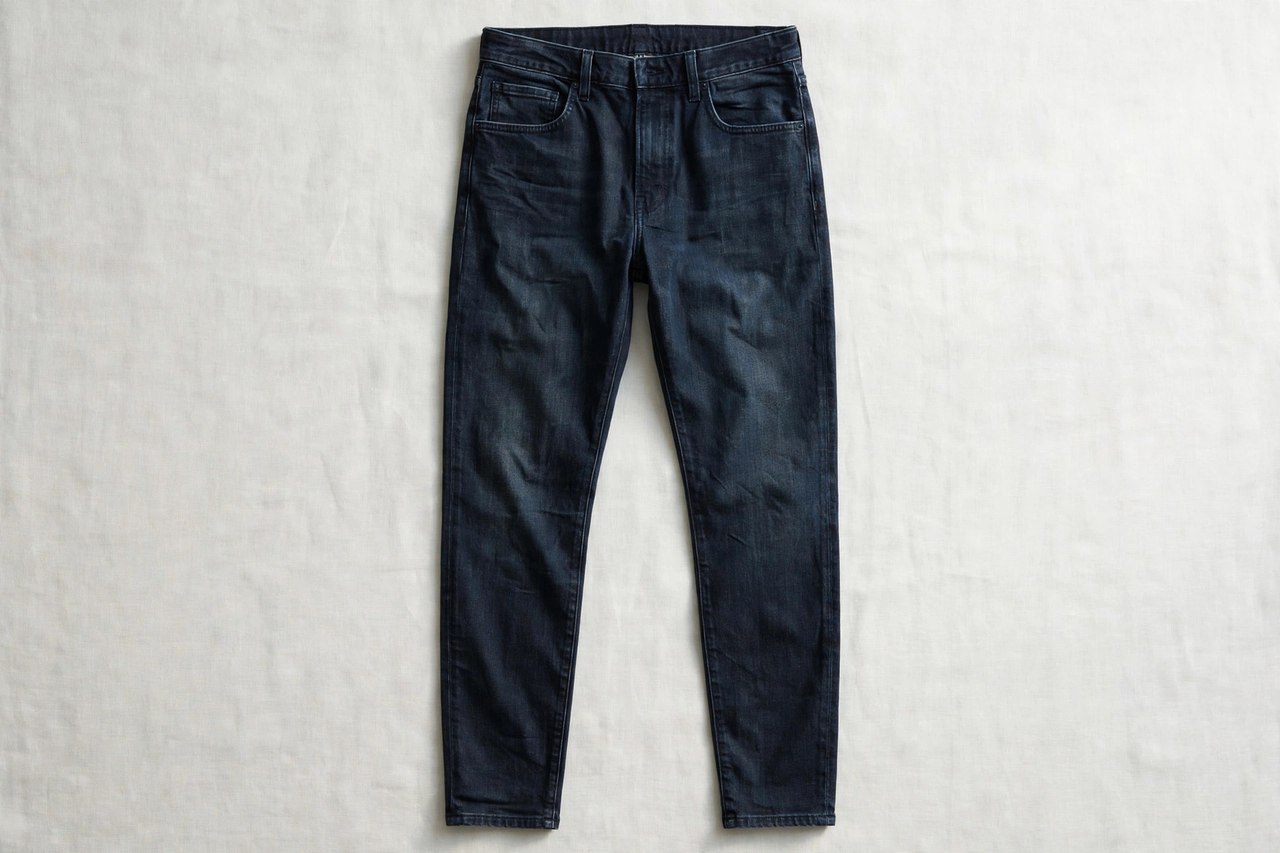
A tapered jean narrows continuously from the thigh to the hem. The top block can be regular or relaxed; the leg then slopes inward so the opening lands around 13 to 15 inches — smaller than a straight leg's, larger and less committed than a skinny's. The taper became the default silhouette of the last decade of menswear because it answers the commonest male fitting complaint in both directions at once: straights that fit the waist strangle the thigh, and jeans that fit the thigh flap at the ankle. Our men's denim fits guide treats it as its own fit, not a variation, because the geometry is its own.
Every brand now sells a taper, which means the word covers everything from a barely-narrowed straight to a near-carrot. The defence is measurement: compare the knee width with the hem width. A true taper loses roughly two to three inches between the two; less is a slim-straight, more is a fashion carrot.
Tapered, Slim and Athletic: Three Ways to a Narrow Hem
A slim jean reaches a narrow hem by being narrow everywhere — the thigh is close, so there is little to taper. A tapered jean starts from a regular or relaxed thigh and narrows; that starting room is the point. An athletic fit is a tapered jean with the specification turned up — an extra-generous thigh and seat for muscular builds, tapering to a standard hem. If your thighs come from sport, the athletic page in this cluster is your detailed version of this one; if they are average, the standard taper was patterned for you.
The knee decides the quality of a taper. The narrowing should be a continuous slope; a jean that stays wide to mid-calf and then pinches reads as two garments joined. Dressing-room test: look at the leg from the side while walking a few steps — the fabric should fall in one clean diagonal conversation with your leg, without a horizontal break or pouch at the calf.
Rises, Hemming and the Calf Question
Tapers take mid and high rises equally well. The high-rise taper is the sharper garment — waist defined, volume at the thigh, clean ankle — and the one that crosses into smart settings in dark washes. The mid-rise taper is the everyday default. What a taper does not forgive is the wrong length: excess inseam cannot stack on a narrow hem the way it can on a straight leg; it accordions above the ankle. Buy tapers at the correct inseam or budget for hemming, and if you hem, ask the tailor to re-taper from the new hem point so the slope survives.
The calf is the taper's known hazard. A strong taper on a large calf will catch and ride up as you walk, the hem creeping above where you placed it. The fixes are a gentler taper — a 15-inch rather than 13-inch opening — or a fabric with one percent stretch. Test by walking briskly in the shop: if you are pulling the legs down every few steps, that pair's slope is too ambitious for your calves.
Fit Checks and Styling
Check the taper in its own order: waist true, thigh with a comfortable pinch of spare cloth, knee free to bend without the fabric pulling across it, hem slipping over the heel with a small tug and sitting where intended over the shoe. Then check the seat from behind — tapered patterns sometimes borrow their thigh room from the back rise, and a seat that pulls under is the tell of a cheap block.
Styling is the taper's home advantage: it is the jean that goes under a blazer without apology in black or dark indigo, shows a boot or a trainer with equal cleanliness, and balances both a fitted tee and an overshirt. Wash cold and inside out; a tapered leg shows uneven dryer shrinkage as a twist along the seam, so hang-drying keeps the slope where the pattern put it.
Common Questions
What is the difference between tapered and slim jeans for men?
The thigh. Slim jeans are close through the thigh and stay close to a narrow hem. Tapered jeans start with a regular or relaxed thigh — real sitting and bending room — and narrow from the knee to a similar hem. Men who find slims tight at the thigh but like the clean ankle usually want a taper.
Can tapered jeans be hemmed?
Yes, but ask for the taper to be preserved: shortening a tapered leg moves the hem up to a wider point of the slope, so a simple hem leaves a wider opening than the original. A tailor can take the leg in from the new hem to restore the original opening — a standard alteration worth specifying rather than assuming.
Do tapered jeans suit muscular legs?
They are designed for them, up to a point: the roomy top block and narrow ankle is exactly the muscular leg's geometry. Very large thighs and calves are better served by athletic fit, which is the same idea with more thigh room, a higher back rise and a hem that still finishes cleanly. Judge by the sit test, not the size label.
More Men's Denim Fit Guides
The other fits and rises in this cluster, in alphabetical order:
Looking for Men's Clothing Stores?
This guide helps you choose men's tapered jeans. To browse where to buy, visit our mens clothing store directory, where you can find retailers that carry them.