Men's Cropped Jeans Guide
A men's cropped jean ends above the ankle to show the shoe and lose the break — a small hem decision that changes the temperature and the formality of the whole outfit.
Shop Men's Cropped Jeans Now
Shop Men's Cropped Jeans on Amazon Shop Men's Cropped Jeans on eBayThe Amazon and eBay links on this page are affiliate links. If you make a purchase through them, Apparel Search may earn a commission.
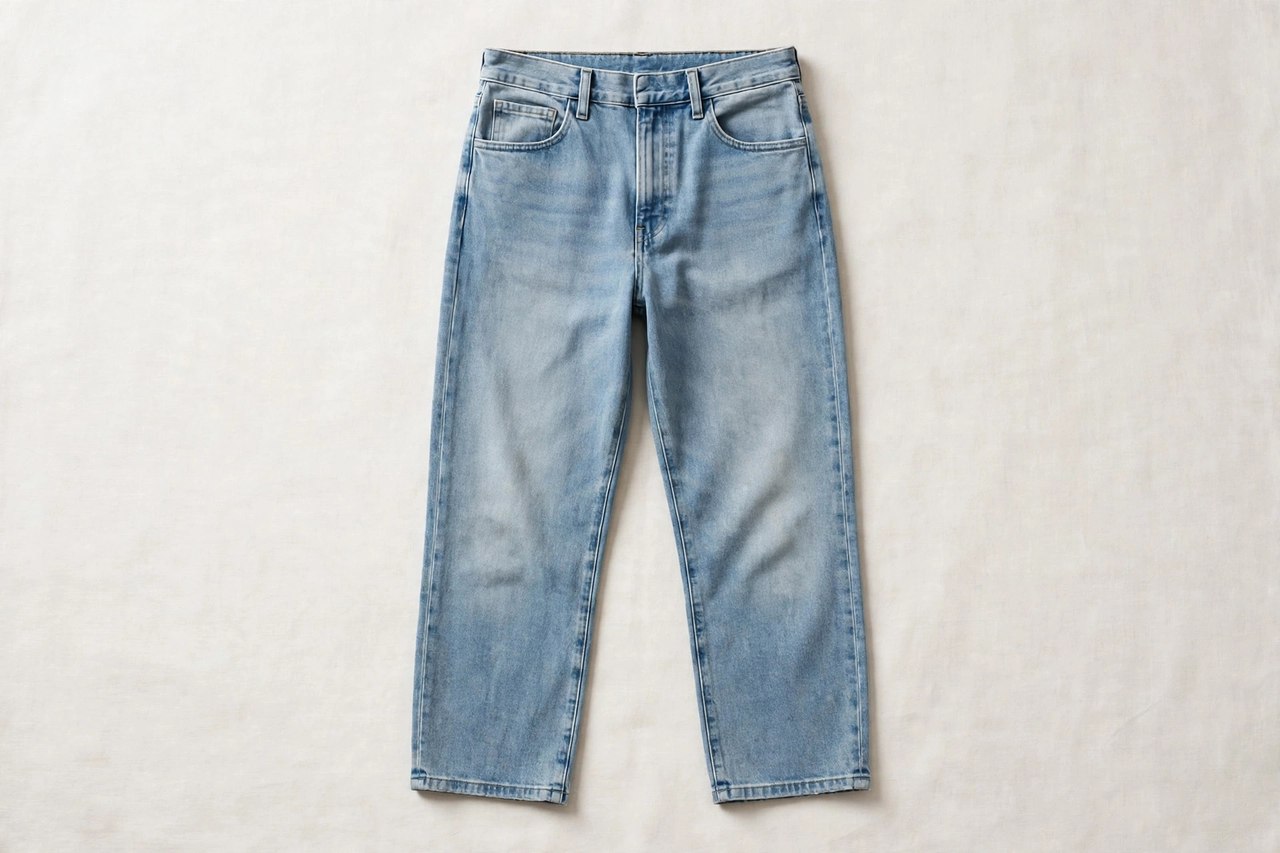
Men's cropped jeans are full jeans cut to end above the ankle — inseams in the region of 26 to 28 inches on a regular block, sized by where they land rather than by the number. The exposed ankle does three things: it removes the break and the stack, it displays the footwear completely, and it lightens the whole silhouette, which is why the crop reads as warm-weather and informal wherever it appears. Among the fits gathered on our men's denim fits guide, it is the only one defined by length rather than width.
A crop is also the easiest 'new' jean a man can acquire, because any straight or tapered pair with a tailor — or a confident pair of scissors — can become one. That accessibility cuts both ways: badly judged crops look like trousers that shrank. This guide is about the judging: where the hem belongs, on which leg shapes, and with what below it.
Where the Hem Belongs
The working zone is one to three inches above the ankle bone. At one inch, the crop is a whisper — a full-length jean with its break removed, tidy and safe. At two to three inches it becomes a statement, showing real ankle and asking the socks and shoes to participate. Above that, on a man, the garment approaches capri territory and a different, narrower set of styling rules. Pick your point deliberately; hems hovering an awkward half-inch above the bone read as an error at any distance.
Leg shape sets the crop's character. A cropped taper is the polished version — narrow hem, clean gap, the shoe fully on show. A cropped straight is the relaxed standard. A cropped wide leg is the boldest, all swing and exposure, and the one that most needs substantial footwear to anchor it. Slim and skinny crops exist but gain least, since a close hem was already showing the shoe; the crop earns its name on the roomier legs.
Socks, Shoes and the Cold-Weather Question
The crop makes legwear a visible decision. Bare ankle or a no-show sock is the summer default under loafers, trainers and sandals. Visible socks, when worn, should be chosen like an accessory — a colour or rib that agrees with the shoe — because the crop will frame them whether you planned it or not. The one forbidden combination is the accidental inch of whatever sock was in the drawer, which undermines the whole deliberate geometry.
Cold weather does not retire the crop; boots adopt it. An ankle boot whose shaft passes the hem turns the crop into a frame for the boot, with no bunching where a full-length hem would fold over the shaft. The condition is overlap or clear gap: hem inside the boot's territory or visibly above it, never just grazing the top edge. In deep winter the exposed band costs warmth that a sock must repay — plan it rather than discovering it.
Rolling Versus Buying Cropped, and Care
A roll is the reversible crop and the right way to audition the look on a straight or tapered pair: one or two neat turns, pressed with the hand, ending in the working zone. Rolling fails on wide legs, where the turned cloth adds bulk at the widest point, and on very long jeans, where the roll becomes a cuff of several inches. Jeans bought cropped hold their hem finish — sewn, raw or released — exactly, which is why committed wearers eventually buy the real thing.
Judge a bought crop standing in the shoes of its season and from the side: the hem should circle the leg levelly and hold its distance from the ankle when you walk. Raw-hem crops will keep fraying a little with each wash unless the edge is stitched; decide if you want that evolution. Wash cold and hang-dry — a cropped jean has no spare length to surrender to a hot dryer, and an inch of shrinkage moves the hem into a different style.
Common Questions
How short should men's cropped jeans be?
The hem should end one to three inches above the ankle bone. One inch gives a tidy, almost full-length look with no break; two to three inches makes the crop a deliberate feature and puts socks and shoes on display. Judge by where the hem lands on your leg, not the labelled inseam, since proportions differ.
Can men wear cropped jeans with boots?
Yes — this is the crop's cold-weather mode. Choose an ankle boot whose shaft reaches or passes the hem so the denim and the boot overlap cleanly, with no bunched fold at the boot top. The combination suits straight and tapered crops best and keeps the exposed-ankle line working through autumn and mild winter days.
Are cropped jeans and rolled jeans the same thing?
They produce a similar line, but a bought crop has a finished hem at the intended length, while a roll borrows the length from a longer jean and adds bulk at the hem. Rolling is the right way to test the look; a proper crop looks cleaner, especially on wider legs where a roll thickens the widest point.
More Men's Denim Fit Guides
The other fits and rises in this cluster, in alphabetical order:
Looking for Men's Clothing Stores?
This guide helps you choose men's cropped jeans. To browse where to buy, visit our mens clothing store directory, where you can find retailers that carry them.