Men's Mid-Rise Jeans Guide
Below the natural waist, above the hip bone's trouble zone: the men's mid rise is the rise most jeans, most builds and most shirts quietly agree on.
Shop Men's Mid-Rise Jeans Now
Shop Men's Mid-Rise Jeans on Amazon Shop Men's Mid-Rise Jeans on eBayThe Amazon and eBay links on this page are affiliate links. If you make a purchase through them, Apparel Search may earn a commission.
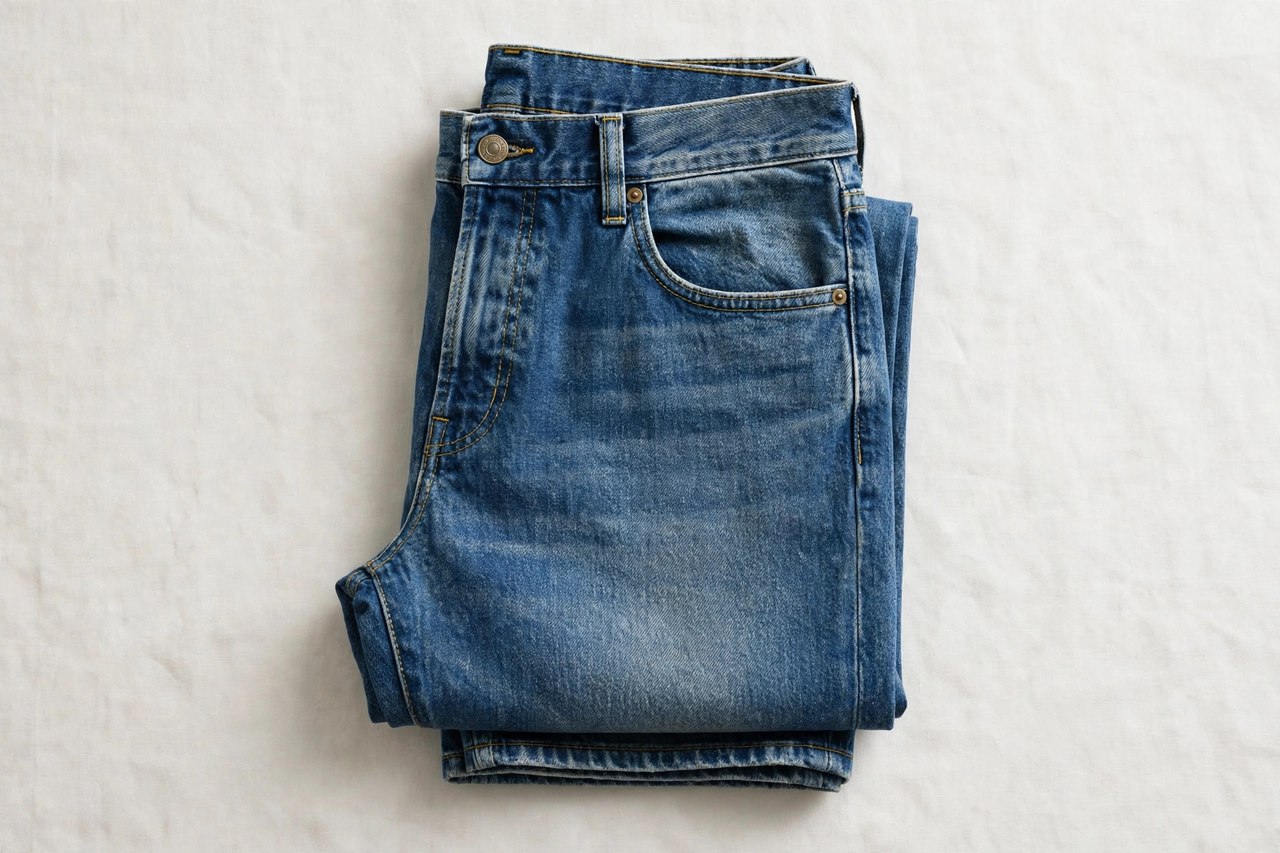
Ask a pattern cutter for the default men's jean and you will get a mid rise: a front rise around nine to ten and a half inches, the waistband sitting below the natural waist and above the hip, the seat cut with enough back rise to work in. It is the rise of the standard five-pocket jean in most ranges, and the comparison point for the taller and lower rises on our men's denim fits guide. Men often wear it for years without knowing its name — which is rather the point of it.
The mid rise's claim is not excitement but coverage: it suits the widest range of stomachs, seat shapes and shirt habits. It tucks adequately, untucks cleanly, and stays where it was put through a day of sitting and standing on most builds. Its failures are specific and fixable, and they are covered here rather than in the marketing.
Men's Rise Numbers, Measured Properly
Front rise runs from the front waistband, down the fly, through the crotch seam to the point where the inseams meet; on men's mid-rise blocks that is typically nine to ten and a half inches. Back rise — waistband down the centre back to the same point — matters just as much and is longer, usually by two inches or more. A jean whose back rise is short for its front will dive when you sit, and no belt fully compensates; it is a pattern fault, not a sizing one.
Labels stretch the range at both ends, so one brand's mid is another's low-mid. Torso length shifts the effect further: the same ten-inch rise sits nearer the waist on a short torso. The reliable method is to measure the front and back rise of your best-fitting pair, write both numbers down, and treat them as your personal mid — the setting your body has already voted for.
Mid Versus Low, Mid Versus High, for Men
Against low rise — eight inches and under — mid rise buys security: the waistband clears the hip bone, stays over a belt, and does not require hoisting after every sit. Low rise remains a youth and fashion cut; mid is where most men land after it. Against high rise — eleven inches and up — mid rise gives up some tucking discipline and leg-lengthening in exchange for a waistband that never argues with a stomach when seated. Neither neighbour is wrong; they are optimised for different priorities.
Leg shape barely argues with the mid rise, which is its structural virtue. Straights, slims, tapers and relaxed blocks are all patterned on it as their home setting. Only the wide leg regularly asks for more rise to anchor its volume, and the skinny historically paired with less. If you own several fits and one rise, mid is the rise that will be right, or nearly right, under all of them.
Tucking, Belts and the Back-Gap Fix
A mid-rise jean half-tucks perfectly and full-tucks adequately: the band is high enough to hold a shirt, low enough that the shirt does not billow from a tall waist. Untucked shirts should end around the fly — much longer and they fight the waistband's line. Belts sit naturally on a mid rise and can be genuinely functional, the one rise where a belt improves the fit instead of decorating a gap or fighting a tall band.
The characteristic mid-rise fault on men is the waistband standing away at the centre back when seated — the seat is right, the waist is right, the curve between them is wrong. Look for blocks with a shaped yoke and a slightly higher back waistband, or have a tailor take in the centre back: an inexpensive alteration that transforms the fit. Buy mid-rise waists exact rather than snug — unlike high-rise rigid denim, there is less band to mould, and an over-tight mid waist will simply migrate to the wider part of the torso.
Common Questions
What is mid-rise for men's jeans in inches?
A front rise of roughly nine to ten and a half inches, with the back rise about two inches longer. The waistband sits below the natural waist, typically an inch or two under the navel. Brands place the edges differently, so compare against the measured rise of a pair that already fits you well.
Are mid-rise jeans good for men with a stomach?
Often the most comfortable choice: the band sits below the natural waist without dropping to the hip, and it does not fold into the stomach when seated the way a too-tall high rise can. The keys are an exact waist — not sized down — and enough back rise that the band stays placed when you sit and stand.
Do shirts stay tucked in mid-rise jeans?
Reasonably well for everyday wear, especially with a belt: the band has enough height to hold a tucked shirt through normal movement. For a reliably sharp, all-day tuck — dress shirts under blazers, for instance — a high rise holds better, because more of the shirt sits below a higher, firmer waistband.
More Men's Denim Fit Guides
The other fits and rises in this cluster, in alphabetical order:
Looking for Men's Clothing Stores?
This guide helps you choose men's mid-rise jeans. To browse where to buy, visit our mens clothing store directory, where you can find retailers that carry them.