Women's Camouflage Jackets Guide
A jacket is camo's biggest canvas — how print scale, pattern family, and season change the whole coat, and how to style it with confidence.
Shop Women's Camouflage Jackets Now
Shop Women's Camouflage Jackets on Amazon Shop Women's Camouflage Jackets on eBayThe Amazon and eBay links on this page are affiliate links. If you make a purchase through them, Apparel Search may earn a commission.
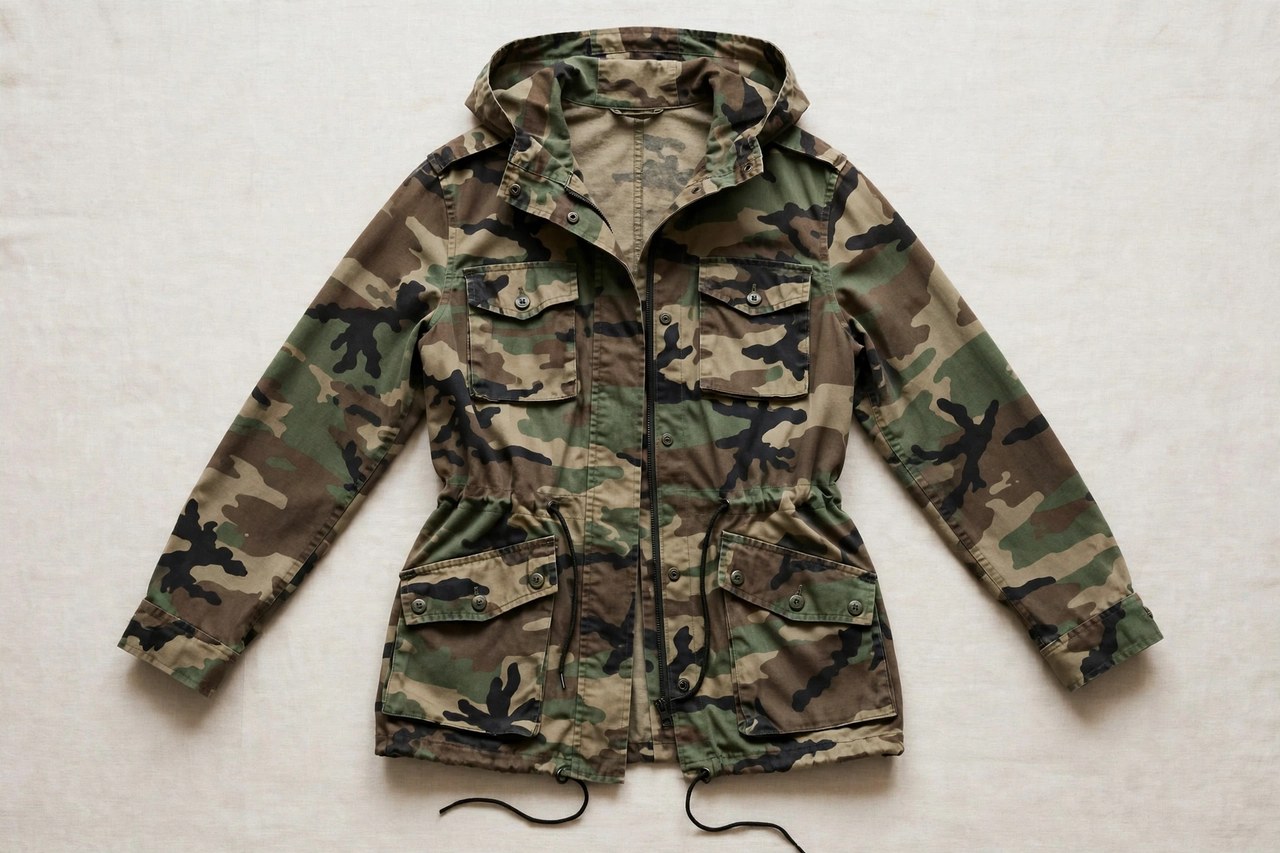
Of all the garments in this series, a jacket gives camouflage the most room to breathe. The back alone is a broad, mostly uninterrupted panel, the sleeves run the full length of the arm, and the front is split only by a zipper or buttons. That large canvas means pattern decisions that barely register on a hat or a pair of shorts become the defining feature here: a big, open woodland print can look sweeping and almost abstract across a jacket back, while a tight digital repeat can read as a fine texture from across the street. It also means a camo jacket is a commitment piece — it will be the first thing anyone notices about your outfit. This guide covers the pattern side of that choice: which camo families suit which seasons, how scale and placement behave on a large garment, what to check in print quality, and how to style a statement jacket so it looks deliberate rather than borrowed.
Print Scale on a Large Canvas Garment
Large garments reward larger prints. A motif that would overwhelm a cap settles beautifully across a jacket, with room for the shapes to repeat four or five times down the back and continue onto the sleeves. Designers call this an engineered sense of scale, and it is why the best camo jackets look balanced even though the print is bold. Very small repeats on a jacket can create an unwanted optical shimmer at a distance and may read as a muddy green-brown texture rather than a pattern, especially in digital prints with high contrast between pixels. Look at how the print handles the garment's interruptions: a good jacket keeps the pattern flowing across the shoulder seam and down the sleeve, aligns the two front panels so the zipper line does not chop a major shape in half, and treats pockets as part of the canvas rather than pasting a mismatched patch over it. Perfect alignment is a premium detail, so its presence is a reliable quality signal.
Pattern Families by Season
Season should steer your colorway more than trend does. Spring and summer jackets favor lighter grounds: desert camo in sand and sage, faded vintage woodland washed down to soft greens, and fashion colorways in stone, blush, or pale grey that sit comfortably over white jeans and linen. Autumn is classic woodland territory, where deeper greens, russet browns, and black shapes echo the season and layer naturally over knitwear, denim, and boots. Winter camo jackets often go darker and moodier — charcoal-based urban prints, black-on-black tonal camo where the pattern appears only as a slight sheen difference, or snow camo in white and pale grey on insulated shells. Tonal camo deserves special mention for jackets: because the shapes are picked out in two close shades of one color, it delivers texture without high contrast, making it the most office- and city-friendly way to wear a full camo outer layer.
Print Quality, Fabric, and Fading
A jacket is washed less often than a tee but worn far more visibly, so print durability matters. On cotton canvas and twill utility jackets the camo is usually printed into the fabric or woven as a jacquard; woven patterns cannot crack or peel and age gracefully, softening with the cloth. Printed nylon and polyester shells, common in rain jackets and puffers, hold color sharply but should be checked for a rubbery surface print that can crack along fold lines at the elbow and under the arms. Turn the jacket inside out and compare the print's intensity: a big drop-off is normal for surface prints, while yarn-dyed and woven designs show nearly the same color inside. Dark colorways fade first at the shoulders and along the zipper, so a slightly faded vintage effect is often a smarter buy than a jet-dark print that will show every wash. Whatever the fabric, the pattern should be colorfast enough that the pale shapes do not pick up green dye in the first wash.
Styling a Camouflage Jacket
Treat the jacket as the outfit's single statement and build quiet clothes underneath it. A plain black or white top, straight jeans, and simple boots let a woodland jacket look sharp and modern; a tonal or grey camo jacket can carry a brighter solid underneath, such as burgundy or mustard, pulled from autumn dressing rather than from the print. Because the jacket is visually busy, keep scarves, bags, and hats plain, and avoid a second camo piece anywhere in the same outfit. Silhouette helps too: a camo utility or field-style jacket looks best slightly relaxed over slim bottoms, while a cropped camo jacket pairs well with high-waisted trousers or a plain midi dress for contrast. For evening, a dark tonal camo blazer-cut jacket over an all-black outfit is a surprisingly polished formula. Zip it, wear it open, or push the sleeves up — the print does the work, so the styling underneath should stay calm and uncomplicated.
Related Women's Camouflage Guides
More to Explore on Apparel Search
- Camouflage Apparel Guide
- Camouflage Boots Guide
- Camouflage Bras Guide
- Camouflage Fashion Blog
- Camouflage Fashion Guide
- Camouflage Robes Guide
- Camouflage Shirts Guide
- Camouflage Shorts Guide
- Camouflage Skirts Guide
- Camouflage Sleepwear Guide
- Camouflage Underwear Guide
- Camouflage Uniforms Guide
- Clothes
- Hunting Clothing
- Women's Clothing Stores
- Women's Clothing Wholesalers
- Women's Jackets
Looking for Women's Clothing Stores?
This guide helps you choose women's camouflage jackets by pattern and season. To browse where to buy, visit our women's clothing store directory, where you can find retailers that carry them.