Women's Camouflage Coats Guide
The boldest way to wear the print — full-pattern outerwear, large-scale repeats on long garments, and keeping the rest quiet.
Shop Women's Camouflage Coats Now
Shop Women's Camouflage Coats on Amazon Shop Women's Camouflage Coats on eBayThe Amazon and eBay links on this page are affiliate links. If you make a purchase through them, Apparel Search may earn a commission.
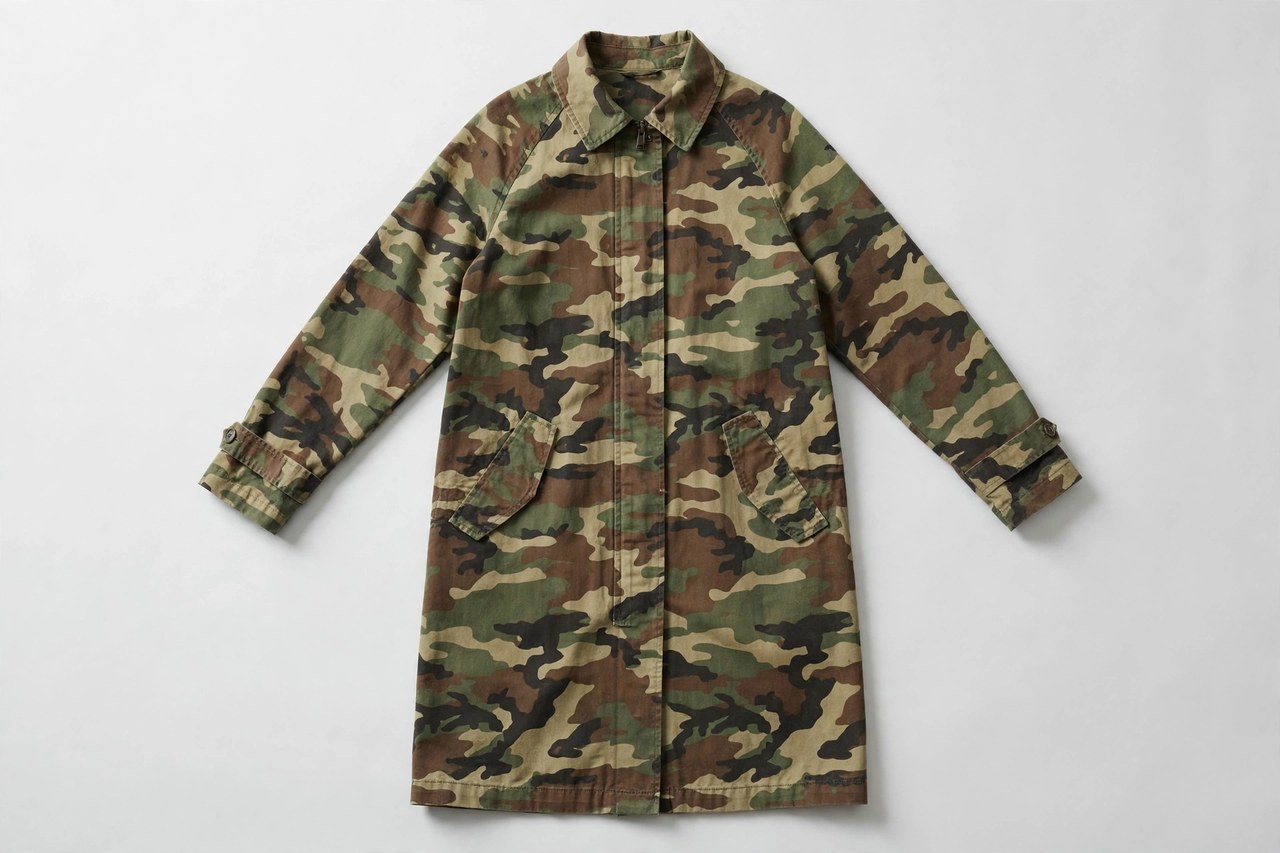
A camouflage coat is the print at full volume. Where a camo tee or scarf offers a hint of pattern, a coat covers the largest continuous area of any outfit, from shoulders to knees or beyond, and turns camouflage into the entire first impression. That boldness is exactly its appeal, and also why the pattern decisions matter more here than on any other garment. This guide stays with those decisions: how print scale should grow on a long garment, which camo families and colorways suit outerwear, how good makers handle the pattern at seams, pockets, and hoods, and how to style a full-print coat so it looks intentional rather than overwhelming. The coat basics underneath are familiar, parkas, puffers, trenches, and wool-blend overcoats all come in camo, in lengths from cropped to full. Choose the silhouette you already know suits you, then use this guide to judge the print on it, because a great pattern can elevate a plain coat and a careless one can cheapen a beautiful cut.
Why Long Garments Need Larger Scale
Scale is the first thing to check on a camo coat, and the rule is simple: the longer the garment, the larger the repeat should be. A small, dense camo that looks charming on a shirt becomes visual noise across four feet of coat, reading from a distance as an undifferentiated murky texture rather than as camouflage. A large woodland repeat, with blotches six to ten inches across, unfolds properly over a coat's broad front panels, lapels, and sleeves, so the pattern's rhythm survives and the garment still reads as camo from across the street. Medium repeats suit shorter coats and cropped jackets, where the area is closer to a top than to a full-length piece. Vertical flow matters too. On long coats, look for repeats that travel downward without an obvious horizontal banding line, because a visible repeat line circling the coat at hip height cuts the silhouette in two. Turn the coat around as well; the back is one unbroken expanse, and it shows the pattern at its best or worst.
Which Camo Families Suit a Coat
Classic green woodland is the natural coat pattern: its earthy palette suits autumn and winter dressing, hides city grime gracefully, and pairs with the browns, blacks, and denims of cold-weather wardrobes. Urban grey camo gives a sharper, more architectural result and is the best choice with black tailoring and monochrome outfits. Snow and white-based camos make striking winter coats but show dirt quickly, so they suit occasional wear better than daily commuting. Fashion colorways, pink, burgundy, or blue camo, appear mostly on puffers and lighter fashion coats, where the mood is playful and the coat is one of several in rotation. Fabric changes the print's character as well. Camo printed on matte canvas or wool blends looks soft and grounded, while the same pattern on shiny puffer nylon looks louder and more technical. Consider where the coat will actually be worn: a woodland parka earns daily wear in most wardrobes, while a pastel camo statement coat is a sometimes piece, delightful but not a foundation.
Print Placement at Seams, Pockets, and Hoods
A coat is assembled from many panels, and the print reveals the maker's care at every join. On quality camo coats, the pattern is matched across the center front closure, so blotches continue over the button or zip line instead of jumping sideways, and pocket flaps are cut so their pattern aligns with the body beneath them. Perfect matching everywhere is impossible with an irregular print, and small breaks at side seams and under sleeves are normal and invisible in wear. What should concern you is a large, high-contrast blotch sliced awkwardly at the chest or a hood whose pattern clashes in color balance with the shoulders it sits on. Hoods, collars, and belts are where makers often cheat by using a solid coordinating fabric; done well, in a tone drawn from the print, that is a design feature that rests the eye, but done in an unrelated color it looks like a repair. Check the belt especially, since it crosses the coat's widest visual field and a mismatched belt print is impossible to ignore.
Styling a Full-Print Coat
Everything under a camo coat should be quiet. Treat the coat as the outfit's pattern, color, and texture in one, and dress beneath it in solids drawn from its own palette: black trousers and a charcoal knit under woodland, all-white or all-grey layers under urban camo, cream and denim under desert tones. Footwear should be solid and simple, black boots, white sneakers, or tan leather, because a second pattern below the hem restarts the competition the coat already won. Scarves and hats work best in one of the print's quieter colors, and a structured solid bag keeps the look polished rather than outdoorsy. Because a camo coat is memorable, rotate it with a plain coat if you dislike being recognized by your outerwear, or embrace it as a signature. For care, follow the coat's own instructions, but note that printed shells fade with aggressive washing; spot cleaning, proper hanging on a wide hanger, and professional cleaning only when needed will keep the large-scale pattern crisp for many seasons.
Related Women's Camouflage Guides
More to Explore on Apparel Search
- Camouflage Boots Guide
- Camouflage Bras Guide
- Camouflage Fashion Blog
- Camouflage Hats Guide
- Camouflage Pants Guide
- Camouflage Robes Guide
- Camouflage Shirts Guide
- Camouflage Shorts Guide
- Camouflage Skirts Guide
- Camouflage Sleepwear Guide
- Camouflage Underwear Guide
- Camouflage Uniforms Guide
- Camouflage Vest Guide
- Clothes
- Hunting Clothing
- Women's Clothing Stores
- Women's Clothing Wholesalers
- Women's Coats
Looking for Women's Clothing Stores?
This guide helps you choose women's camouflage coats by pattern and style. To browse where to buy, visit our women's clothing store directory, where you can find retailers that carry them.