Basque
Clothing Definitions — definitions of garments and clothing terms from Apparel Search
Search Apparel Search
At a Glance
Definition: A basque is a women's tight, form-fitting bodice — in Victorian fashion a long fitted jacket, and today a fitted piece of lingerie, often finished with lace.
Pronunciation: bask
Category: Clothing Definitions
Word Origin
The clothing word basque takes its name from the Basque country and its traditional dress: the fitted bodice and skirted jacket of Basque women's costume gave French fashion the term, and English borrowed it from French.
Few clothing words have changed their address as completely as basque. The word names a close, form-fitting bodice — and the constant through its history is that fit. In the 19th century a basque was a respectable long jacket, shaped to the torso and worn in the street. Today the same word names a piece of lingerie, shaped to the torso and worn in the bedroom. This page traces how one term travelled from outerwear to underwear, and what the garment looks like in each of its lives. For the wider vocabulary around it, see our clothing terminology guide.
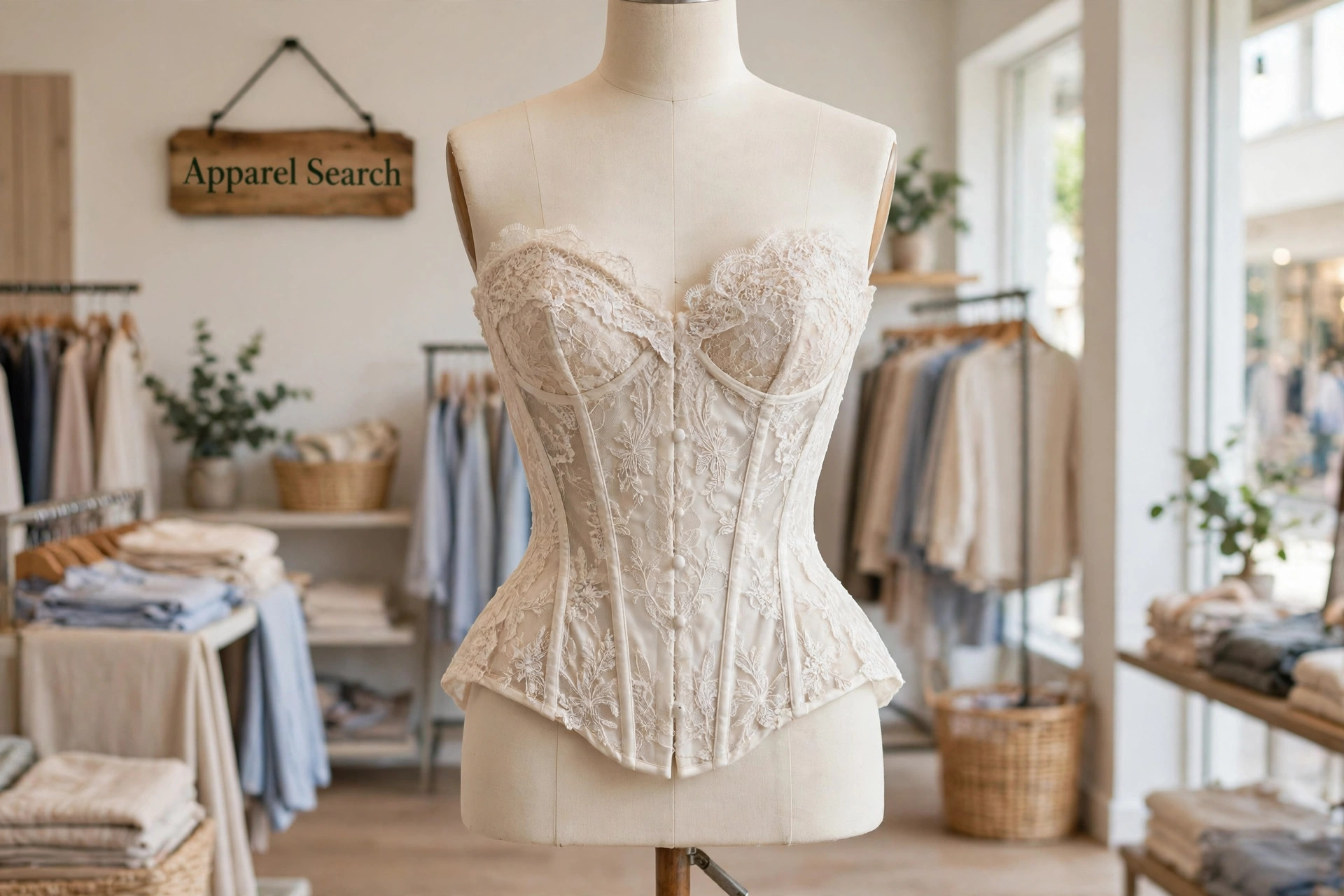
The Victorian Basque: A Fitted Jacket
In Victorian fashion, a basque was a long, fitted jacket for women — a tailored coat-like garment that followed the torso closely and extended below the waist in a shaped skirt. The word did double duty: it named the whole jacket, and it named the skirted part of the jacket itself, the extension that carried the fitted line down over the hips. On dresses as well as jackets, a basque bodice meant a bodice prolonged below the waist into points or a short skirt, a defining silhouette of mid-to-late 19th-century dress.
The basque belonged to the era's language of structured dress, alongside the fitted jacket and the shaped bodices worn over full skirts. Its shaping was achieved by cut and seam rather than by stretch — panels fitted to the body, often over the period's corsetry — which is why the word has always implied construction, not just closeness.
The Modern Basque: Lingerie
In current usage the basque has moved indoors. The modern basque is a fitted lingerie bodice, longer than a bra top and extending over the waist and often the hips, typically finished with the decorative vocabulary of underwear — frilly lace, cut-out designs and fine straps — and often fitted with suspender straps for stockings. The word can loosen further still: a "basque" reference in a garment description may point to lingerie-style details, such as lace edging or cut-outs, rather than to a separate bodice piece at all.
The modern garment sits in the underwear department alongside fishnet and lace hosiery, and its styling overlaps the world of fetish clothing — though the mainstream basque is simply decorative lingerie, sold wherever bridal and occasion underwear is sold. Shoppers comparing structured styles can browse our women's corset guide alongside it.
Basques, Corsets and Shaping
The basque's nearest relative is the corset, and the kinship is construction. Both are structured, close-fitting torso garments; both shape by panel and seam; and more structured basques borrow the corset's tools directly, with firm panels or light boning to smooth and support. The difference is one of degree and intent: a corset is built to reshape the waist, while a basque is built to fit and flatter the torso as it is, as a complete garment rather than as foundation wear.
That is also why the Victorian and modern meanings connect. The jacket's shaped panels and the lingerie's fitted bodice are the same tailoring idea at two levels of formality — which is why our fashion vocabulary and fashion synonyms pages treat basque as a term whose meaning depends on its century.
Choosing and Wearing a Basque
Fit is the whole garment, so choose by the torso: a basque should close smoothly, without digging at the waist or gaping at the bust, and its length over the hips should sit where the design intends rather than riding up. Structured versions give more shaping; softer lace versions give more comfort and decoration. Accurate measurements matter more than the size label, and the garment is best tried with the hosiery it will be worn with, since basques are usually part of a set — with stockings held by its suspenders, or over other hosiery.
The same close-fitting family includes the dance and gym staples shelved nearby in this section — the leotard, the unitard and the wider world of dancewear and dance costumes — all garments defined, like the basque, by following the body closely. Care follows the delicacy of the materials: lace and cut-out work wash best gently, by hand or in a protective bag, and the garment should be stored flat or hung so its shaping is not crushed. For the full list of neighbouring terms, return to the clothing definitions.
Not to Be Confused With
Basque vs. corset: a corset is a structured undergarment built to shape the waist, traditionally with boning and lacing. A modern basque is a fitted bodice-style lingerie piece — it may borrow the corset's shaping, but it is designed as a complete, decorative top garment in its own right.
Common Questions
What is a basque?
A basque is a women's tight, form-fitting bodice or coat. In Victorian fashion it named a long, fitted jacket, or the skirted part of one; today it names a fitted piece of lingerie, often finished with lace and cut-out details.
What was a basque in Victorian fashion?
In Victorian fashion a basque was respectable outerwear: a long, close-fitting jacket whose shaped extension below the waist was also called the basque. The close fit through the torso is the thread that connects that jacket to the modern lingerie garment of the same name.
How is a basque worn today?
The modern basque is worn as lingerie, usually as part of a set with stockings or other hosiery. Structured versions shape with firm panels or light boning; softer versions rely on lace and stretch fabric. Fit should be smooth, without digging at the waist or gaping at the bust.