Morning Dress
Clothing Definitions — definitions of garments and clothing terms from Apparel Search
Search Apparel Search
At a Glance
Definition: Morning dress is the most formal code of men's daytime dress, centred on the morning coat worn with striped trousers, a waistcoat, a formal shirt and tie, and traditionally a top hat.
Category: Clothing Definitions
Word Origin
The name records when the dress was worn, not what it looks like: the morning hours were when a gentleman rode, paid calls and did the formal business of the day, and the dress fixed for those hours kept the name even after it became all-day formal wear for occasions held before evening.
Morning dress is a dress code, not a single garment: the most formal clothing a man wears by day, second in formality only to court dress. Despite its name it is not confined to the morning — it is worn at formal events held before evening, principally weddings, funerals, investitures, memorial services and race meetings such as Royal Ascot. Its centrepiece is the morning coat; everything else in the outfit — trousers, waistcoat, shirt, tie, shoes and hat — is prescribed around it. This page sets out the code; the coat itself has its own page.
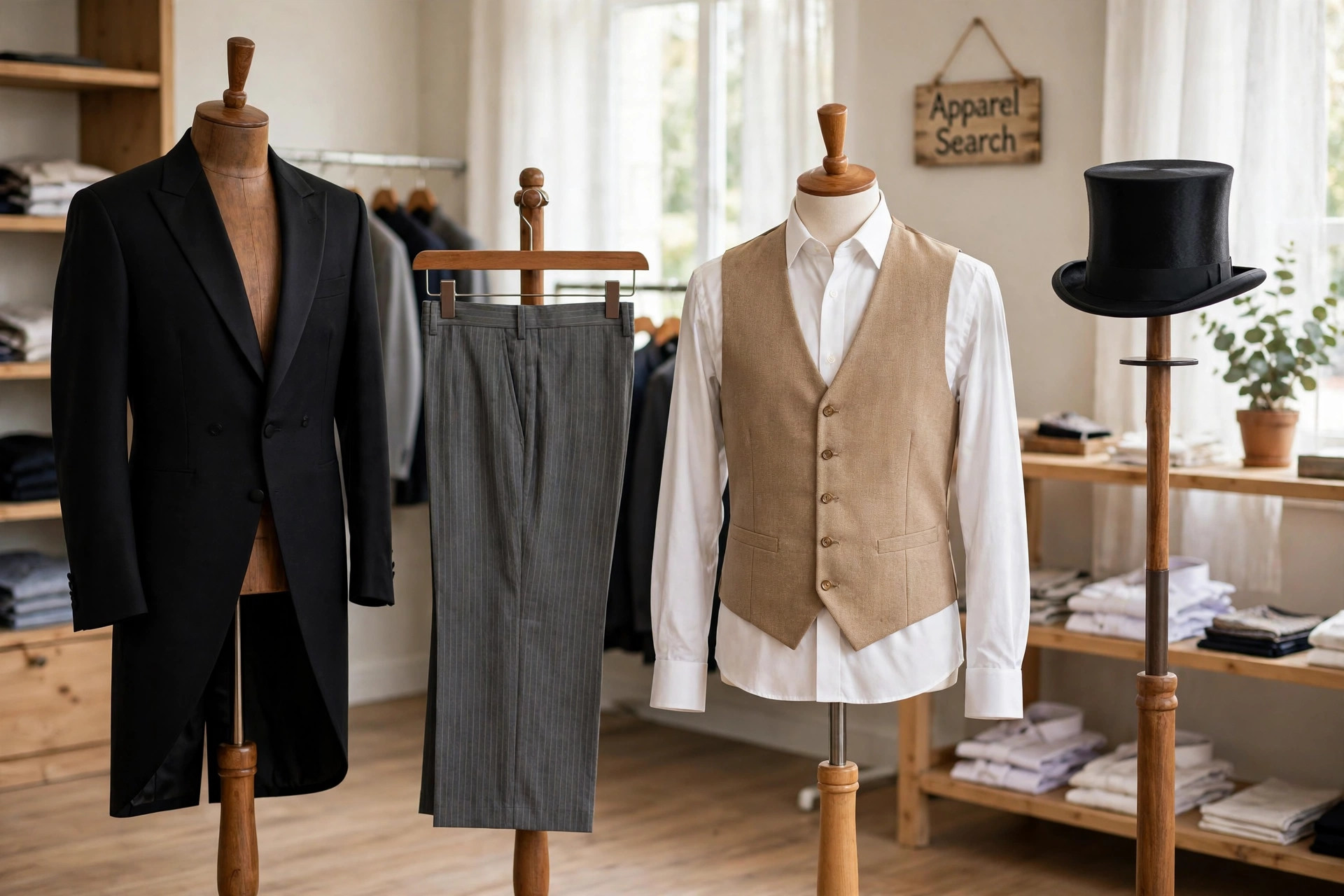
The Components of the Code
The standard form begins with the morning coat in black, worn with formal trousers in a grey cashmere stripe — the pairing so standard that a black coat almost automatically means striped trousers. Beneath the coat goes a waistcoat, single- or double-breasted, in buff, dove grey or white as the usual choices, with black reserved as the most formal option for funerals, memorial services and wear with academic dress. A white slip — a narrow under-waistcoat showing just inside the waistcoat's opening — is an occasional traditional extra. Coloured and patterned waistcoats appear at weddings, where the code relaxes a little, but not at funerals.
The shirt is double-cuffed, fastened with cufflinks, and normally white — if a coloured or striped shirt is worn, the cuffs and the stiff collar should still be white. The collar is usually the plain turned-down kind; a wing collar goes with the Ascot cravat. The tie, once restricted to grey or, at funerals, black, is now worn in most colours at weddings. Trousers are worn without turn-ups, with a single pleat to each leg, and held by braces so no waistband shows beneath the waistcoat. Shoes are black Oxfords, highly polished or in patent leather; a black silk or grey top hat and formal gloves in suede, chamois or kid complete the dress outdoors.
Morning Grey and the Occasions
The code has one recognised variant: morning grey, in which coat, waistcoat and trousers are all grey and worn as a matching suit instead of the black coat with stripes. It is lighter in feeling and belongs to summer racing — it is the traditional dress for the Thursday of Royal Ascot — and to summer weddings. The full black form remains the choice for funerals, memorial services and the most formal official occasions, where colour in the waistcoat or tie would be out of place.
The occasions explain the code's survival. Morning dress is specified by name on invitations to royal and state ceremonies, required in the Royal Enclosure at Ascot, and still the expected dress for formal British weddings and funerals; it also appears at formal race meetings and civic occasions in other countries that inherited the British code. Spats, once frequently seen with it, have effectively disappeared. Because few men wear it often, most outfits are hired complete — the code's precision is exactly what makes hiring it straightforward.
Morning Dress Among the Dress Codes
Morning dress sits at the head of the daytime codes in the system of formal wear. Its evening counterpart is white tie — the evening dress of tailcoat and white waistcoat worn after dark — and the boundary between them is the time of day, not the importance of the event: the same wedding held in the evening would call for evening dress instead. Black tie, the dinner jacket code defined on the Tuxedos page, stands one step below white tie in the evening, as the lounge suit stands below morning dress by day. The whole outfit, bought or hired as a set, is also covered by the site's guide to the morning suit.
Two practical notes complete the code. First, morning dress is daytime dress however grand the event: it is not worn to an evening function, and guests who arrive in it after dark have misread the invitation. Second, the code is worn whole or not at all — the lounge suit is the correct fallback for a man without the full outfit, since a morning coat with ordinary trousers, or striped trousers without the coat, reads as costume rather than dress. Hired as a set, coat, waistcoat, trousers, shirt and hat together, it remains the most completely specified outfit in the modern wardrobe.
Not to Be Confused With
The code and its chief garment share a name and are often used as if they were the same thing. Morning dress is the whole formal daytime code — coat, striped trousers, waistcoat, shirt, tie, shoes and hat, worn as one prescribed outfit. The morning coat is a single garment within it: the one-button coat whose fronts cut away into tails. A man wears morning dress; the coat is the most important thing he wears to do it.
Common Questions
What is morning dress?
Morning dress is the men's formal daytime dress code, the most formal type of clothing worn outside court dress. It centres on the morning coat, worn with striped trousers, a waistcoat, a formal shirt and tie, and a top hat.
When is morning dress worn?
Despite its name, morning dress is worn for formal daytime events generally, not only in the morning: weddings, funerals, investitures, formal race meetings such as Royal Ascot, and official ceremonies, always before evening events.
What is morning grey?
Morning grey is the variant of morning dress in which all the principal pieces, coat, trousers and waistcoat, are grey instead of black coat and striped trousers. It is worn mainly at summer race meetings.