Jacobean Embroidery
Embroidery Definitions — definitions of embroidery techniques, stitches and needlework terms from Apparel Search
Jacobean embroidery refers to embroidery styles that flourished in the reign of King James I of England in the first quarter of the seventeenth century. The term is usually used today to describe a form of crewel embroidery used for furnishings, characterized by fanciful plant and animal shapes worked in a variety of stitches with two-ply wool yarn on linen. A popular motif in Jacobean embroidery is the Tree of Life.
The term is usually used today to describe a form of crewel embroidery used for furnishing characterized by fanciful plant and animal shapes worked in a variety of stitches with two-ply wool yarn on linen. A popular motif in Jacobean embroidery is the Tree of Life.
Origins
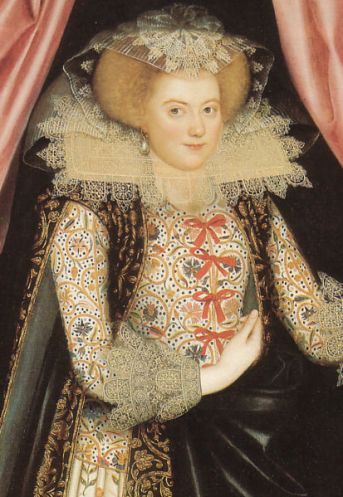
Early Jacobean embroidery often featured scrolling floral patterns worked in colored silks on linen, a fashion that arose in the later Elizabethan era. Embroidered jackets were fashionable for both men and women in the period 1600-1620, and several of these jackets have survived.
Legacy
Jacobean embroidery was carried by British colonists to Colonial America, where it flourished. The Deerfield embroidery movement of the 1890s revived interest in colonial and Jacobean styles of embroidery.
| The above article is licensed under the GNU Free Documentation License. From Wikipedia, the free encyclopedia (Crewel embroidery - Wikipedia, the free encyclopedia). 9/5/06 |
|
|
|
 |
A Name That Changed Its Meaning
Jacobean is a reign label that drifted. Strictly it names whatever flourished under James I in the first quarter of the 17th century, which included the silk-embroidered jackets of 1600 to 1620 — among the most splendid surviving English garments, their linen covered in scrolling flowers worked in colored silks. In the needlework trade today, however, the word almost always means the wool furnishing style: crewel embroidery of fanciful plants and animals in two-ply wool on linen, designed for hangings, curtains and bed furnishings rather than dress. Anyone reading a pattern, a museum label or a kit description has to judge from context which Jacobean is meant — the historical period or the crewel style that borrowed its name.
The Tree of Life and the Furnished Room
The Tree of Life organizes the classic Jacobean hanging: a central stem or mound from which improbable flowers, leaves, birds and insects grow at furnishing scale, none of them botanically consistent and all of them full of stitch variety — the variety is the display, since a large hanging in a limited stitch vocabulary would read flat at room distance. Wool on linen suits that scale: the thread covers quickly, stands in relief, and survives on curtains and bed hangings that silk dress embroidery never had to endure. Colonists carried the style to America, where it furnished colonial rooms in the same spirit, and the Deerfield movement of the 1890s, reviving colonial needlework, treated Jacobean designs as a heritage worth teaching again — a second life for a pattern language already two and a half centuries old.
Reading a Jacobean Design
A classic Jacobean hanging rewards reading from the mound up: earth, often worked as a stylised hillock, then stems that branch into leaves far larger than life, flowers that mix species on one stalk, and birds or insects perched without scale or gravity. The incoherence is deliberate — the design is a pattern-maker's garden, assembled for stitch interest, each shape offering a different filling or outline treatment. That is why the style teaches so well: a single hanging can contain stem, chain, satin, couched and seed work, a whole crewel vocabulary organized by one tree.
Common Questions
What does Jacobean embroidery look like?
In modern usage it means crewel furnishing embroidery: fanciful plant and animal shapes, flowing vines and leaves, worked in a variety of stitches with two-ply wool yarn on linen. A popular motif is the Tree of Life, from whose branches the stylised flowers, birds and animals of the design grow.
What was early Jacobean embroidery?
Early Jacobean embroidery often featured scrolling floral patterns worked in colored silks on linen, a fashion that arose in the later Elizabethan era. Embroidered jackets were fashionable for both men and women in the period 1600 to 1620, and several of these jackets have survived.
How did Jacobean embroidery reach America?
British colonists carried Jacobean embroidery to Colonial America, where it flourished as a furnishing style. The Deerfield embroidery movement of the 1890s revived interest in colonial and Jacobean styles, bringing the plant and animal crewel designs back into American needlework.
More to Explore
- embroidery
- crewel embroidery
- 1600-1650 in fashion
- Embroidery Stitch Definitions
- Counted-thread embroidery
- Drawn Thread Work
- Sewing Definition
- Sewing Needles
- Sewing Machinery Definition
- fabric Definition
- fiber Definition
- GNU Free Documentation License
- Crewel embroidery - Wikipedia, the free encyclopedia
- Clothing Model
- Fashion Calendar
- Embroidery Machinery Directory