Licensed Apparel Merchandiser Job Description
Merchandising licensed clothing lines — assortments, royalties and sales built around brands the company does not own
A licensed apparel merchandiser merchandises clothing lines built on licensed brands — characters, teams, labels and names the company rents rather than owns. The merchandising craft is the familiar one of range, quantity, price and timing, but every decision carries a second ledger: royalties owed on each sale, minimum guarantees to be earned out, licence terms that limit what may be sold where, and a property calendar of film releases, sports seasons and anniversaries that drives demand. Where the licensed apparel designer answers for how the product looks, the merchandiser answers for whether the licensed line pays. This page explains that commercial desk.
More Design Job Descriptions by Letter:
What a Licensed Apparel Merchandiser Does
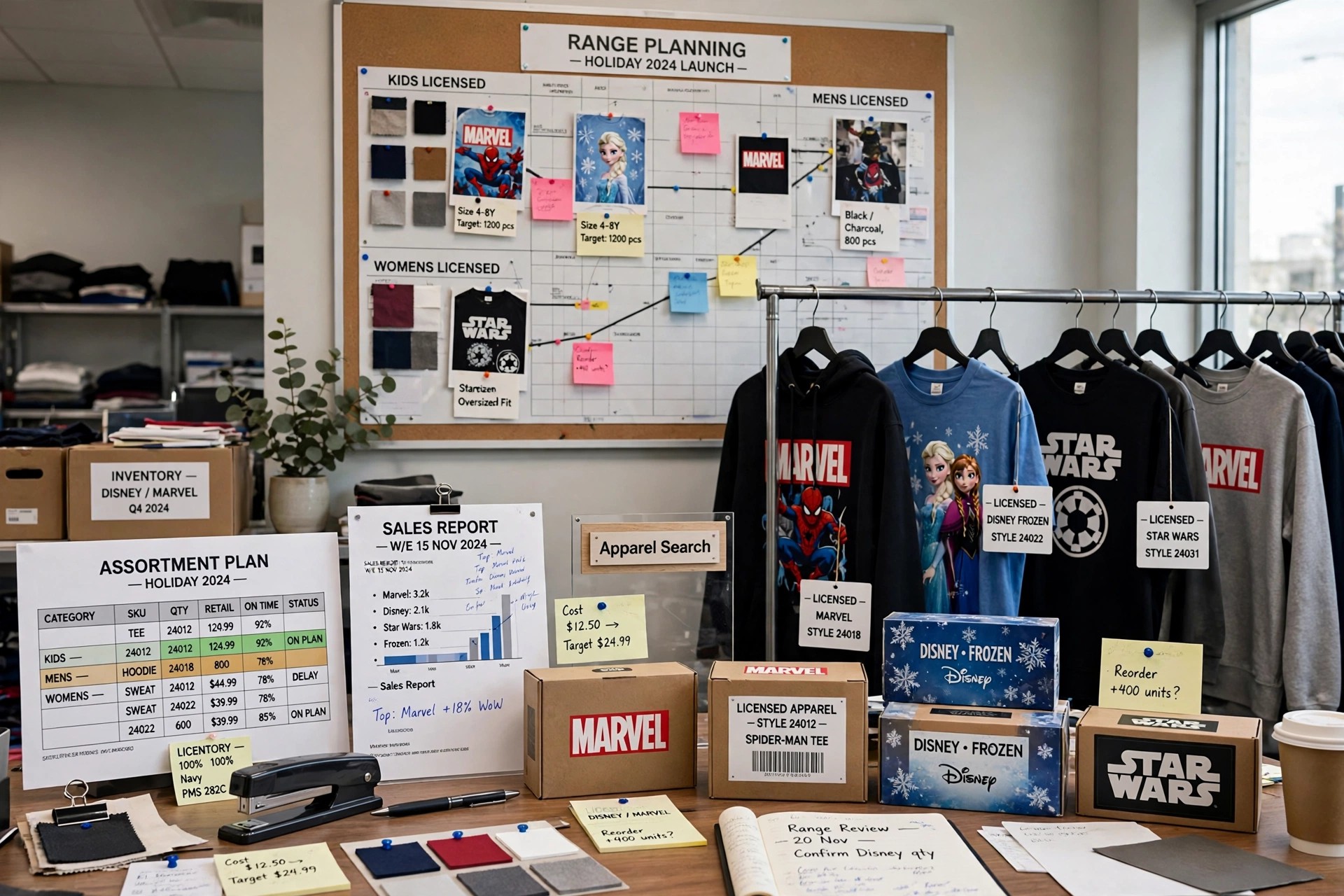
The merchandiser plans the licensed assortment: which properties in the company's portfolio get range space each season, which product categories and retail channels each property suits, at what prices and in what quantities. Property performance is read like any other range data — sell-through by character, category and channel — but with the licence clock audible throughout: a property approaching the end of its term, or cooling with its audience, gets a different commitment from one rising toward a major release. The merchandiser builds the range plan with the design team, agreeing the styles, volumes and delivery months that the licence terms and the sales forecast jointly support.
Licensor relationships are managed from this desk as much as from design. The merchandiser prepares the sales forecasts licensors require, reports actual sales for royalty accounting, tracks performance against minimum guarantees, and flags early when a property is underperforming its guarantee so the company can act — push distribution, adjust price, or plan an orderly exit at term end. Royalty rates, approval costs and guarantee shortfalls are part of the line's true margin, and the merchandiser who ignores them can build a range that sells well and still loses money.
Royalties, Guarantees and the Property Calendar
Licensed economics differ from own-brand economics in ways the merchandiser must hold in daily view. A royalty — a percentage of the wholesale or retail price — is owed on every licensed unit sold, and most agreements set a minimum guarantee: a floor of royalties the licensee must pay whether or not the goods sell. That structure changes range judgement. Guaranteed money pushes toward volume and reliable categories; royalty cost pushes prices up or margins down; and the sell-through bar for a licensed line is higher than for an identical unlicensed line, because the property's cut comes off before the company's profit begins.
Timing is the second special discipline. Licensed demand is event-driven to a degree ordinary fashion is not: a film release, a team's winning season, a game's launch or a property's anniversary can multiply demand for a few months and then subside. The merchandiser plans deliveries into those windows — which means committing quantities before the event proves itself — and plans the exit just as carefully, because licensed stock left after the moment passes, or after the licence expires, may not even be sellable. Clearance rules in the agreement, sell-off periods and destruction obligations for unsold licensed goods are working knowledge on this desk, not legal footnotes.
Skills and Abilities the Role Requires
Numerical merchandising skill is the base: range planning, forecasting, sell-through and margin analysis, and stock management across channels, all at the standard the general merchandising roles in this directory describe. The licensed specialism adds contract literacy — reading a licence agreement's commercial terms and knowing which of them bind daily decisions — and royalty arithmetic applied without error across thousands of units and several properties at once. Errors in royalty reporting are audit findings, and licensors do audit.
Judgement about properties is the desk's distinctive flair: sensing which characters, teams and brands will hold their audience, which are peaking, and which retail partner fits which property, then sizing commitments to that judgement under guarantee pressure. Communication skills bind it together — negotiating range space with retailers, forecasts with licensors, and priorities with the design team, whose creative enthusiasm for a property must sometimes be moderated by its royalty maths. It is merchandising with a second set of books, and the people who thrive on it enjoy exactly that double discipline.
Qualifications, Training and Career Path
Licensed apparel merchandisers typically arrive from general fashion merchandising or buying support roles, bringing range-planning and sales-analysis experience, and learn the licensing economics in post — frequently within a licensee company whose whole business is licensed product. Fashion business and merchandising qualifications provide the analytical base; short courses and professional reading in licensing practice are a recognised supplement. Employers look for accurate forecasters with clean reporting habits, because the licensor relationship runs on the numbers this desk produces.
Progression leads to senior merchandiser and merchandising management across a property portfolio, and sideways into licensing management — negotiating and managing the licences themselves — or into brand management on the licensor's side. The experience is also valued by entertainment, sport and retail companies building licensed programmes of their own. As brand extension into apparel continues to grow, the merchandiser who understands both fashion ranges and licence economics sits at a genuinely scarce intersection of skills.
Common Questions
How is licensed apparel merchandising different from ordinary merchandising?
The range craft is the same, but licensed lines carry royalties on every sale, minimum guarantees to earn out, term and territory limits, and demand driven by the property's calendar of releases and events — a second commercial ledger on every decision.
What is a minimum guarantee in licensing?
The floor of royalties a licensee promises to pay the property owner over the licence term whether or not the goods sell. The merchandiser tracks sales against it, because a line that misses its guarantee still owes the money.
How do you become a licensed apparel merchandiser?
Come through general fashion merchandising or buying support with strong forecasting and reporting skills, then learn licence economics — royalties, guarantees, terms and property calendars — in a licensee company or through licensing courses and professional reading.
More to Explore
- Clothing Industry Portal
- CAD Services
- Computer Assisted Design
- Fashion Schools and Education
- Fashion Careers
- Fashion Job Description Directory
- Fashion Employment Agencies
- Employment Search Engines
- Fashion Artists Guide
- Graphic Designers Guide
- Apparel Licensing
- Licensing Agents
- Licensing by Brand Name
- Licensing Companies
- Merchandising Clothing