Menswear Designer Job Description
Designing clothing for men — tailoring, casualwear and the detail discipline of the menswear market
A menswear designer designs clothing for the men's market: suits and tailoring, shirts, knitwear, trousers, denim, outerwear and the casual categories in between. Menswear is often described as a design discipline of inches and details — the customer changes his wardrobe more slowly than the womenswear customer, silhouettes evolve rather than flip, and a lapel width, a collar shape or a trouser break carries the design argument that a whole silhouette change carries elsewhere. That conservatism is deceptive: menswear design demands exact construction knowledge, deep fabric literacy and a precise sense of proportion. This page explains the role across its categories.
More Design Job Descriptions by Letter:
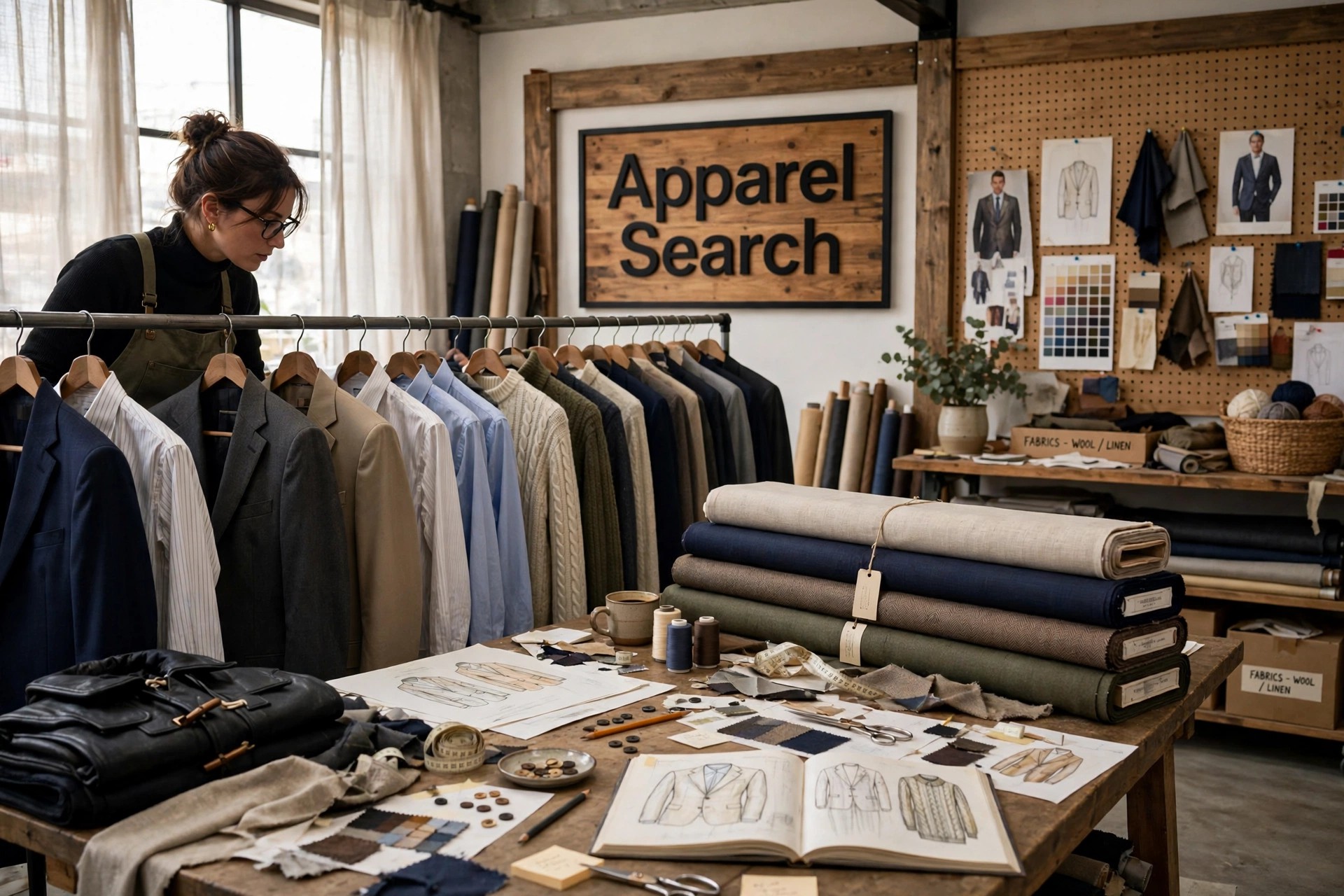
What a Menswear Designer Does
The designer builds seasonal ranges across the categories his brand serves, starting from fabric: menswear is fabric-led to a degree womenswear rarely matches, and ranges often begin at the mills, selecting suitings, shirtings, jersey and denim months ahead of design. Sketches develop each category against the range plan — the balance of tailoring to casualwear, core to fashion pieces, price points from entry to premium — and chosen styles are specified in tech packs covering construction in unusual detail: collar and lapel shapes, pocket styles, stitch types, button and trim specification, internal construction for tailored pieces.
Sampling and fitting follow menswear's own conventions. Tailored garments are fitted for structure — shoulder line, chest drape, sleeve pitch, trouser balance — while casual categories are fitted for ease and proportion across a size range that runs to tall and big fittings in many brands. The designer works with pattern cutters and factories through correction rounds, checks pre-production samples against sealed standards, and reviews the finished range as a wardrobe: menswear customers buy outfits and replacements, and ranges are merchandised and judged as systems of interchangeable pieces.
Tailoring, Categories and Construction Detail
Tailoring is menswear's technical heart. A jacket is an engineered garment — canvas or fused interlining shaping the chest, shoulder structure built from padding and sleeve-head rolls, lapels that roll to a chosen button point — and the menswear designer specifies that architecture, not just the cloth outside it. Half-canvas, full-canvas and unstructured constructions sit at different prices and feel entirely different on the body; trousers carry their own detail language of rises, pleats, waistband construction and break. Designers who cannot discuss construction with a tailor or factory lose control of their own product.
The casual categories have their own disciplines. Shirting turns on collar shapes, cuff and placket detail and cloth from poplin to flannel; knitwear on gauge, stitch and yarn character; denim on wash, fit blocks and hardware; outerwear on weatherproofing, lining and pocket engineering. Across all of them, menswear detailing is restrained but exact — a bartack, a buttonhole, a contrast under-collar is placed deliberately — and branding is typically quiet, carried in fit, fabric and small marks rather than prints. The designer learns each category's vocabulary and designs within it fluently.
Skills and Abilities the Role Requires
Construction knowledge leads: pattern literacy, tailoring architecture, and the ability to specify a garment so completely that a factory builds the intended product. Fabric knowledge is the second pillar — wool suitings and their weights and finishes, cotton shirtings, knit structures, denim and technical outerwear cloths — because menswear customers feel quality through cloth and make, and return what disappoints. Drawing and CAD present the ideas, but proportion judgement — the millimetre-level sense of collar, shoulder and length — is the talent portfolios are hired for.
Commercial understanding completes the profile. Menswear sells on replacement, fit loyalty and wardrobe building more than on novelty, so the designer protects proven blocks and best-selling styles, refreshes them in fabric and detail, and introduces change at the pace the customer accepts. Working calmly with pattern rooms, mills and overseas factories, reading sales by fit and size as design evidence, and presenting ranges in the market's understated language are all part of the working week.
Qualifications, Training and Career Path
Menswear designers typically hold fashion design qualifications, often with menswear-specific final collections, and enter through assistant designer roles in menswear brands, tailoring houses or retailers' own-brand menswear teams. Portfolios should show construction intelligence: tailored pieces as made garments, tech packs with real construction detail, and category range across shirting, knitwear or casualwear rather than tailoring alone. Time spent around tailoring — alterations rooms, bespoke workshops, factory visits — is education this market visibly respects.
The ladder runs to senior menswear designer and design direction of a menswear label or division, with specialisation available in tailoring, denim, sportswear and luxury menswear as distinct senior crafts. Skills transfer into product development, technical design and buying for menswear categories. In a market that rewards reliability and punishes gimmickry, the menswear designer's reputation is built slowly and kept the same way: range after range that fits, lasts and quietly improves.
Common Questions
How is menswear design different from womenswear design?
Menswear is more fabric-led and construction-led: silhouettes evolve slowly, so design argument is carried in cloth, fit and detail — lapel and collar shapes, tailoring construction, trouser balance — and customers buy for replacement and wardrobe building more than novelty.
Do menswear designers need tailoring knowledge?
Yes, in proportion to their categories. Even casualwear designers need pattern and construction literacy, and tailoring designers must specify internal architecture — canvas, shoulder structure, lapel roll — as confidently as the outer cloth.
How do you become a menswear designer?
Study fashion design with menswear work in your portfolio — made tailored garments and detailed tech packs carry weight — and enter through assistant roles in menswear brands or retailers' menswear teams, building fabric and construction knowledge category by category.
More to Explore
- Menswear Wholesale Directory
- Men's Clothes Guide
- Men's Clothing Brands
- Merchandising Clothing
- Fashion Artists Guide
- CAD Services
- Computer Assisted Design
- Fashion Job Description Directory
- Fashion Employment Agencies
- Employment Search Engines
- Fashion Schools and Education
- Fashion Careers
- Fashion Directory
- Fashion Industry News