Suit Designer Job Description
Designing suits and tailored clothing — canvas, lapels, fit and the architecture inside a jacket
A suit designer designs suits and tailored clothing: two- and three-piece suits, tailored jackets, tailored trousers and the coordinated tailoring a brand sells as its most constructed product. Where most fashion design works on cloth that hangs, tailoring design works on cloth that is built — a jacket has an internal architecture of canvas, padding and stitching that holds its shape on the body, and the suit designer specifies that architecture as deliberately as the silhouette outside it. The role sits inside menswear and womenswear tailoring labels, department-store tailoring ranges and made-to-measure operations. This page explains the work in full.
More Design Job Descriptions by Letter:
What a Suit Designer Does
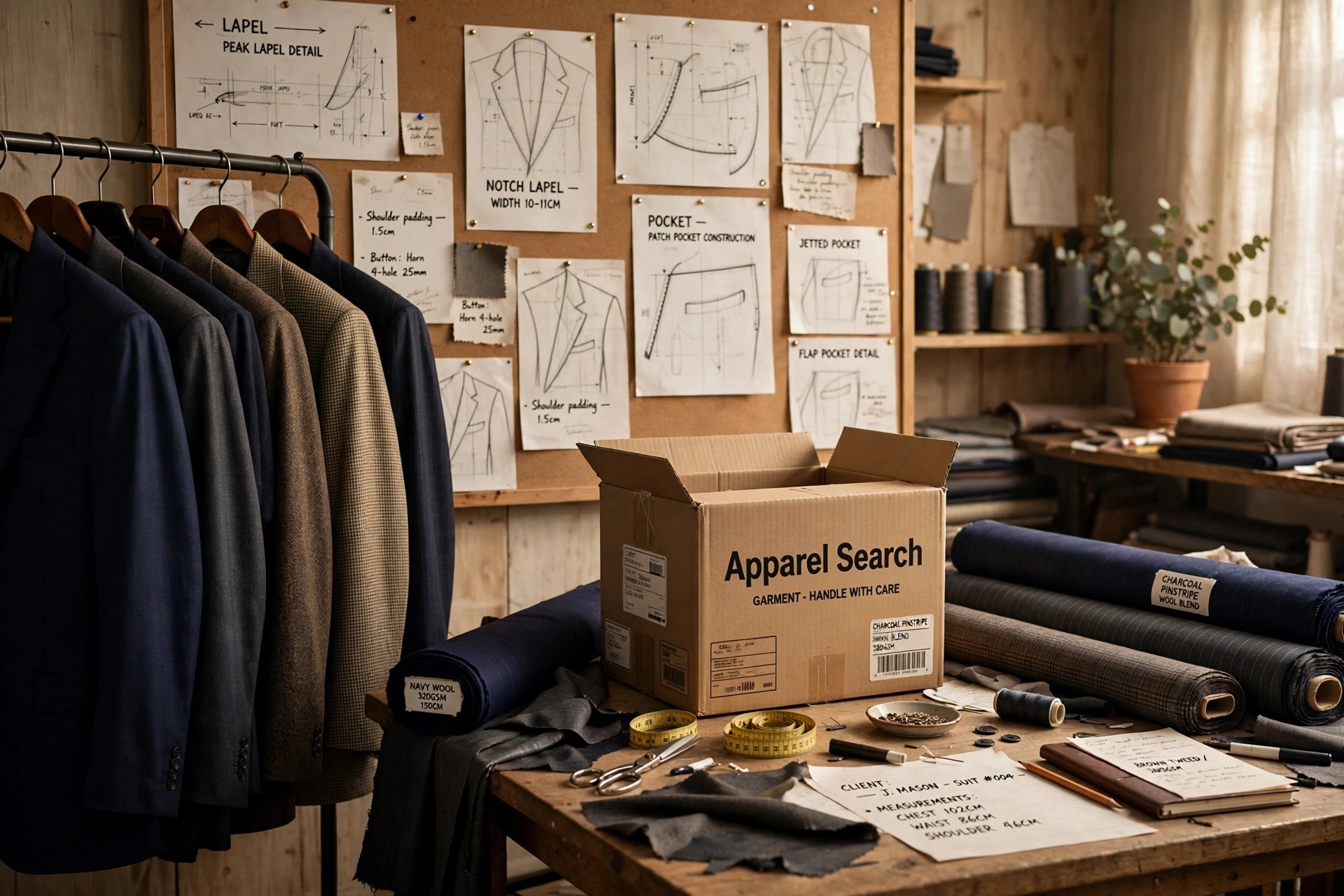
The season begins with the tailoring range plan: the suit blocks the brand will run, the price architecture from entry tailoring to premium cloth, and the balance of classic, slim and contemporary fits. The designer selects suiting fabrics at the mills — weight, weave, pattern and composition drive a tailoring range more than any other decision — and sketches each suit and jacket with its construction stated: lapel type and width, button stance, pocket configuration, vent, lining and trouser style. Nothing in tailoring is decorative by accident; every visible detail corresponds to a construction choice a factory must execute.
Development is fitting-led. Prototype jackets are assessed on the body for shoulder line, chest drape, sleeve pitch, collar fit and balance front to back, because a suit succeeds or fails in three dimensions and in movement. The designer works with pattern cutters through correction rounds, checks that trouser blocks grade with the jackets they accompany, and approves pre-production samples against a sealed standard covering cloth, construction and finish. Tailoring sells on trust — a customer who finds his fit returns for it season after season — so consistency of block and make is protected as a commercial asset, not only a technical one.
Construction: Canvas, Shoulders and Lapels
The jacket's interior is the suit designer's specialist territory. Full-canvas construction floats a horsehair-canvas chest piece inside the jacket so the chest shapes itself to the wearer over time; half-canvas and fused constructions trade some of that life for price and lightness, and the designer chooses the construction honestly for each price point. Shoulder expression — natural, soft, structured, roped — is built from padding and sleeve-head construction, not from the cloth, and it changes the entire character of a suit more than any surface detail.
The visible vocabulary sits on top of that structure. Lapels are designed by type (notch, peak, shawl), width, gorge height and roll line; button stance fixes where the jacket closes and how much shirt shows; pockets — flapped, jetted, welt, ticket — are placed to serve both use and proportion. Trousers carry their own construction language of rise, pleats, waistband build and break. A suit designer who cannot discuss these elements with a tailor, a pattern cutter and a factory in precise shared terms cannot control the product, however strong the sketches look.
Skills and Abilities the Role Requires
Pattern and construction literacy comes first — deeper here than in any other ready-to-wear category. The designer must read a fitting the way a tailor reads it, name the fault (a collar standing away, a sleeve pitching forward, a front edge swinging) and specify the correction. Fabric knowledge follows: wool and wool-blend suitings by weight, weave and finish, from high-twist travel cloths to flannels and luxury blends, and how each cloth behaves under canvas, pressing and wear.
Proportion judgement is the talent the category hires for: the millimetre-level sense of lapel width against chest, jacket length against trouser rise, pattern scale against the wearer's size. Commercial discipline completes the profile — tailoring ranges are planned in depth around proven blocks, changed at the pace a tailoring customer accepts, and costed exactly, because construction hours dominate a suit's price. The designer also works closely with the tailored clothing buyers and merchandisers who plan the range, and with made-to-measure teams where the brand offers personalised product.
Qualifications, Training and Career Path
Suit designers usually train in fashion design or menswear design, often with tailoring modules, and enter through assistant roles in tailoring brands, suit departments or bespoke-influenced labels. Time around real tailoring — alterations rooms, bespoke workshops, factory visits where canvas work can be seen — is education this market visibly respects. Portfolios should show made tailored garments, fittings documented, and technical drawings with genuine construction detail rather than styling sketches alone.
Progression runs to senior suit designer and design leadership of a tailoring label or a retailer's tailoring division. Specialisation deepens with experience: luxury and bespoke-influenced tailoring, made-to-measure programme design, and womenswear tailoring are distinct senior crafts within the same discipline. The skills also transfer into technical design and product development for structured garments. It is a specialism where reputation accumulates slowly and lasts, because a well-built suit is remembered by everyone who wore one.
Common Questions
How is a suit designer different from a menswear designer?
The menswear designer covers the whole men's wardrobe; the suit designer specialises in tailored clothing alone — suits, jackets and tailored trousers — and specifies the internal construction (canvas, shoulder build, lapel roll) as well as cloth and styling. Many suit designers work in womenswear tailoring as well as men's.
What does canvas mean in a suit jacket?
Canvas is the internal layer that gives a tailored jacket its chest shape. A full-canvas jacket carries a floating canvas chest piece that moulds to the wearer; half-canvas and fused constructions use less or bonded interlining at lower prices. Choosing and specifying the construction is core suit design work.
How do you become a suit designer?
Study fashion or menswear design with tailoring content, build a portfolio of made tailored garments with construction detail, and enter through assistant roles in tailoring brands or suit departments. Practical time around bespoke or alterations tailoring is a recognised advantage.
More to Explore
- Tailored Clothing Buyer Job Description
- Fashion Artists Guide
- Merchandising Clothing
- CAD Services
- Computer Assisted Design
- Fashion Job Description Directory
- Clothing Industry Portal
- Fashion Employment Agencies
- Employment Search Engines
- Fashion Schools and Education
- Fashion Careers
- Fashion Directory
- Fashion Industry News