Men's Swimwear Designer Job Description
Designing men's swim trunks, boardshorts and rash guards — waistbands, inseams, liners and quick-dry performance
A men's swimwear designer designs the garments men swim and surf in: swim trunks, boardshorts, swim briefs and jammers, and the rash guards and swim tops worn with them. The category looks simple — most of it is, outwardly, a short — and is engineered like equipment. A trunk must stay secure in surf, dry fast, move without binding, carry pockets that drain, and fit men who buy by waist size and expect the garment to work for several summers. This page describes the men's swimwear designer's work: the constructions, the fabrics and the market logic that shape the range.
More Design Job Descriptions by Letter:
What a Men's Swimwear Designer Does
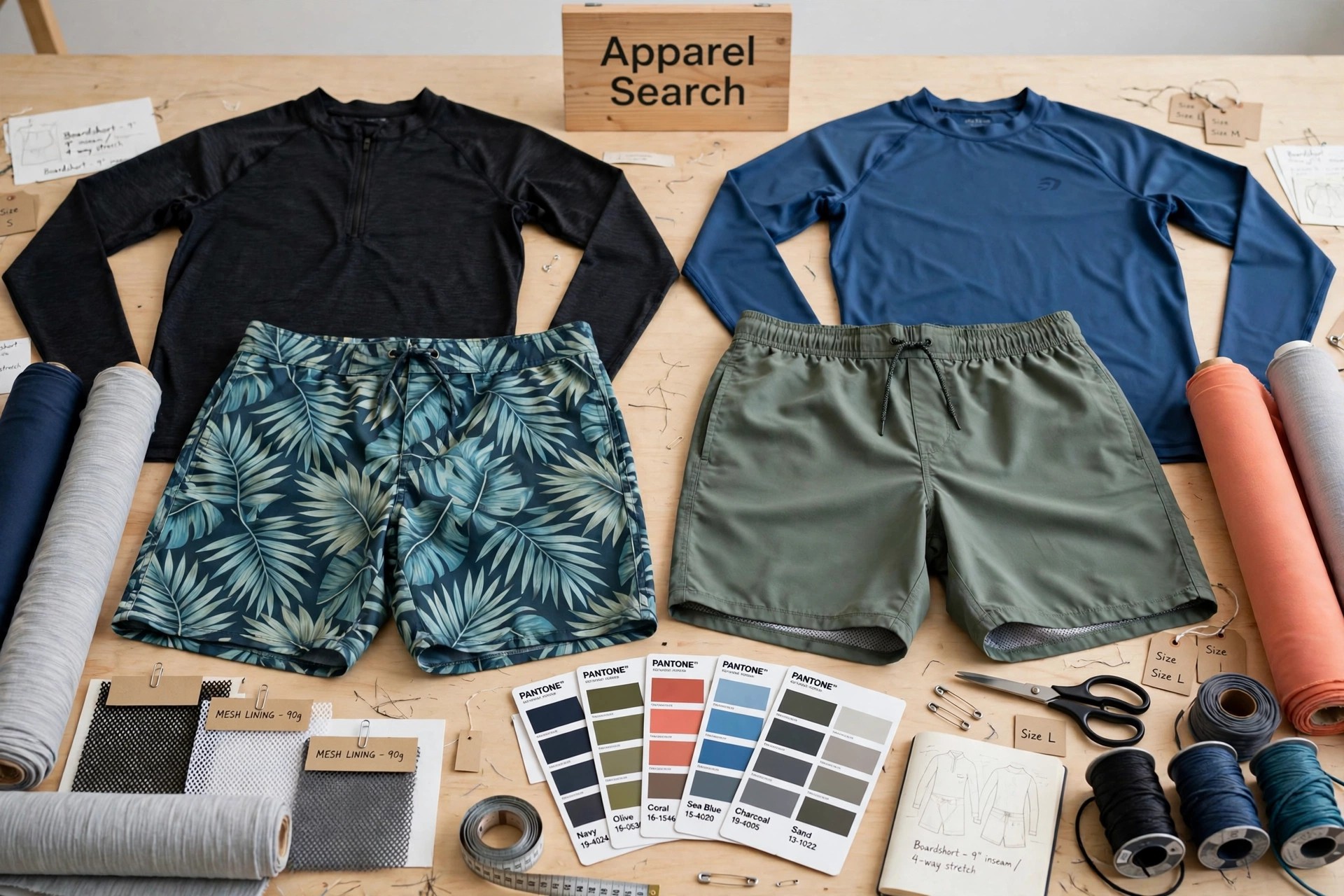
The designer builds the men's swim range by garment family and use: the classic elastic-waist trunk, the boardshort for surfing and beach sports, the tailored swim short that the premium market has made a category of its own, and athletic briefs and jammers for training and competition swimming. Each family has its own fit block and inseam lengths, and the range is planned across them by price and customer. Styles are specified completely — outer fabric, waistband system, liner, pockets, drawcord, hardware — because in a garment this small every component is visible in the product's performance.
Development is wear-tested with a user's suspicion. Samples are assessed in water and in movement: does the waistband hold when the wearer dives, does the leg bind when climbing out, do the pockets drain or balloon, does the fabric stay opaque and hold its colour. The designer corrects inseam and rise proportions across the waist-size range — men's swim is graded on waist measurement with fit expectations closer to trousers than to fashion shorts — and approves pre-production samples only when construction, fabric performance and fit all pass together.
Waistbands, Liners and Performance Fabrics
The waistband is the men's swim designer's signature construction problem, and the market offers three main answers. Elasticated waists with a drawcord are adjustable, forgiving and standard on trunks; flat-front boardshort waistbands close with hook-and-loop or lace-up fly systems and a fixed waist, fitting like a trouser and performing better in surf; hybrid tailored shorts use a structured waistband with hidden elastic or adjusters to look like a short and wear like a trunk. The designer chooses the system per style, specifies cord, eyelets and aglets that resist salt and chlorine, and engineers pockets — including mesh drainage and secure closures for keys and cards — into the garment's small real estate.
Fabric and liner decisions carry the performance. Quick-dry polyester and nylon fabrics, many with mechanical or elastane stretch, are specified by weight, drying behaviour and colourfastness to chlorine, salt and sun; four-way stretch serves boardshorts and athletic styles where movement is the product. The inner mesh liner brief — its fabric softness, support and leg elastication — decides comfort more than any other hidden component, and some styles replace it with a compression short liner or none at all for the tailored market. Rash guards extend the same fabric logic upward: stretch, flat seams against chafing, and sun-protection ratings stated honestly where the fabric is tested for them.
Skills and Abilities the Role Requires
Construction knowledge of small, hard-working garments heads the list: waistband systems, liner engineering, pocket drainage, and the pattern grading that keeps fit honest across waist sizes. Fabric judgement follows — quick-dry behaviour, stretch and recovery, chlorine and salt resistance, print durability — because men's swim customers keep garments for years and punish fading and sagging in reviews and repeat buying. Print and colour skill matters commercially: men's swim sells on a legible ladder from core solids through seasonal prints, and the designer builds that ladder so the range reads clearly at retail.
The working skills are those of a performance category. The designer collaborates with specialist swim and surf factories, reads wear-test and returns evidence by size and style, and manages the category's calendar — ranges committed early for a short, weather-sensitive season. Understanding the distinct customers inside men's swim — the family holiday buyer, the surfer, the lap swimmer, the tailored-short customer — and designing each family's details for its user, rather than styling one short four ways, is the judgement that separates the specialist from the generalist.
Qualifications, Training and Career Path
Men's swimwear designers usually train in fashion or menswear design, often with sportswear or contour content, and enter through assistant roles with swim, surf and active brands, sports retailers or menswear labels with a swim category. Portfolios that work in this market show constructed garments — waistband and liner solutions drawn and made, fabric choices defended with performance reasoning — and any practical understanding of surfing, swimming or beach sports as a user is a genuine advantage at interview.
Progression runs to designer and senior designer owning a men's swim range, and toward design leadership across men's swim, surf and beach categories. The expertise transfers into men's activewear and shorts categories, where the same waistband, fabric and fit science applies year-round, and experienced men's swim designers are also recruited by boardshort and surf specialists whose whole business is this garment family. It is a narrow specialism with deep product knowledge, and the designers who hold it are valued accordingly.
Common Questions
What waistband systems do men's swim shorts use?
Three main systems: elasticated waists with a drawcord (adjustable, standard on trunks), flat-front boardshort waistbands with hook-and-loop or lace-up closures (a fixed, trouser-like fit for surf), and structured tailored waistbands with hidden adjustment. The designer specifies the system, cord and hardware for each style.
Why do men's swim trunks have a mesh liner?
The mesh brief liner provides support and modesty in a lightweight garment with no underwear layer, and drains quickly. Its fabric softness and leg elastication decide the garment's comfort; some styles use a compression liner or, in tailored swim shorts, no liner at all.
How do you become a men's swimwear designer?
Train in fashion or menswear design, build a portfolio showing constructed swim garments with waistband, liner and fabric decisions explained, and enter through assistant roles with swim, surf, active or menswear brands that run a swim category.
More to Explore
- Swimwear Factories — CMT Swimwear
- Men's Swimwear Wholesalers
- Women's Swimwear Wholesalers
- Men's Swimwear Stores
- Women's Swimwear Colours
- Merchandising Clothing
- Fashion Artists Guide
- Computer Assisted Design
- CAD Services
- Fashion Job Description Directory
- Fashion Employment Agencies
- Employment Search Engines
- Fashion Schools and Education
- Fashion Careers
- Fashion Directory
- Fashion Industry News
- Clothing Industry Portal