Textile Designer Job Description
Designing the fabrics themselves — print, weave, colour and surface for the cloth every garment starts from
A textile designer designs fabrics: the prints, weaves, knits, colours and surfaces that garment designers then cut into clothing. Every floral dress began as a textile designer's repeat pattern; every checked shirt as a woven design specified yarn by yarn. Textile designers work for fabric mills and converters, for fashion brands with in-house fabric teams, for print studios that sell artwork to the industry, and across interiors as well as apparel. It is fashion's upstream design profession — one step closer to the material than the garment designer, and just as creative. This page explains the discipline as a whole.
More Design Job Descriptions by Letter:
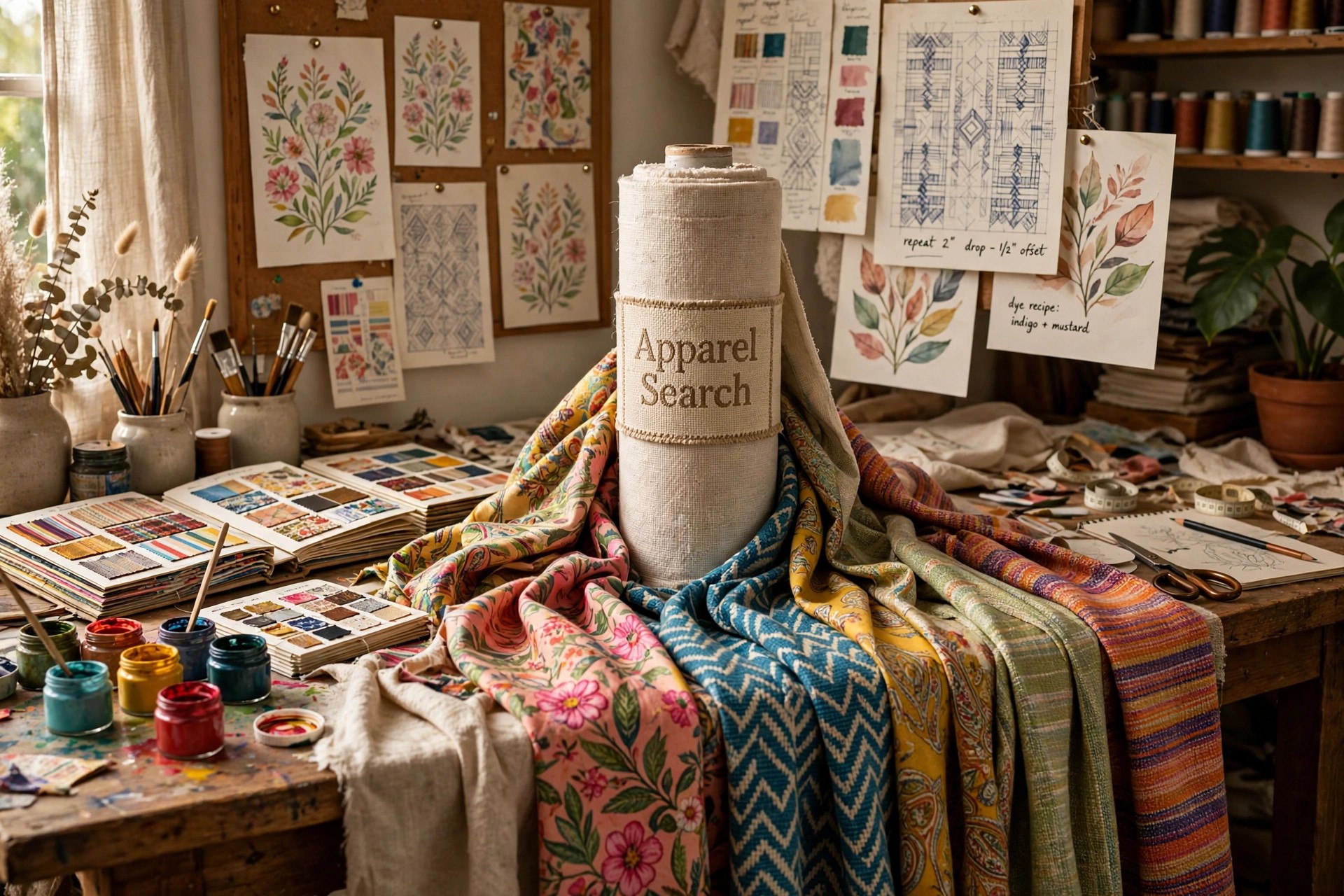
What a Textile Designer Does
The work divides by fabric family. Print designers create artwork — motifs drawn, painted or built digitally — and engineer it into seamless repeats and colourways for rotary, screen or digital printing. Woven designers specify yarns, weave structures and colour orders that become checks, stripes, jacquards and textured cloths on the loom. Knit designers create stitch structures and colourwork for knitted fabrics. Many designers work across two families; all of them design with the fabric's end use open on the desk, because a print that delights on paper can fail at garment scale, on a moving body, in a fabric that drapes differently from the proof.
Development runs through mills and sampling. Designs are sent as artwork files or woven specifications, returned as strike-offs, blanket trials or loom samples, and corrected for colour, scale and handle until the fabric is approved for bulk. The designer tracks each design's production behaviour — how a colour prints on this ground, how a weave shrinks in finishing — and builds collections seasonally: coordinated stories of prints, weaves and plains at qualities and prices matched to the customers who will buy the cloth, whether those customers are fashion brands, retailers or garment manufacturers.
Repeats, Colourways and Designing for Production
Repeat engineering is the print designer's core technical craft. A motif is arranged into a tile that joins invisibly at every edge — by block, half-drop or mirror repeats — at a size set by the printing method and the garment's scale. Colourways multiply each design across the season's palettes, with separations prepared so each print colour becomes one screen or one digital channel, and registration held to production tolerances. Woven design has its own equivalent rigour: ends and picks, yarn counts and colour sequences calculated so the cloth in bulk matches the sample the customer approved.
Production realism separates professional textile design from surface illustration. The designer knows the cost and constraint of each route — how many colours a rotary screen print can carry, what digital printing charges by coverage, which weave structures a mill's looms run well — and designs inside those economics rather than discovering them at sampling. CAD systems built for textiles handle repeats, colourways and weave simulation, and fluency in them is standard; but the judgements that matter — scale on a body, colour under shop light, handle against skin — are still made on real fabric, by hand and eye.
Skills and Abilities the Role Requires
Drawing and colour are the visible talents: motif development in a hand the market wants, and colour judgement strong enough to build colourways that sell in several palettes at once. Beneath them sits the technical layer — repeat construction, separations, weave and knit structure knowledge, fabric behaviour in finishing and wear — without which designs cannot survive production. Employers test for both halves: a portfolio of beautiful artwork that cannot repeat is a known disappointment in this industry, and hiring managers look for the engineering evidence alongside the art.
Commercial awareness completes the profile. Studio designers sell artwork to buyers who choose in seconds at trade presentations, so presentation and range-building matter; mill designers design to qualities and prices their customers can sell; brand designers develop fabrics exclusively enough to justify the development cost. All of them manage collections against seasonal calendars, keep design archives and version records immaculate, and follow fabric-level trends — fibre, finish, sustainability certification and hand-feel — as closely as garment designers follow silhouette.
Qualifications, Training and Career Path
Textile designers usually hold degrees in textile design, surface pattern or woven and knitted textiles, and entry routes match the three employer types: design studios take juniors who can draw and repeat to production standard; mills take designers who understand their looms or print tables; brands take both into fabric development teams. Portfolios should show finished fabric, not only artwork — repeats demonstrated, colourways worked, cloth sampled where possible — because the fabric is the product being hired for.
Progression runs to senior textile designer and design leadership of a mill, studio or brand fabric team, with specialisation deepening into print, weave or knit as distinct senior crafts — the knit and woven specialisms have their own pages in this directory. Studio designers also build freelance and licensing careers, selling collections internationally. The discipline sits upstream of every garment, so its skills remain in demand wherever cloth is designed: apparel, interiors, and the growing technical textiles field alike.
Common Questions
What does a textile designer actually design?
Fabrics. Print designers create repeat artwork and colourways; woven designers specify yarns and weave structures for checks, stripes and jacquards; knit designers create stitch structures and colourwork. The output is cloth — sampled, corrected and approved with mills — that garment designers then use.
What is a seamless repeat?
A pattern tile engineered so its edges join invisibly when repeated across fabric: motifs crossing one edge re-enter on the opposite edge, producing continuous pattern with no visible grid. Building clean repeats at production scale, in the repeat size the printing method requires, is a core textile design skill.
How do you become a textile designer?
Study textile design or surface pattern, build a portfolio showing finished fabric thinking — repeats, colourways and sampled cloth, not only artwork — and enter through a print studio, a mill design team or a brand's fabric development team in a junior role.
More to Explore
- Merchandising Clothing
- Fashion Artists Guide
- Computer Assisted Design
- CAD Services
- Fabric Mills
- Textile Industry Guide
- Fashion Job Description Directory
- Fashion Employment Agencies
- Employment Search Engines
- Fashion Schools and Education
- Fashion Careers
- Fashion Directory
- Fashion Industry News
- Clothing Industry Portal