Window Display Job Description
The hands-on craft of building windows — dressing mannequins, rigging props, focusing light and finishing to the glass
Window display is the physical craft that turns a scheme on paper into the scene behind the glass. Its practitioners build backdrops, rig props from ceilings, dress mannequins until the garments sit as if worn by an invisible body, focus every spotlight by hand, and finish the window down to the last pin, price ticket and fingerprint on the glass — frequently through the night, so a store wakes to a new season. Where window design is done at a desk, window display is done on knees, ladders and lifting platforms, and its quality is judged in millimetres by anyone who cares to look closely.
Window display sits inside the wider discipline covered by the Apparel Search Visual Merchandising Guide — window display design, clothing store layout, planograms, mannequins and retail lighting — for readers who want the design thinking behind the scenes this craft builds.
More Design Job Descriptions by Letter:
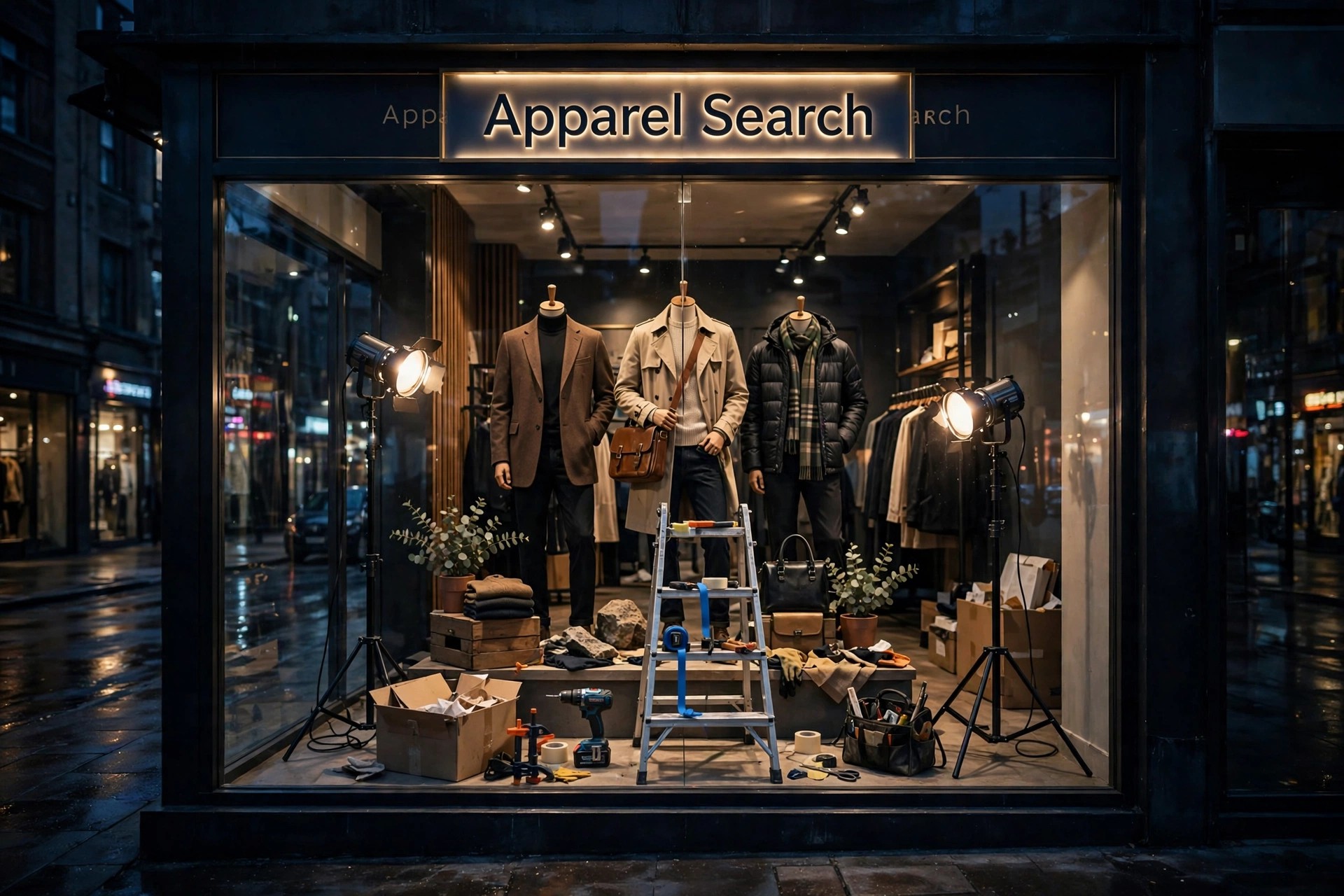
Building the Window: From Empty Box to Finished Scene
An installation begins with a strip-out: the previous scheme's props, graphics and stock are removed, the window box cleaned and repaired, and the new scheme's structures built in sequence — backdrop and flooring first, then large props and rigged elements, then mannequin positions marked and lighting rough-set before a single garment enters. Display workers read the designer's drawings and installation pack, measure against the real window (which never quite matches its plan), and solve the discrepancies on the spot with the carpenter's and electrician's improvisation the trade expects.
Rigging is the invisible engineering of the craft. Objects hang, float and balance in windows by wire, monofilament, magnets and hidden armatures, each fixing judged for strength, safety and invisibility from the pavement. A suspended element that sags two centimetres by morning, or catches light on its wire, marks the difference between competent and careless display work, and senior practitioners carry a personal toolkit of fixings knowledge accumulated over hundreds of installs.
Dressing Mannequins and Handling Garments
Dressing is the craft's signature skill. A mannequin must be assembled, the garment fitted to its form with pins, padding and hidden tape so cloth falls as it would on a moving person, sleeves and hems arranged with deliberate gesture, and the whole figure styled — footwear, accessories, bag placed in hand — before being carried, already dressed, into position without disturbing a fold. Garments are steamed or pressed beforehand, checked for damage and security-tagged appropriately, and the display worker protects stock throughout: what is in the window remains saleable merchandise, not a prop to be sacrificed.
Grouping figures is composition performed at full scale and real weight. Poses are angled to the sightlines from the street, heights varied, spacing adjusted by stepping outside and reading the window as a passer-by — the craft's essential discipline, repeated dozens of times per install, of viewing the work from the customer's side of the glass rather than from inside it.
Lighting, Pinning and the Finishing Details
Once the scene stands, the window is finished under light. Display workers focus each spotlight — angle, spread and intensity — modelling the mannequins, carving depth out of the box and killing reflections where possible, then view the result from the street in daylight and darkness, since a window lives in both. Graphics and vinyl lettering are applied bubble-free and level; price and promotional tickets are placed to regulation; floor and glass are cleaned last, inside and out.
The finishing pass is where professional pride concentrates: hems re-pinned, a collar lifted, dust lifted from a plinth, a prop nudged the width of a hand. Photographs are taken for the record and for head-office sign-off, and the install pack is annotated with every deviation made on site, so maintenance and other stores inherit the knowledge.
Installation Nights, Safety and Maintenance
The working pattern is dictated by trading: windows change when the public is absent, so overnight and pre-dawn shifts, weekend changeovers and seasonal all-night installs are normal. The work is physical — lifting mannequins and props, ladder work, tool use — and governed by safety practice around working at height, electrical fittings, manual handling and public protection where pavement work is needed. Between campaigns the same teams maintain windows: replacing failed lamps, repairing damage, rotating stock so garments do not fade unevenly, refreshing graphics and keeping the scene at its opening standard for its whole run.
Skills With Hands and Eyes
Employers look for demonstrable manual craft — building, painting, sewing basics, confident tool handling — combined with a stylist's eye for how clothes should sit and group. Problem-solving under time pressure matters nightly; so does care, because the materials include both fragile props and expensive merchandise. A driving licence and willingness to travel between stores are common requirements in field display teams, and basic electrical and rigging competence, formally certified where regulations require, extends a display worker's usefulness considerably.
Training Routes and Career Path
Entry is commonly as a display assistant or trainee within a retailer's visual team, an agency crew or a prop-making workshop, learning by installing alongside experienced practitioners; display, visual merchandising and theatre production courses provide a second route and a portfolio of built work. Progression runs to display specialist, senior installer leading changeover crews, and toward window design or visual merchandising management for those who develop the planning side. The craft also feeds exhibition building, film and theatre set dressing, and event installation, where the same speed, rigging and finishing standards apply.
Common Questions
Is window display a physical job?
Very. It involves lifting and carrying mannequins and props, ladder work, building and painting, and long overnight installation shifts on your feet. Craft skill matters, but fitness and stamina are genuine job requirements.
What is the difference between window display and window design?
Display is the realisation: building, rigging, dressing, lighting and finishing the window in the glass. Design is the prior conception and specification of the scheme. This page covers the hands-on craft; the design role has its own page in this directory.
Do window display workers work at night?
Frequently. Changeovers happen outside trading hours so stores open with finished windows, which means overnight and early-morning shifts are a normal, expected part of the job, especially at seasonal launches.