Fashion Publicist Job Description
Earning fashion its coverage — pitching designers and collections to the editors, stylists and creators who decide what the public sees
A fashion publicist works to get a designer, brand or retailer covered — favourably and often — by the media its customers read and watch. The publicist pitches stories and products to magazine and newspaper editors, digital journalists, stylists and creators; lends the samples those people photograph and film; stages the press days and events where collections are presented; and reports the coverage earned back to the client. Publicists work in fashion brands' in-house teams and in public relations agencies representing several labels. The role is the mirror image of the fashion editor's desk: where the editor chooses what to publish, the publicist competes to be chosen. This page explains the publicity desk.
More Marketing Job Descriptions by Letter:
What a Fashion Publicist Does
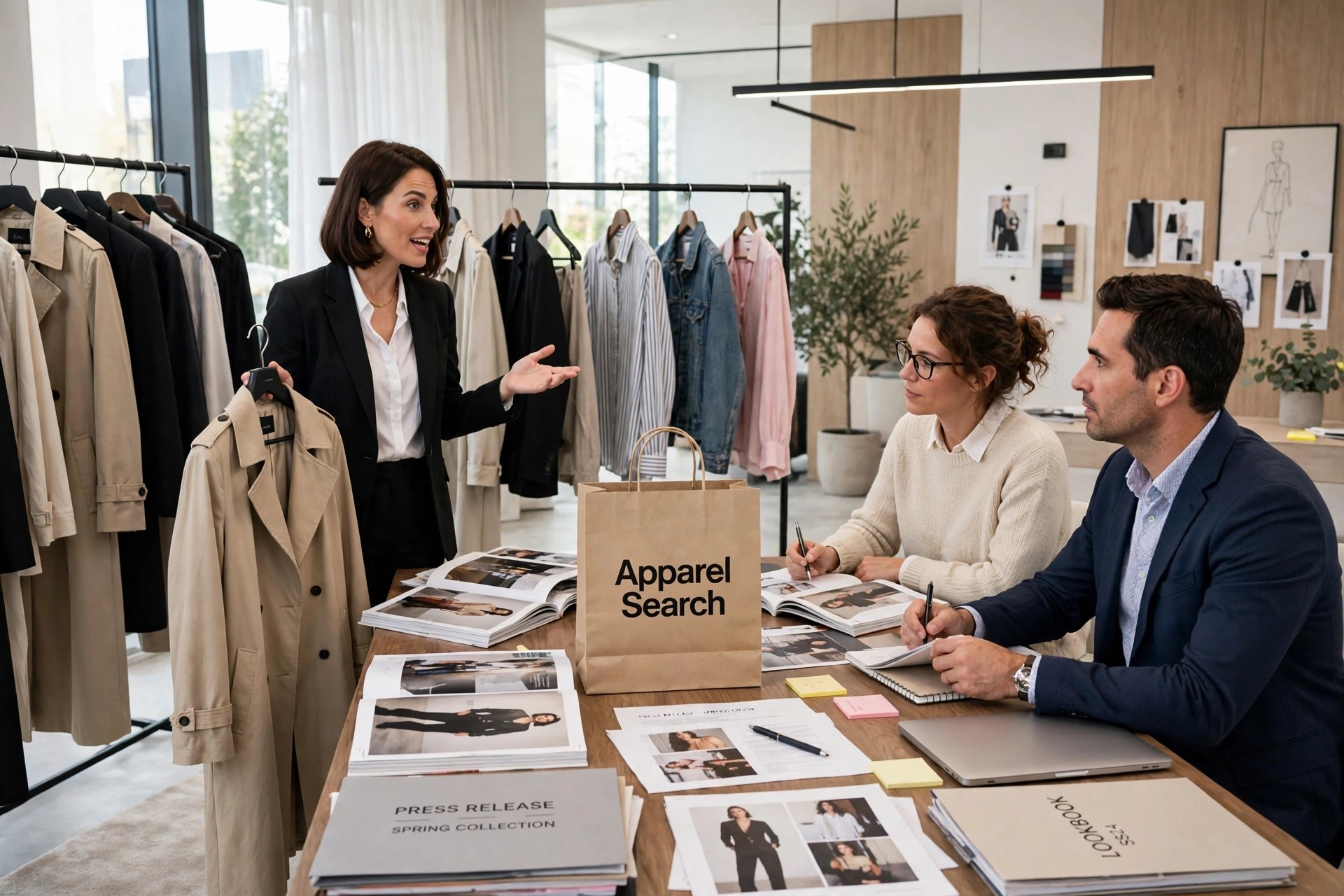
Pitching is the daily core. The publicist maintains a living knowledge of who edits, writes and styles what — which editor is planning a tailoring story, which stylist is shooting summer dresses, which creator's audience matches a launch — and approaches each with the right product, angle and timing, by release, by personal note and by showroom appointment. Press releases and media alerts carry the formal news — collections, openings, collaborations, appointments — written in a form journalists can lift from without rewriting, with images, prices and availability checked before they leave the office.
Samples are the publicist's physical stock. The press sample set — often the only complete set of a collection outside the sales line — is lent, tracked, chased and recovered through a constant traffic of editorial loans: out to a shoot, back in time for a press day, out again to a stylist, each movement logged because a lost sample can mean a lost cover. Around that traffic the publicist runs press days and launch events, prepares briefing documents and lookbooks, answers journalists' price and stockist questions against deadline, and compiles the coverage reports that prove the work: every page, post and mention, valued and presented to the client.
Media Relationships and the Coverage Business
Publicity runs on relationships, and building them is slow, deliberate work: knowing editors' tastes and deadlines, being useful without being a nuisance, telling a journalist honestly when a product is not right for their story, and delivering exactly what was promised, when it was promised. That trust is why a good publicist can place a young designer in a major title — the editor takes the call because past calls were worth taking. The reverse is also true, which is why publicists guard their credibility with the media as carefully as their clients' images.
The work environment is the showroom and the media round: press days, collection appointments, lunches and launches, launches' follow-up and the permanent hum of sample traffic, all peaking in the collections seasons when every client wants coverage in the same weeks. Agency publicists divide their attention across several brands; in-house publicists go deep on one. Crisis work belongs to the desk as well — a product fault, a misjudged campaign, a difficult news story — where the publicist's counsel and speed can decide how much damage a brand takes in public.
Skills and Abilities the Role Requires
Communication is the whole toolkit: pitching in writing that an editor finishes reading, presenting a collection in a showroom with genuine product knowledge, and speaking for a brand on the telephone against a journalist's deadline. Media literacy is its foundation — reading the titles, sites and feeds the publicist pitches to, understanding their audiences and formats well enough to propose only what fits. Organisation carries the sample traffic and the follow-up discipline that separates placed coverage from hopeful emails.
Fashion knowledge and taste support every approach: the publicist must talk about a collection as fluently as its designer does, know which pieces editors will reach for, and sense which story angles the season supports. Resilience matters as much as charm — most pitches are declined, politely or silently, and the publicist's craft is to keep the quality of approach high without taking refusal personally. Discretion is absolute: embargoed collections, unpublished prices and clients' difficulties are all held in confidence as a condition of the job.
Qualifications, Training and Career Path
Publicists typically study public relations, communications, journalism, marketing or fashion business, but entry is judged on aptitude and experience: internships and assistant roles in PR agencies and press offices teach the sample traffic, media lists and pitching routines the trade runs on. Writing samples matter at interview, because the release and the pitch email are the publicist's visible craft, and employers look early for the organised, personable reliability that editors learn to trust.
Progression runs from account assistant and junior publicist through account manager levels to senior publicist, PR manager and communications director, with agency paths leading to account direction and agency leadership. Experienced publicists also found their own agencies, taking anchor clients with them, or move in-house to lead a brand's whole communications function. The career compounds: every season adds media relationships and a coverage record, and in fashion those two assets are the publicist's capital.
Common Questions
How is a fashion publicist different from a fashion editor?
They sit on opposite sides of the coverage decision. The publicist represents a brand and pitches its products and stories; the editor works for a publication and chooses what to feature. Publicists succeed by understanding editors' needs; editors rely on publicists they trust for product, information and samples.
What is sample trafficking in fashion PR?
The lending system for press samples: logging garments out to editors, stylists and creators for shoots and features, tracking every movement, and recovering them on schedule for the next commitment. It is unglamorous, essential work — a lost sample can cost a brand major coverage.
How do you become a fashion publicist?
Study communications, PR, journalism or fashion business, intern in press offices and agencies, and start in account assistant roles where media lists, releases and sample traffic are learned — strong writing and genuine fashion knowledge are what employers test.
More to Explore
- Fashion Employment Agencies
- Employment Search Engines
- Fashion Job Description Directory
- Fashion Directory
- Fashion Industry News
- Fashion Schools and Education
- Fashion Careers
- Apparel Industry Links
- Fashion Newspaper
- Online Fashion News and Magazines
- Fashion Books
- Fashion Book Directory
- Public Relations
- Fashion Week
- Fashion Blogs