Cashier Job Description — Clothing and Fashion Retail
The checkout desk of fashion retail — accurate transactions, honest money handling and the last impression a clothing store makes
A cashier in a clothing store is the person at the point of sale — the employee who completes the purchase. In a department store, a mass merchant or a fashion boutique, the cashier scans and folds garments, processes card, cash and gift card payments, handles returns and exchanges, applies promotions correctly and sends the customer away with an accurate receipt and a good final impression of the store. It sounds simple, and at its best it looks simple; underneath sit money accuracy, security awareness and service judgement exercised hundreds of times a day. This page explains the checkout desk.
More Miscellaneous Job Descriptions by Letter:
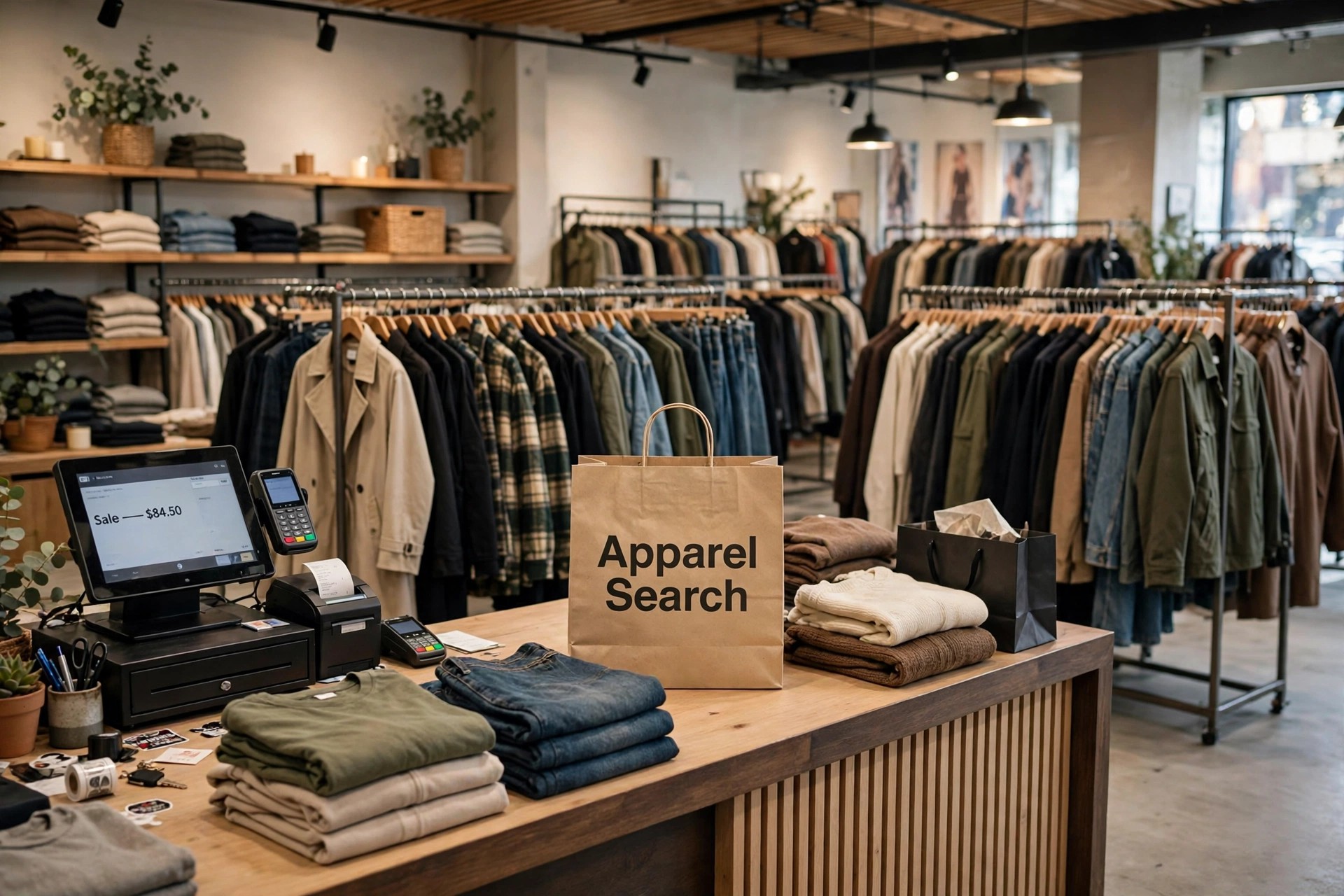
What a Clothing Store Cashier Does
Transaction work is the core. The cashier greets the customer, scans or keys each garment, removes security tags, checks prices and promotion rules as the system applies them, folds or bags purchases properly — clothing deserves better than being stuffed into a bag — takes payment by card, cash, gift card or store account, and reconciles every element before the customer leaves. Split payments, price queries and items without tags are daily variations the cashier resolves on the spot or escalates cleanly to a supervisor with the queue still moving.
Around the transactions sits the money discipline. Cashiers open and close their tills with counted floats, follow cash-handling and refund-authorisation procedures exactly, keep vouchers, receipts and return paperwork in order, and report discrepancies rather than absorbing them. Returns and exchanges bring their own craft: checking garments for wear and damage, verifying receipts and policy, processing refunds to the original payment method and returning saleable stock to the floor correctly ticketed. In many clothing stores the cashier also answers the telephone, manages click-and-collect handovers and keeps the checkout area stocked with bags, tissue and gift wrap.
Service, Security and the Rhythm of the Store
The checkout is the store's last impression, and cashiers carry its service reputation in miniature. A friendly, unhurried manner at the till — while keeping the line moving — turns a purchase into a reason to return; a careless one undoes the work of every assistant on the floor. Cashiers also hold a quiet security role: watching for tag-switching and fraudulent returns, verifying high-value transactions and signatures where required, keeping the till area controlled, and following procedure calmly when something is wrong. None of this is policing; it is the awareness that comes from handling money and merchandise in public all day.
The work environment is a standing, public, peak-driven one. Clothing retail concentrates its trade into weekends, evenings, sale launches and the pre-holiday rush, and the checkout feels every surge first. Cashiers rotate between tills, returns desks and collection points, support floor colleagues when queues vanish, and learn the store's product as they handle it — sizes, fabrics, promotions and the season's lines pass through their hands daily. For many workers the cashier desk is a first job; for others it is a stable, skilled post in a store they know deeply. Both are treated seriously by good employers, because till accuracy and checkout service are measurable things.
Skills and Abilities the Role Requires
Numerical accuracy under repetition is the headline skill: hundreds of transactions, each one right, with till discrepancies treated as investigations rather than rounding errors. Point-of-sale fluency follows — learning the store's system thoroughly, including its awkward corners of refunds, exchanges, staff discounts and promotion stacking — plus the manual fallback skills for the day the system slows or fails. Honesty is a condition of the job rather than a skill, and employers test it through procedure: floats counted, voids witnessed, refunds authorised.
People skills complete the profile. Cashiers deal with the public at its most varied — delighted, hurried, disappointed by a refused return — and must hold the store's policy and their own courtesy at the same time. Patience, clear explanation and the ability to call a supervisor early rather than let a queue-side problem grow are the marks of a strong cashier. Physical stamina matters too: long standing shifts, lifting bagged purchases and the concentration to stay accurate in the eighth hour of a sale day.
Qualifications, Training and Career Path
Cashier posts are usually entry-level, with employers hiring for numeracy, honesty, reliability and manner rather than formal qualifications; a school-leaving standard of mathematics and clear communication is the typical expectation. Training is given on the job — till system, cash procedures, returns policy, security awareness and service standards — and new cashiers work supervised until their till record is clean. Previous experience with money handling, in any sector, is a genuine advantage, as is familiarity with retail from stockroom or sales floor work.
Progression from the checkout runs in several directions. Experienced cashiers become senior cashiers and checkout supervisors, responsible for floats, authorisations and training; others move onto the sales floor toward senior sales and department roles, into stock and operations work, or toward customer service desks where returns and problem resolution are the whole job. The cashier's education — money discipline, product knowledge, customer handling and grace under queue pressure — is a recognised foundation for retail management, and many store managers started exactly here.
Common Questions
What does a cashier in a clothing store do?
Runs the point of sale: scanning and bagging garments, taking card, cash and gift card payments, handling returns and exchanges, keeping the till accurate and secure, and giving customers a good final impression of the store.
Do cashiers need experience or qualifications?
Usually neither formally — employers hire for numeracy, honesty and manner, then train on the till system, cash procedures and returns policy. Any previous money-handling experience helps an application.
Where can a cashier role lead?
To senior cashier and checkout supervisor posts, customer service and returns desks, sales floor and department roles, and onward toward retail management — many store managers began at the till.
More to Explore
- Fashion Job Description Directory
- Fashion Employment Agencies
- Employment Search Engines
- Fashion Directory
- Fashion Industry News
- Fashion Schools and Education
- Fashion Careers
- Apparel Industry Links
- Clothing Stores and Retail
- Fashion Week
- Fashion Blogs
- Fashion Newspaper
- Online Fashion News and Magazines
- Fashion Book Directory