Supply Chain Management Job Description
The discipline that plans the whole flow — sourcing, production, inventory and delivery as one connected chain
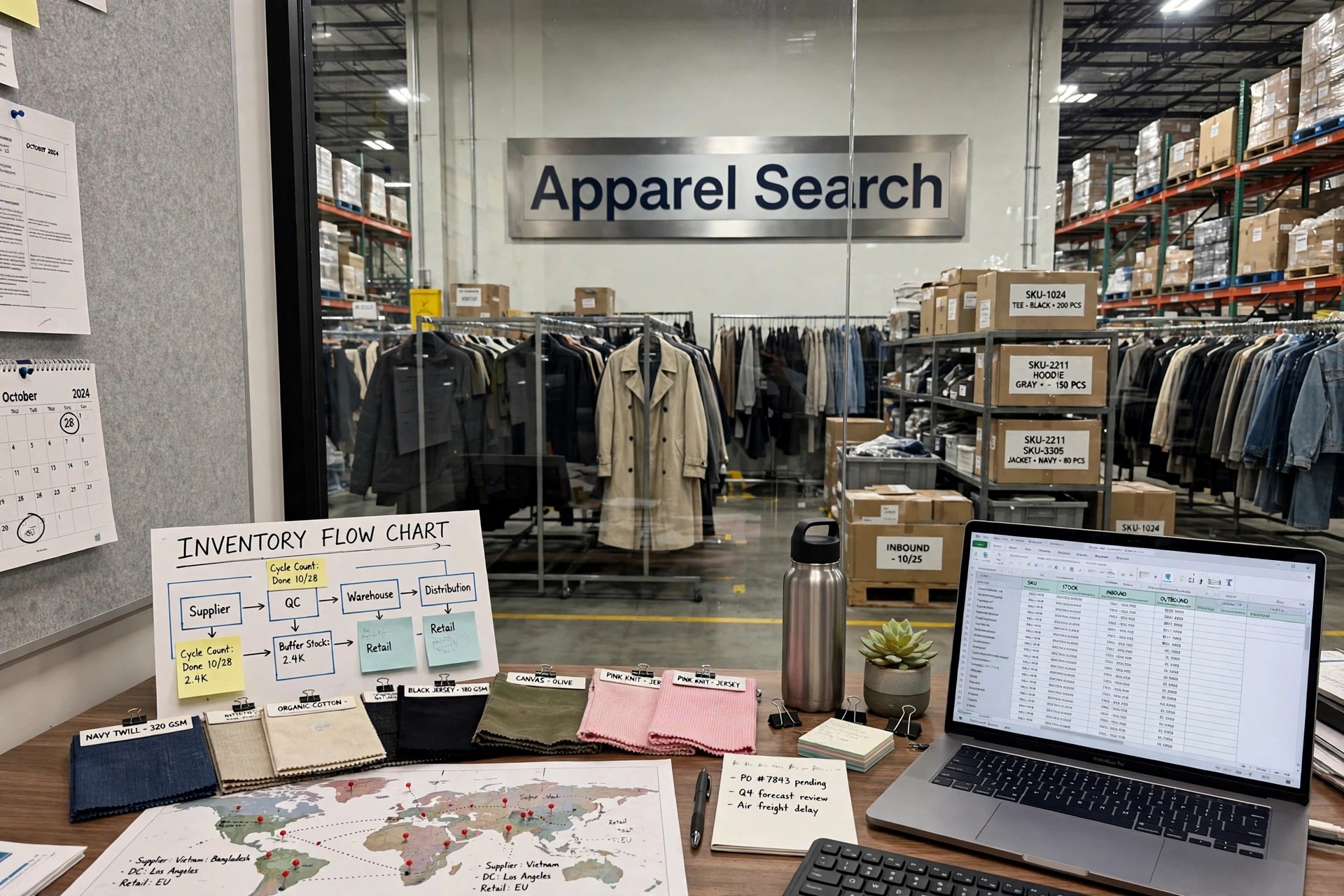
Supply chain management — SCM — is the discipline of running the fashion business as one connected flow: from fabric and factory capacity, through production and freight, into warehouses and out to stores and customers, with inventory levels planned at every step. Where the other pages in this category describe individual jobs along that chain, this page describes the function itself — the planning, coordination and systems work that makes the chain behave as a chain, not a series of handoffs — and the roles that practise it.
More Transportation & Warehouse Job Descriptions by Letter:
Planning: Demand, Supply and the Seasonal Calendar
Apparel supply chains are planned backwards from the selling season. SCM planning starts with the demand picture — what the business expects to sell, by category, channel and month — and converts it into a supply plan: which factories receive which orders, when fabric must be committed, when production slots are booked, and when finished goods must land to meet the season's delivery windows. Because fashion lead times are long and selling seasons are short, the plan is built months before the customer appears, and SCM's first craft is keeping that plan honest as forecasts change — re-phasing orders, pulling forward what is selling, and cutting what is not before it becomes stranded stock.
Inventory flow is the plan's other half. SCM decides how much stock the chain should hold at each point — fabric at the mill, work in progress at the factory, finished goods at the distribution centre, replenishment stock behind the stores — balancing the cost of holding inventory against the cost of running out. In fashion, where most product is seasonal and cannot be carried over at full value, those balances are sharper than in most industries, and the discipline's central tension is permanent: availability sells, but every unit bought and not sold is margin destroyed.
Procurement Liaison and Production Follow-Up
SCM sits between the commercial teams and the supply base. On one side are merchandising, buying and sales, with their ranges, orders and store commitments; on the other are mills, factories, freight forwarders and warehouses, with their capacities and constraints. The SCM function translates between them: turning ranges into factory-ready orders and material commitments, confirming capacity exists before promises are made, then following production through — fabric delivery, sewing progress, quality checkpoints, ex-factory dates — escalating problems while there is still time to solve them.
This liaison work is why SCM roles demand commercial fluency as well as operational discipline. The practitioner must understand a purchase order, a letter of credit, a critical path and a margin line, and must be able to argue a priority — which order takes the last capacity slot, which shipment flies and which sails — in terms both the merchant and the factory accept. Companies structure this differently — centralised teams, sourcing-office teams, or split planning and follow-up roles — but the connecting function is the same.
Logistics Coordination and Supply Chain Systems
The physical chain — freight, customs, warehousing and distribution — is coordinated, though not usually executed, by SCM. The logistics specialists in this category book and track the shipments, clear the goods and run the buildings; SCM sets the parameters they work to: service levels by channel, routing and mode decisions at plan level, delivery windows into the distribution centre, and the allocation of landed stock between stores, e-commerce and wholesale customers when supply runs short. When disruption hits — a port delay, a factory failure, a carrier collapse — SCM re-plans around it and reports the new arrival picture honestly.
Systems are the function's nervous system. SCM work runs on planning and product-lifecycle tools, order and inventory systems, warehouse and transport systems, and the reporting layers above them, and SCM practitioners are usually the business owners of that data: item and order accuracy, lead-time assumptions, capacity calendars and the dashboards the whole company reads. A supply chain is only as manageable as its data is truthful, and maintaining that truth — chasing the unconfirmed order, the wrong date, the phantom stock — is unglamorous, essential SCM work.
Skills, Qualifications and Career Paths in SCM
SCM draws people from across the chain it manages: planners, buyers' assistants, production coordinators, logistics specialists and warehouse managers all arrive in SCM roles, bringing one segment's knowledge and learning the rest. Employers look for that cross-functional curiosity plus analytical strength — comfort with forecasts, lead times and inventory mathematics — systems fluency, and the communication range to work with factories overseas and merchants at home in the same hour. Degrees in supply chain, business, textiles or related fields are common routes in, and professional supply chain qualifications are widely recognised, but demonstrated planning achievement carries the most weight.
Careers develop along the function's own ladder: from coordinator and analyst roles through supply chain planning and management positions to head of supply chain and operations leadership, with specialisation possible in planning, sourcing operations or logistics strategy. One neighbouring page should be distinguished from this one: the Global Supply Chain Manager page under G describes a specific senior management role, with a named post-holder's duties and scope. This page is the wider treatment of the discipline that role sits within — the function, its planning and systems, and the range of roles that practise it — and the pair are cross-referenced rather than merged.
Common Questions
What is supply chain management in the apparel industry?
The function that plans and coordinates the whole flow of clothing — demand and supply planning, material and factory commitments, production follow-up, freight and warehousing parameters, and inventory levels — so seasonal product arrives in the right place, at the right time, in the right quantity.
How does SCM differ from logistics?
Logistics executes movement and storage: booking freight, clearing goods, running warehouses. SCM plans and coordinates the whole chain those activities sit inside — deciding what flows, when, in what quantity, and re-planning when forecasts or circumstances change.
How does this page differ from the Global Supply Chain Manager page?
That page describes one senior role and its responsibilities. This page treats supply chain management as a discipline — its planning, procurement liaison, inventory flow and systems — covering the full range of SCM roles, of which the global manager is the senior example.
More to Explore
Supply Chain Resources
Transportation & Warehouse Directory Pages by Letter
References & Further Reading
More Job Description Categories
- Buying Job Descriptions
- Design Job Descriptions
- Marketing & PR Job Descriptions
- Miscellaneous Job Descriptions
- Planning & Allocation Job Descriptions
- Production & Sourcing Job Descriptions
- Sales & Selling Job Descriptions
- Transportation & Warehouse Job Descriptions (current)