April 2005 Fashion Forecast — Snap Fashun
A Snap Fashun trend-spotting report from April 2005 — April 2005 trend spotting: crochet detailing, Swiss dot and red in London and Milan, kept as the historical record.
This page holds a Snap Fashun trend-spotting report from April 2005, covering April 2005 trend spotting: crochet detailing, Swiss dot and red in London and Milan. Snap Fashun supplied Apparel Search with photographic trend reports from the fashion capitals — street, store and runway photographs with short captions naming the look, the store and the city — and the report text below is kept as the historical record of what was spotted at that date. Read it as a snapshot of its season: the garments, colors and details it names were the live commercial questions of April 2005 for buyers, designers and fashion historians.
Trend spotting of this kind was the fast end of forecasting. Instead of predicting two years ahead, a spotter photographed what was already appearing in leading stores and on leading streets, and buyers at home used the photographs to decide what to order, copy or watch. That is why these reports are organized by city and store rather than by theory — London, Milan, Paris, Los Angeles and the other capitals each contributed evidence, and the caption under each photograph is the forecast itself.
How Trend Spotting Worked
When this report was published in April 2005, its readers were planning ranges, placing orders and briefing store teams. A spotting report was written to be acted on within weeks: it named the look, showed the photograph, identified where it was selling, and let the reader judge how far it might travel. The photographs carried with the report — the store and street images in the Photos section below — were the evidence, and the short captions were the analysis.
Snap Fashun built its service on exactly that evidence. Its photographers worked the fashion capitals continuously, and its reports grouped what they found into stories — a color, a detail, a silhouette, a mood — that a buyer could translate into orders. The twelve reports in this history series run from April 2005 to October 2008, and together they show the method at work across four years of seasons: the same cities, the same store-level attention, and a completely different set of looks each time.
Reading a April 2005 Spotting Report Today
Three habits make a historical spotting report genuinely useful rather than merely nostalgic. First, separate the garment from the styling: cuts and details return, while the exact way a look was worn dates fastest. Second, note the geography — which city and which store carried a look first — because spotting reports show trends moving from capital to capital before they reached the wider high street. Third, compare this report with its neighbours in the series: April 2005 trend spotting: crochet detailing, Swiss dot and red in London and Milan sat inside a run of reports, and the sequence shows which directions lasted several seasons and which vanished after one.
For current seasons, pair this report with the forecasting guides and Pinterest trend boards linked below. The method has not changed — photograph what is actually being worn and sold, name it plainly, and commit while the evidence is fresh — even though the cameras and the platforms have. That continuity is why Apparel Search keeps these reports available: they document, season by season, how the industry watched itself in real time.
One more detail is worth recording for anyone citing this report in research: spotting captions were written for trade readers who already knew the stores named, so a modern reader should treat each caption as a sighting, not a review — the store is the location of the evidence, and the garment described is the trend call. Read that way, a page of short captions becomes a surprisingly precise record: it fixes a look to a place and a month, which is exactly the information that later fashion history usually loses.
The Report
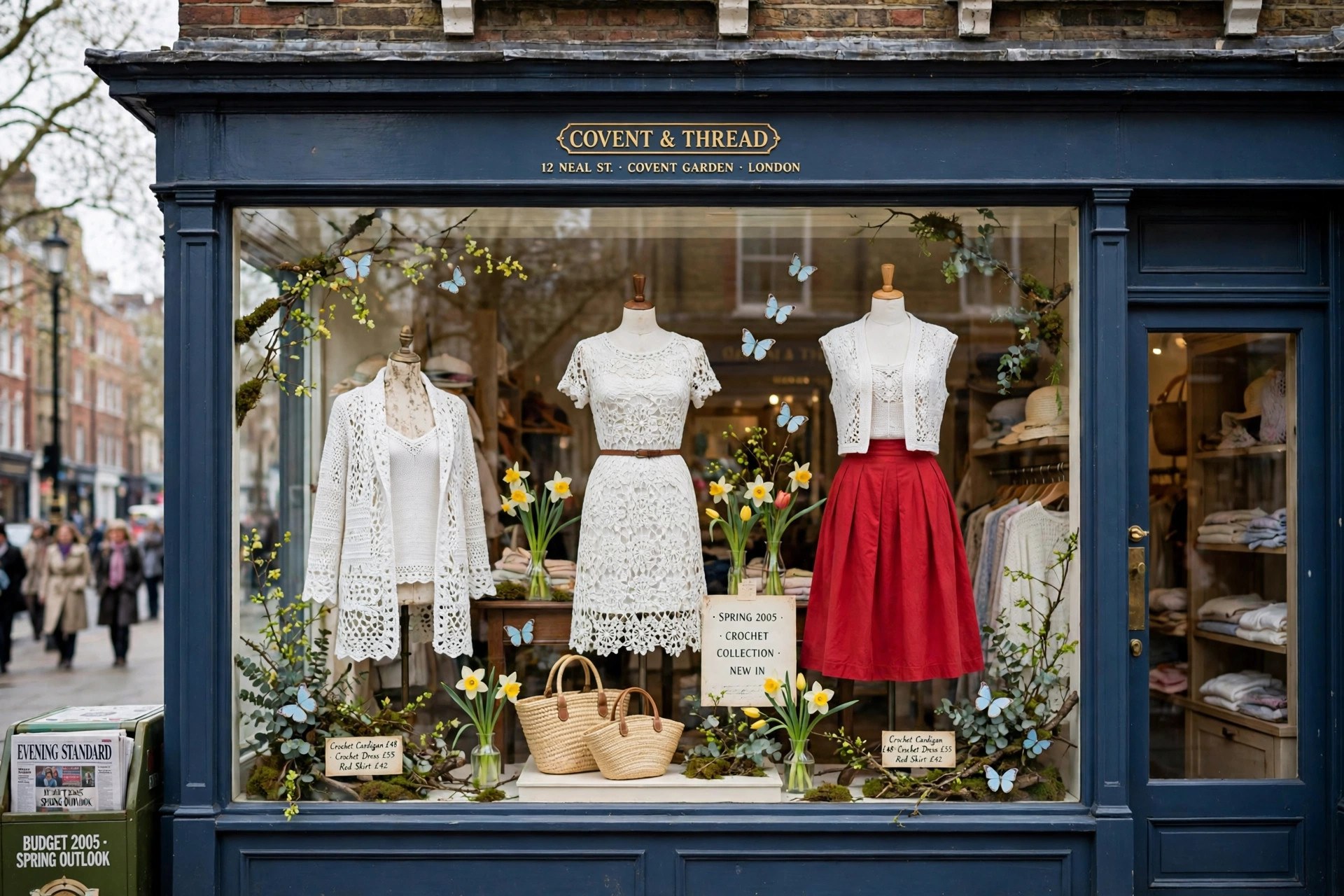
white Swiss dot with crochet detailing. Morgan, London. more crochet detailing from Pinko in Milan red skirt from Ted Baker in London. Red is Hot! at Nadine in Milan, part of a desert fatigue story we call Foreign Legion.
Photos


Common Questions
What is this April 2005 Snap Fashun report about?
It is a Snap Fashun photographic trend-spotting report covering April 2005 trend spotting: crochet detailing, Swiss dot and red in London and Milan. Its captions and photographs are kept as the historical record of what was spotted in stores and on streets in April 2005.
Who produced these trend-spotting reports?
Snap Fashun produced the reports, supplying Apparel Search with photographs and captions from the fashion capitals — London, Milan, Paris, Los Angeles and others — naming the look, the store and the city for each sighting.
How should I use a spotting report from this period?
Use it as dated evidence: study the garments, colors and details it names, note which cities and stores carried them first, and compare it with the neighbouring reports in the 2005–2008 series rather than treating it as a statement of what is in fashion now.
More to Explore
- September 2006 - Fashion Trends
- June 2006 - Fashion Trends
- April 2006 - Trend Spotting
- February 2006 - Trend Spotting
- November 2005 - Trend Spotting
- September 2005 - Trend Spotting
- June 2005 - Trend Spotting
- Merchandising
- Computer Assisted Design (CAD)
- Design Studio
- Fashion Industry Artist Guide
- Embroidery Design Services
- Swatch Cards
- Store Fixtures & Display
- Fashion Industry News
- Online Fashion News
- Employment
- Pattern Maker
- Printing
- Production Services
- Color Trend Forecasting
- Consulting
- Consulting Fashion & Design
- Color Standards
- Retail
- Fashion Designers
- Fashion Stylist Agencies