Airline Uniforms by Airline · Australia
The Qantas Uniform by Martin Grant
A dusky French navy wardrobe lit by two reds — ruby and fuchsia — cut on a diagonal that quotes the red triangle of the Qantas logo. Martin Grant’s uniform, unveiled in 2013, dressed 12,600 people in 35 garments and is still flying today. This guide covers the design, the pieces, the scarf code that shows seniority, the separate pilot uniform of 2016, and the successor already announced for 2027.
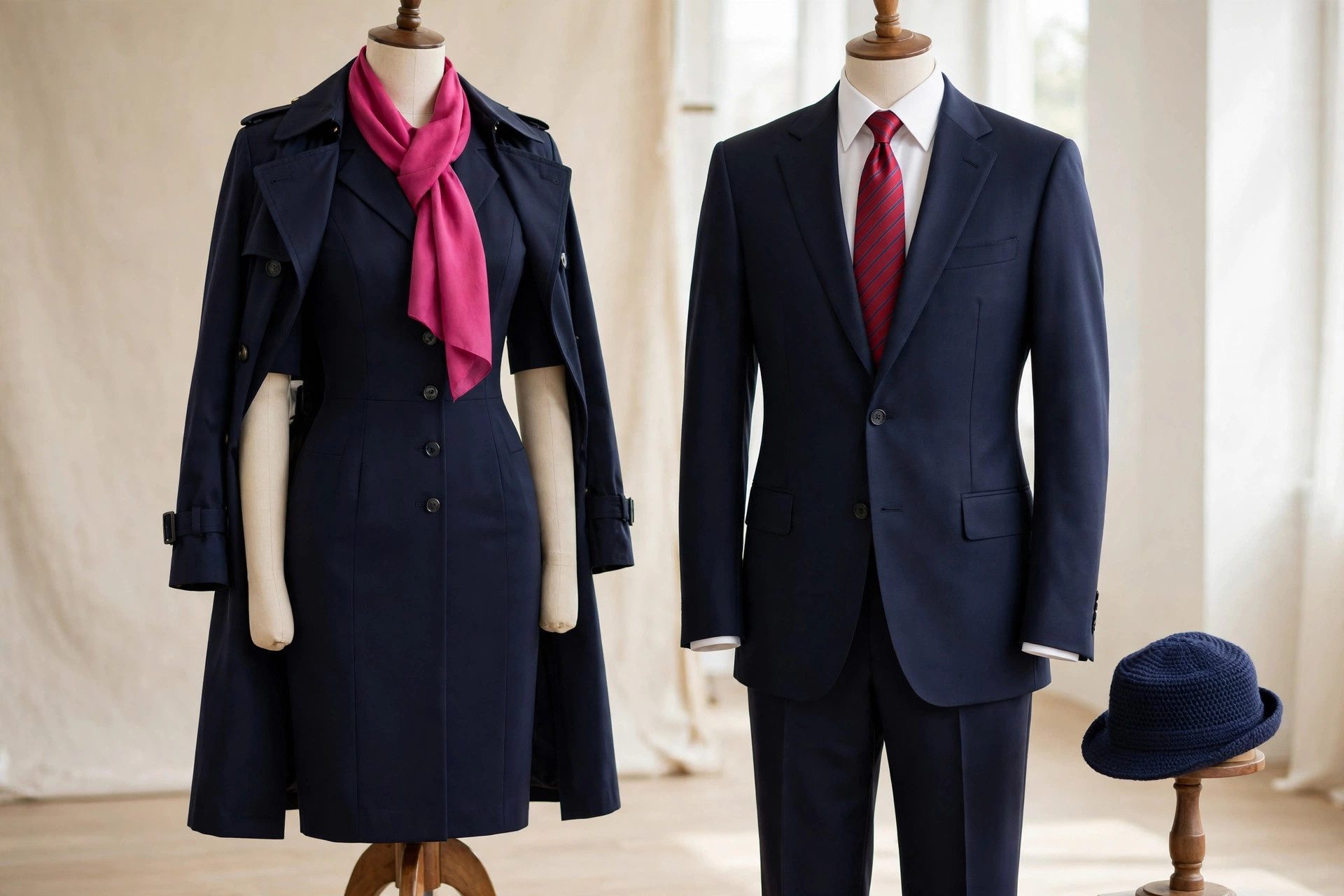
The Design
A Paris-Based Australian, a Red Triangle and 35 Garments
When Qantas unveiled its new uniform in Sydney on 16 April 2013, it was the airline’s first new look in ten years and its tenth uniform since 1938. The designer was Martin Grant: born in Melbourne, based in Paris for some twenty-five years by then, and known for immaculate, self-taught tailoring — he had trained in London for a year, done years of made-to-measure work, and dressed clients of the calibre of Cate Blanchett and Tilda Swinton. Qantas Group CEO Alan Joyce called the result “fresh, modern and bold” and “a new look for a new chapter for Qantas” — a uniform meant to speak of Australian style on the global stage while surviving the daily reality of a frontline workforce.
Grant started from the logo. “My inspiration for the uniform came from Qantas’ striking logo — the powerful red triangle and the flying kangaroo,” he said at the launch. “I have always loved the Qantas logo as it’s very nostalgic for me.” The red triangle of the tailfin became the collection’s organising idea: against French navy suiting and white shirting, variations of Qantas red — ruby red and fuchsia pink — run in diagonal stripes across the women’s tops and dresses and onto the men’s ties, recreating the triangle’s slash. The same triangle turns up in the details: on the back of the women’s skirts, and under the fold-down lapel of the trench coat, where a flash of red and a miniature kangaroo appear when the collar is turned.
The scale was industrial as well as aesthetic. Grant designed 35 garments for female and male employees, to be worn by 12,600 uniformed staff — international and domestic cabin crew and ground employees — from early 2014. Fifteen types of fabric were used, including premium super-fine Australian merino wool for the suiting and cotton blends for the shirts; around 400,000 garments and some 350,000 metres of fabric were produced, delivered to 85 locations in 21 countries. Grant developed the designs with a uniform panel of twelve representatives drawn from Qantas’s customer-facing departments, testing for the glamour he wanted — “something simple and durable” that “would suit every body shape” — against the wearability the panel demanded.
The Components
The Wardrobe, Piece by Piece
Grant’s wardrobe is a capsule system rather than a single outfit: dresses, separates, suiting and outerwear in one navy-red palette, mixed by role, season and climate. The women’s side is led by the dress; the men’s by a sharply structured suit.
- The Dress
- The signature piece: a French navy dress carrying the bold diagonal colour block — ruby red across the torso, with fuchsia at the sleeve and neckline in the best-known version — the red triangle of the logo worn as a slash of colour. A small red-triangle detail also appears at the back of the skirt.
- Tops and Shirting
- White shirting and navy tops with the same diagonal striping, worn with skirts or trousers as separates — the mix-and-match half of the wardrobe, and the warm-climate option under the system.
- The Women’s Suit
- A tailored navy suit option alongside the dress: structured jacket and skirt or trousers in the Australian-wool suiting, worn with white shirting.
- The Trench Coat
- Grant’s signature garment, carried over from his own collections: a navy trench worn to and from the aircraft and around the airport, its fold-down lapel revealing a flash of red and a miniature flying kangaroo. It is the piece that makes Qantas crew recognisable on the street, not just in the cabin.
- The Trilby Hat
- A knitted trilby-style hat for female crew, made from recycled bottle tops — the wardrobe’s most talked-about accessory at launch, and a small piece of sustainability theatre built into the uniform itself.
- The Scarf
- Neckwear in the palette’s two reds. The colour is not decoration alone: as the next section explains, fuchsia and dark ruby distinguish grades of crew.
- The Men’s Suit
- A single-breasted, single-button structured jacket in French navy, worn over a V-neck knit vest and white shirt, with a tie carrying the red diagonal. Some ground roles wear polo shirts instead of the full suit.
- Fabrics and Footwear
- Fifteen fabrics across the wardrobe, the suiting in Australian wool (reported at launch as an 80 per cent Australian-wool cloth) chosen for a workforce crossing climates in a single duty. Working footwear is plain black; the red-soled shoes seen at the launch shows were a runway flourish, not issue kit.
Reading the Uniform
Scarves, Stripes and Seniority
Qantas does not use a kebaya-style whole-garment rank code, but the Grant wardrobe does carry a quiet one, in the neckwear. At the uniform’s London showing, Grant explained that he had introduced fuchsia to lift the standard red-white-and-blue — and assigned the two reds by seniority:
| Neckwear colour | Worn by | Reading |
|---|---|---|
| Fuchsia pink scarf | Cabin crew | The bright pink scarf is the general cabin-crew issue — the colour passengers see most. |
| Dark ruby red details | Senior crew | The deeper ruby red is reserved for more senior staff — the same red, darkened a register, marks the step up. |
On the flight deck, rank follows the near-universal airline code of epaulette stripes, and the pilots’ clothes are a separate Grant design again — the 2016 pilot uniform covered in the evolution section below. Customer-facing ground and cabin roles are told apart less by badges than by garment: the full suit and trench for customer service, polo shirts for some operational ground roles, and the dress or separates in the cabin.
The Men’s Uniform
One Button, a Knit Vest and the Red Diagonal
The men’s wardrobe is the tailored counterweight to the dress. Its core is a single-breasted, single-button jacket — sharply structured in the Savile Row-influenced cut Grant favours — worn with a V-neck knit vest, a white shirt and trousers in the same French navy. The colour story arrives on the tie: the diagonal stripe in Qantas red that mirrors the women’s dresses, so the two halves of the crew read as one system across a cabin.
Men share the wardrobe’s outerwear logic — the trench for transit — and its working end is deliberately plain: black leather shoes and, for some ground roles, navy polo shirts in place of jacket and tie. Since the 2023 grooming overhaul described below, the old “male” and “female” determinations have been scrapped altogether: the garments are issued as capsules that any crew member can choose from, regardless of gender.
“I Feel Like I Am Home”
Grant has lived in Paris for most of his career, and he talked about the commission the way an expatriate would. “As an Australian ex-pat it is a great privilege to design the Qantas uniform,” he said. “When I am travelling and I see the red tailfin of a Qantas aircraft I feel like I am home.” That homesickness is built into the clothes: the uniform takes the tailfin’s red triangle — the thing a travelling Australian sees first at a foreign airport — and wears it, diagonally, across the chest.
The Rules
Grooming: The 2023 Overhaul
For most of the Grant uniform’s life, Qantas policed its wearing with the kind of detailed style-and-grooming rules the industry grew up on — the airline itself recalls an era when sideburns had to stop at mid-ear, gelled spikes were out, and navy was the recommended eyeliner colour. That changed in June 2023, when Qantas scrapped its designated “male” and “female” uniform determinations and overhauled the grooming requirements — the first update in a decade, made, the airline said, in line with employee feedback and evolving customer expectations. The garments did not change; the rules for wearing them did.
Under the updated guidelines, all staff may wear flat shoes — ending the expectation that female crew wear heels, including on long-haul flights — and all may choose whether to wear make-up or not, a change male crew had requested so they could wear concealer and foundation. Long hair is permitted for everyone, worn in a low ponytail or bun; cornrows are accepted for all staff except flight crew, for safety reasons. Jewellery rules are now the same for all: watches of any size and diamond stud earrings are permitted. Two requirements survived the overhaul intact: tattoos must still be concealed in uniform, and hosiery is still required with a dress or skirt. The uniform is now organised into “capsules” — guidance on which pieces are worn together — and the same guidelines apply at Jetstar, the Qantas Group’s low-cost airline.
Evolution
From Waiters’ Jackets to Vallance
Qantas has been dressing crew since the beginning: its first male cabin crew, in 1938, served dinner in white waiters’ jackets, and when female crew joined in 1947 they wore a military-style uniform. The uniform has been redesigned again and again since — 1959, 1964, 1969, 1971, 1974, 1985, 1993, 2003 and 2008 in the airline’s own count — drawing on a designer list that runs from Emilio Pucci (whose era produced the coral-red service director’s blazer pictured below) and Yves Saint Laurent to Australian labels George Gross and Harry Who.
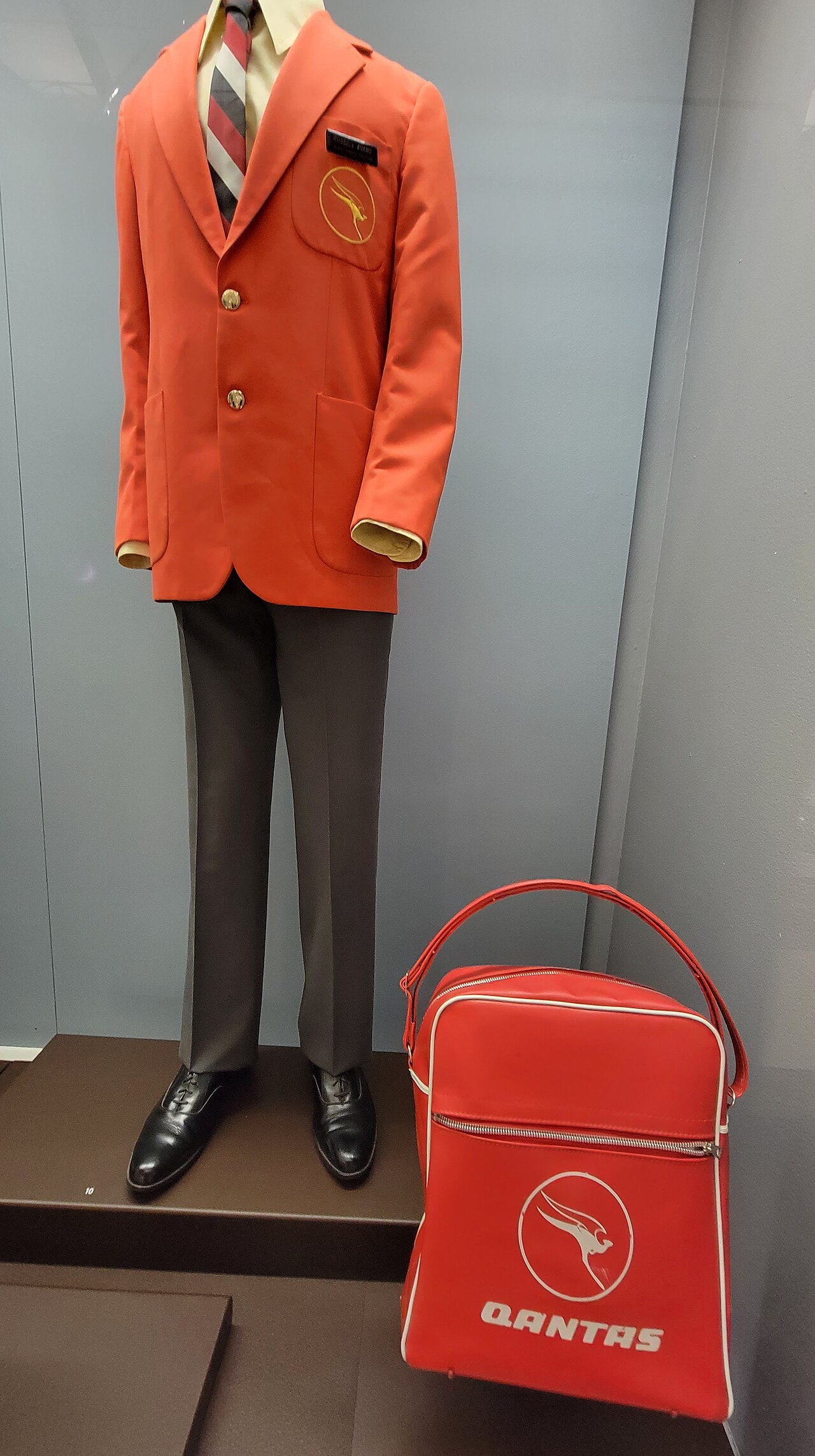
The Morrissey decade, 2003–2013. The uniform Grant replaced was Peter Morrissey’s, launched in 2003 and refreshed for the A380’s arrival in 2008: black Australian-wool suits with scarves and ties in the “Wirriyarra” textile designed by the Balarinji Design Studio, its “dusk” print in silver and blue tones, and a matching dusk-print dress for female crew. It was stylish and distinctively Australian, but after ten years Qantas wanted the contemporary European cut Grant delivered.
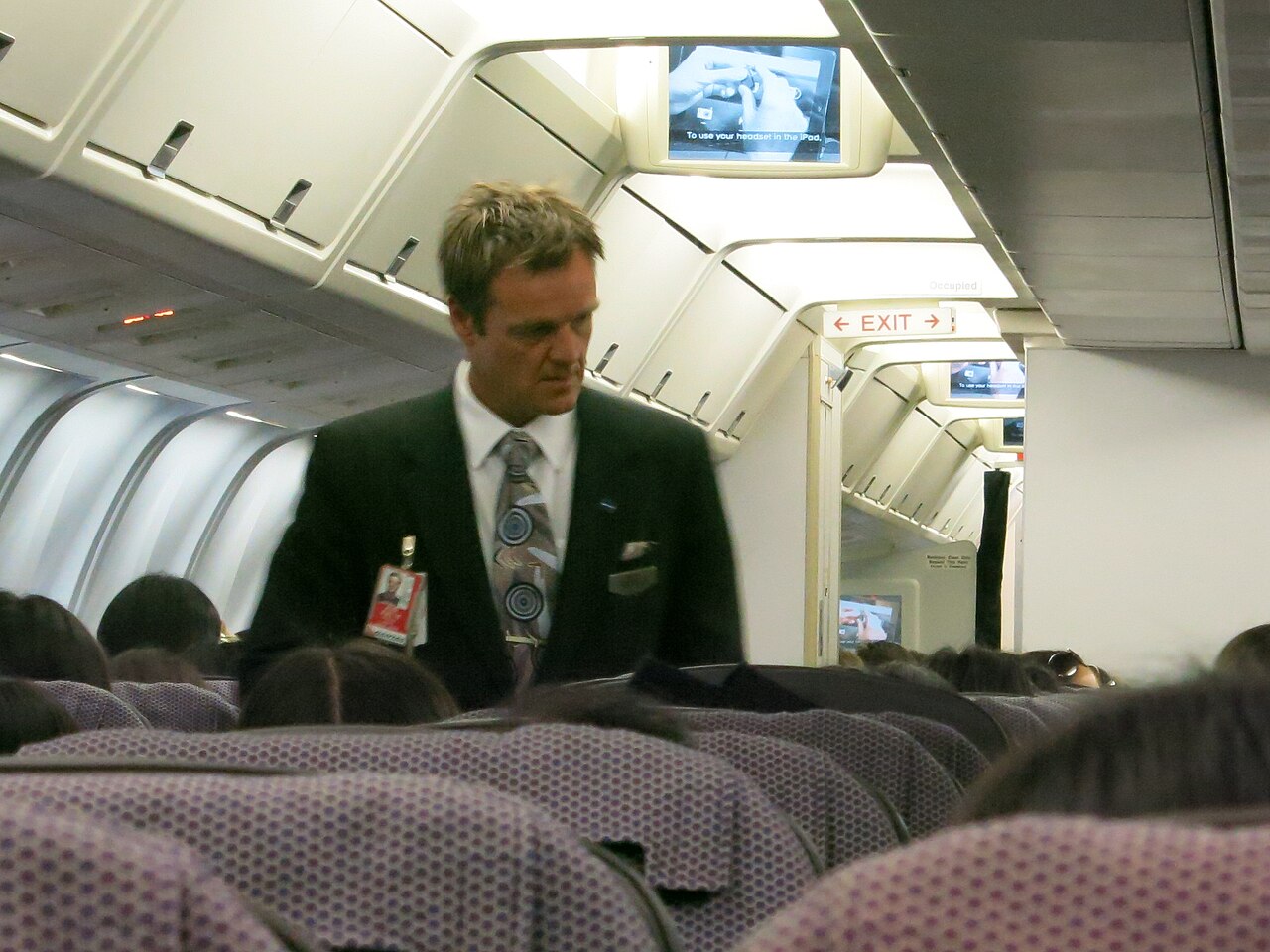
The pilot uniform, 2016. Grant’s cabin and ground wardrobe left the pilots in their existing uniform at first. In 2016 he designed them a separate one, timed for the delivery of Qantas’s first Boeing 787-9 Dreamliner: a tailored suit in pure Australian merino wool that, in the airline’s words, nods to Qantas’s earliest designs while offering comfort across different climates. It is a distinct commission from the 2013 wardrobe — the two are often conflated, but cabin crew and pilots wear different Grant designs from different years.
The successor, 2027. The Grant era now has an end date. After a nationwide search and competitive process — informed by a survey of more than 17,500 uniformed staff on durability, functionality and comfort — Qantas has appointed Australian designer Rebecca Vallance to create the next uniform, set to debut in 2027 alongside the airline’s fleet renewal and its Project Sunrise ultra-long-haul programme. Vallance, the first woman to design the Qantas uniform, replaces a design that will by then have served for thirteen years — a long life, and a sign of how well the navy, the reds and the diagonal have worn.
The Icon
Why the Diagonal Endures
Most airline uniforms are identified by a colour. Grant’s Qantas uniform is identified by a gesture — the diagonal slash, borrowed from the logo, that cuts across dresses, tops and ties and turns a navy wardrobe into a moving piece of branding. It solved the flag carrier’s eternal problem elegantly: the clothes look Parisian, but the mark they carry is unmistakably the one on the tailfin, and no other airline can wear it without wearing Qantas’s own symbol. Add the trench — a designer signature that gave crew a street presence most uniforms never achieve — and the recycled-bottle-top trilby, and the wardrobe became that rare thing, a uniform the fashion pages covered as fashion. For the country behind it, see our Australia clothing industry page.
Airlines refresh their uniforms from time to time, so the details here describe the uniform as documented for this guide — the airline’s own site always carries the latest version.
Common Questions
Common Questions
Who designed the Qantas uniform?
Australian designer Martin Grant, who is based in Paris. His cabin and ground wardrobe was unveiled on 16 April 2013 and worn by 12,600 uniformed employees from early 2014. Grant later designed a separate pilot uniform in 2016 — the two commissions are distinct.
What colours is the Qantas uniform?
French navy suiting and white shirting, set off by two variations of Qantas red — ruby red and fuchsia pink. The reds appear in diagonal stripes across the women’s tops and dresses and on the men’s ties, recreating the red triangle of the Qantas logo.
How many garments are in the Qantas uniform wardrobe?
35 garments for female and male employees, made in 15 types of fabric, including premium super-fine Australian merino wool for the suiting. Around 400,000 garments were produced for the launch.
What do the Qantas scarf colours mean?
They show seniority. Fuchsia pink scarves are worn by cabin crew generally, while dark ruby red details are reserved for more senior staff — the same Qantas red, in a deeper register, for the senior grade.
Is the Qantas uniform changing?
Yes. Qantas has appointed Australian designer Rebecca Vallance — the first woman to design its uniform — to create the next one, set to debut in 2027 and replace the Martin Grant design worn since 2014. More than 17,500 uniformed staff were surveyed to shape the brief.
Keep Exploring
More to Explore
In This Series
Airline Uniforms by Airline
The series hub — every airline’s guide, the designers behind them, and the ones in preparation.
Read ↑Australia Clothing Industry
The airline’s home country in the World Clothing Industry directory.
Read ↑Go Deeper
Keep Exploring
Explore Fashion for Travel
The crew are only half the fashion on a flight — the other half is what the passengers are wearing. Our travel guides cover the traveller’s side of the same subject, and they link back here.
Outfits for Flying
Travel Outfits
What to wear when you are going somewhere — outfit systems built for transit days.
Read ↑Airport Outfits
Security-friendly shoes, cabin layers and the full airport dressing system.
Read ↑What to Wear on a Long Flight
Dressing for the overnight haul — comfort, warmth and arriving presentable.
Read ↑What to Wear When Traveling
The destination-rules guide to building a travel wardrobe that works on arrival.
Read ↑Business Travel Wardrobe Guide
A working wardrobe that travels — suits, wrinkle strategy and boardroom-ready arrivals.
Read ↑Packing & Capsule Wardrobes
Travel Capsule Wardrobe Guide
A small set of pieces that combine into a trip’s worth of outfits.
Read ↑Travel Packing Guide
The complete packing method — lists, order and wrinkle control.
Read ↑How to Pack a Suit
Getting a tailored jacket and trousers across the world without the creases.
Read ↑Carry-On Packing Guide
Everything in one bag — the carry-on-only system, piece by piece.
Read ↑Travel Comfort & Accessories
Search Apparel Search