Women's Slip-On Shoes Guide
Slip-on shoes fasten with nothing — no laces, buckles or straps — using elastic, shaped uppers and a close fit to stay on while you simply step in.
Shop Women's Slip-On Shoes Now
Shop Women's Slip-On Shoes on Amazon Shop Women's Slip-On Shoes on eBayThe Amazon and eBay links on this page are affiliate links. If you make a purchase through them, Apparel Search may earn a commission.
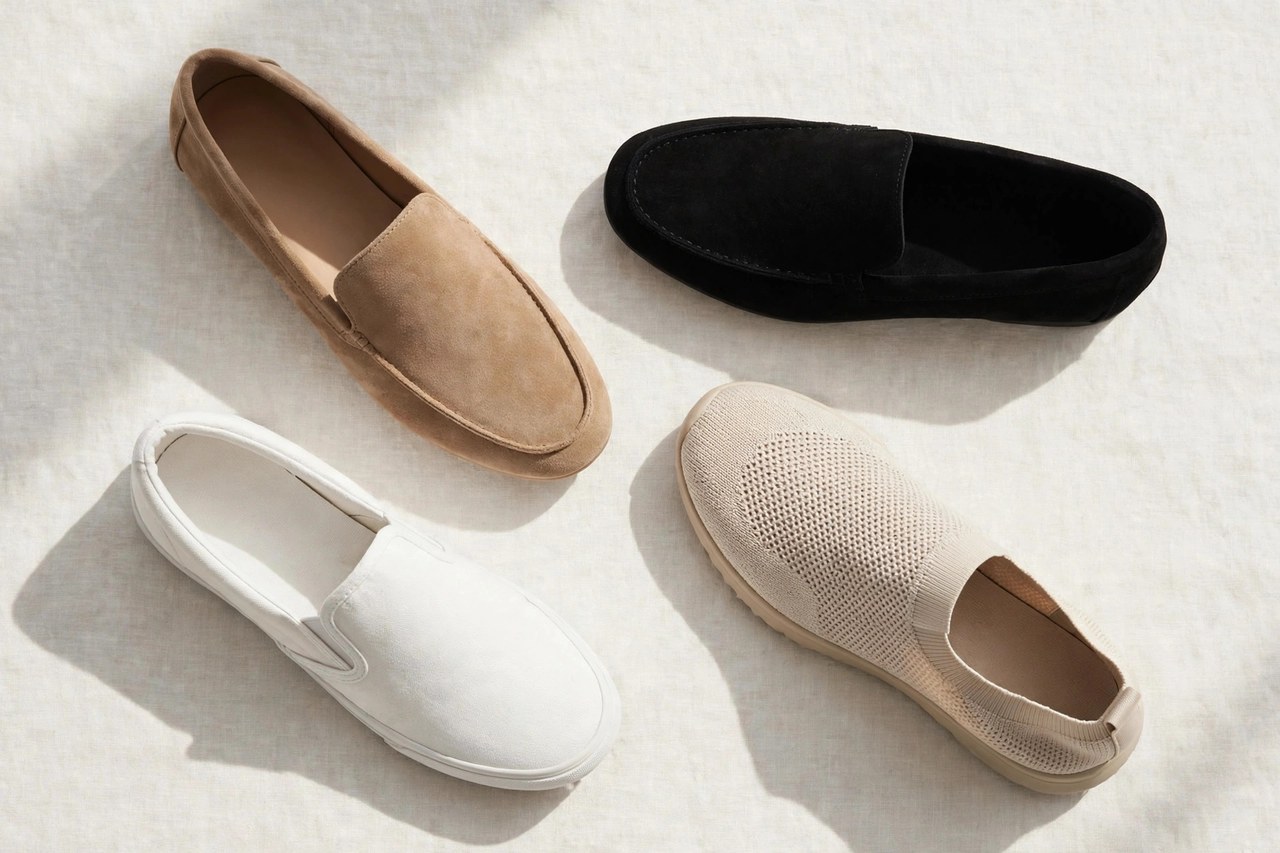
A slip-on shoe is any shoe with no fastening to do up: no laces to tie, no buckle to close, no strap to adjust. You step in and walk. That convenience is engineered, not accidental — because there is nothing to tighten, the shoe must hold itself on with its shape, its materials and usually a little elastic, which makes slip-ons the most fit-sensitive casual shoes you can buy.
The category is broad, and this guide treats it as one. It covers the main slip-on families, from loafers to slip-on sneakers, the elastic gussets and padded collars that replace laces, how to judge heel hold when there is no way to adjust it, and who slip-ons serve best. A shoe you will put on twice a day for years deserves more scrutiny at purchase, not less, precisely because it asks so little of you afterward.
The Slip-On Families
The loafer is the dressed end: a structured, low shoe with a moccasin-style or plain front, in leather or suede, that works with tailoring. Slip-on sneakers take a trainer sole and a laceless knit or canvas upper, often with elastic side panels, and are the everyday workhorse. Mules and clogs are the backless branch, held only at the front. Espadrilles, boat shoes in slip-on form, and ballet flats round out the range, each borrowing the same no-fastening principle.
What unites them is the entry: a shaped opening, often with a pull tab at the heel, sized so the foot slides in with slight resistance and then sits held. Knit uppers stretch to admit the foot and recover to hold it; leather uppers rely on a correctly shaped last and soften with wear. If entry is effortless and sloppy in the shop, it will only get looser — new slip-ons should feel snug, within reason, on day one.
How They Stay On: Gussets, Collars and Lasts
The classic mechanism is the elastic gusset, a stretch panel at one or both sides of the opening, used on loafers, Chelsea-style slip-ons and many sneakers. It flexes for entry, then contracts to grip. Padded collars cushion and narrow the heel opening, and a shaped heel counter cups the back of the foot. In knit slip-ons, zones of tighter and looser knitting do the same jobs invisibly, which is why good ones feel engineered and cheap ones feel like socks with soles.
Because none of this adjusts, the last — the foot-shaped form the shoe is built on — does all the work. Brands cut slip-ons on lasts that run noticeably different in heel width and instep height, so a wearer who slips out of one brand's heel may be held perfectly by another's at the same marked size. Heel slip of a few millimeters in a new leather pair will settle as the sole flexes; a full centimeter of lift-out will not, and no insole fully cures it.
Fit, Sizing and Everyday Use
Shop slip-ons in the afternoon, walk a hard surface, and test the things laces normally forgive: heel lift, instep pressure, and toe room with the foot slid fully home. Socks change everything in this category — a loafer fitted barefoot will strain with a winter sock, and a knit sneaker fitted with thick socks will swim barefoot — so decide your sock plan first and fit to it. Many wearers keep a no-show sock as the default middle setting.
The use case is frequency and ease: commuting, travel days when shoes come off at security, dog walks, school runs, jobs with constant in-and-out. Slip-ons are also a genuine accessibility aid for anyone who finds bending and lacing difficult, where a long-handled shoe horn plus a well-chosen slip-on restores full independence in footwear. For long-distance walking or sport, laced shoes still win, because adjustability beats convenience past a few miles.
Care for Elastic and Uppers
Elastic is the wear part. Gussets and knit collars lose recovery with heat and age, so keep slip-ons out of hot cars and away from radiators, and rest a knit pair a day between wears so the upper rebounds. Once elastic is truly gone, a cobbler can replace gussets on leather shoes; on knit sneakers, the shoe's life is the elastic's life, and sagging entry is the retirement sign.
Clean by material: brush suede, wipe leather and condition it so the opening keeps its shape, and machine wash only knit styles the maker labels washable, air drying always. Use a shoe horn even though the shoe seems not to need one — crushing the heel counter down with your foot is the fastest way to destroy the very structure that holds a slip-on on. Stored with the heel intact, a good pair steps in like new for years.
Related Women's Guides
More to Explore on Apparel Search
- Women's Dress Shoes Guide
- Women's Casual Shoes Guide
- Women's Shoes
- Women's Footwear
- Fashion
- Clothing Retail Stores
- Fashion News
- Fashion Designers
- Popular Brands
- Apparel
- Women's Clothing Stores
- Women's Clothing Wholesalers
- Women's Fashion
- Women's Shoe Stores
- Women's Footwear Guide
- Footwear Definitions
- Shoe Search
- Fashion Videos
- Fashion Calendar
- Celebrity Fashion
- Fashion Designer Directory
- Women's Athletic Shoes
- Women's Boots
- Women's Sandals
- Women's Trend Shoes
Women’s Clothes Guide by Letter: Women's Apparel Directory N · Women's Clothes Directory O · Women's Clothing Directory P · Women's Apparel Directory Q · Women's Fashion Directory R · Women's Clothes Directory T
Looking for Women's Clothing Stores?
This guide helps you choose women's slip-on shoes. To browse where to buy, visit our women's clothing store directory, where you can find retailers that carry them.