Women's Spectator Shoes Guide
Spectator shoes are two-tone shoes — classically black-and-white or brown-and-white oxfords and pumps — whose contrast panels made them the flamboyant footwear of the jazz age.
Shop Women's Spectator Shoes Now
Shop Women's Spectator Shoes on Amazon Shop Women's Spectator Shoes on eBayThe Amazon and eBay links on this page are affiliate links. If you make a purchase through them, Apparel Search may earn a commission.
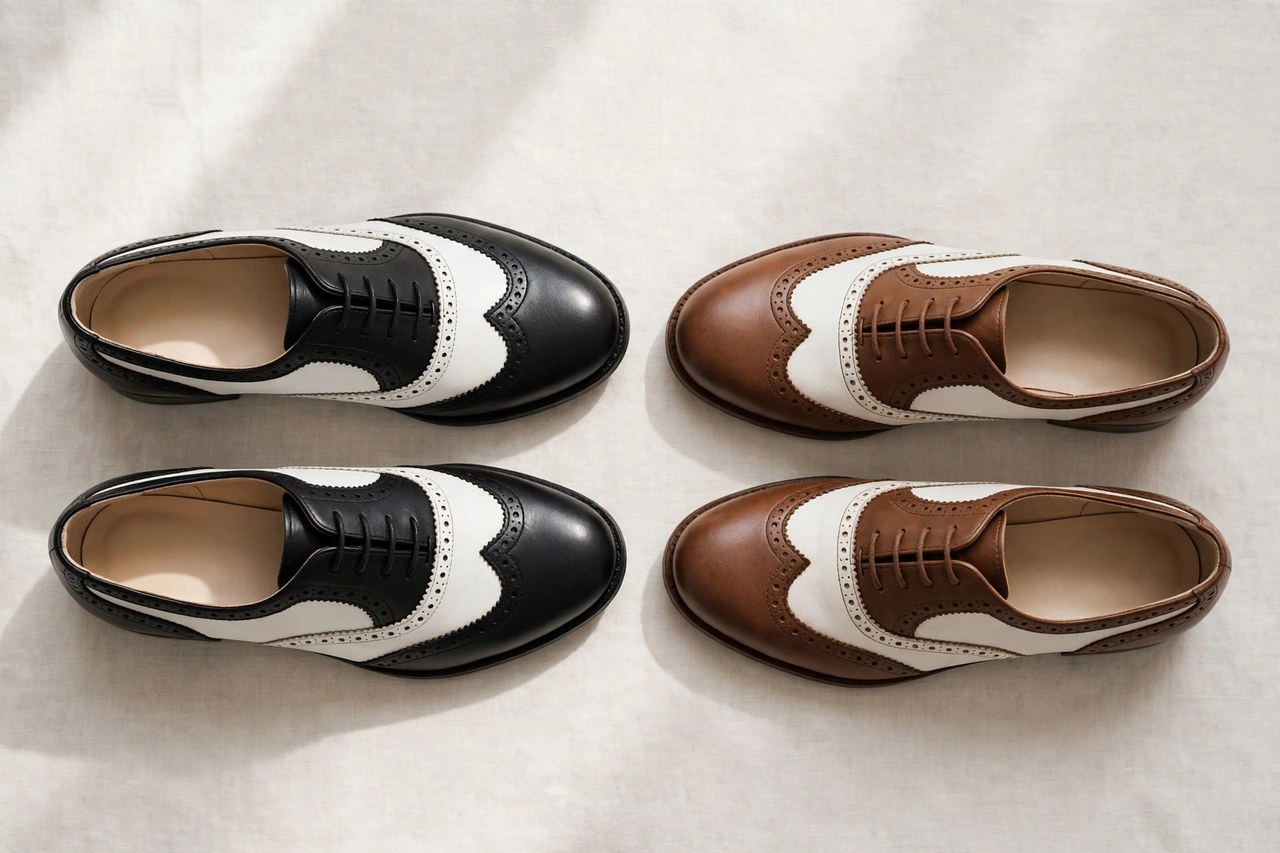
A spectator shoe is a two-tone shoe: the toe cap, heel and lace panels are made in one color of leather and the body of the shoe in a contrasting color, classically white paired with black or tan paired with brown. The effect is unmistakable — a shoe that looks formally constructed and playfully dressed at the same time — and it has survived a century of fashion cycles because that tension never quite goes out of style.
This guide covers the spectator as a footwear style with a real biography: where the two-tone construction came from, why it picked up a slightly scandalous second name in Britain, the forms it takes for women today, and how to wear a shoe that is always, by design, the loudest item in the outfit. It rewards wearers who treat it as a classic with a wink, not as a costume.
A Short, Slightly Scandalous History
Two-tone shoes began in late nineteenth-century Britain as cricket and summer sporting shoes, where white canvas or buckskin combined with leather trim that could be cleaned. In Britain they earned the nickname co-respondent shoes — a co-respondent being the person named in someone else's divorce case — because the shoes became associated with the flashy dress of men involved in such scandals. The name is a reminder that spectators were never the conservative choice, even when everything else about their construction was.
The style's golden age came in the 1920s and 1930s in America, where spectator oxfords became the signature shoe of jazz musicians, dancers, gangsters in films and well-dressed spectators at sporting events — the American name ties them to watching sport in style rather than playing it. Fred Astaire wore them dancing, which fixed their other association: movement, rhythm and showmanship. Every revival since, from 1950s saddle-shoe nostalgia to modern menswear-inspired women's oxfords, quotes that era.
The Anatomy of the Two-Tone
The classic spectator is built on an oxford or brogue pattern. The contrast panels are structural pieces: a wing tip or cap toe, the heel counter and the eyestay are cut in the darker leather, while the vamp and quarters are white or cream. Perforated brogueing often outlines the color boundary, which makes the seam decorative and hides the join. Brown-and-white spectators use tan or cognac as the dark partner and read softer and more summery; black-and-white is the graphic, high-contrast original.
Women's versions widen the pattern book. Alongside the faithful lace-up oxford there are spectator pumps with two-tone toe caps, spectator loafers, Mary Jane spectators with a strap, and heeled brogues that put the whole construction on a stacked heel. Quality shows in the joinery: the two leathers should meet flush under the brogueing with no ridge you can feel, and the white sections on good shoes are leather, not plastic — plastic whites crack and yellow, and the whole point of the shoe is the crispness of that contrast.
How to Wear Spectators
The styling rule is subtraction: the shoes are the statement, so the rest of the outfit goes quieter. Spectators excel with tailoring — wide-leg trousers, a pencil skirt, a blazer — where their menswear ancestry makes sense, and with simple dresses in solid colors where the two-tone becomes the pattern the outfit otherwise lacks. Black-and-white spectators anchor black, white, navy and red outfits; brown-and-white versions belong to cream, tan, denim and pastel palettes and to summer generally.
Avoid competing patterns near the feet and let hems show the shoe: cropped trousers, above-ankle skirts and dresses display spectators properly, while floor-length hems waste them. Socks, when worn, should be invisible liners or a deliberate plain choice — a patterned sock plus a two-tone shoe is two arguments at once. Worn with confidence and restraint elsewhere, spectators read as knowledgeable rather than retro: they are the choice of someone who knows exactly what shoe she is wearing and why.
Care for Two Colors at Once
Spectators demand slightly more care than single-color shoes because every product must be color-matched to its panel. Polish the dark leather with its own polish, keep polish strictly off the white sections, and clean white leather with a dedicated white cleaner or renovating cream rather than colored cream. Masking the dark panels with tape while working on the white is a trick cobblers use and home carers can borrow without embarrassment.
Store spectators stuffed, in bags, away from sunlight that yellows white leather unevenly. Scuffs on the white toe — the most exposed panel — should be treated promptly, since dirt ground into white leather becomes a permanent gray ghost of itself. The brogue perforations collect polish and dust; a soft brush restores them. A well-kept pair of spectators holds its contrast for years, and the contrast is the entire garment: care for the boundary between the colors and you have cared for the shoe.
Related Women's Guides
More to Explore on Apparel Search
- Women's Dress Shoes Guide
- Women's Shoes
- Women's Footwear
- Fashion
- Clothing Retail Stores
- Fashion News
- Fashion Designers
- Popular Brands
- Apparel
- Women's Clothing Stores
- Women's Clothing Wholesalers
- Women's Fashion
- Women's Shoe Stores
- Women's Footwear Guide
- Women's Shoes
- Footwear Definitions
- Shoe Search
- Fashion Videos
- Fashion Calendar
- Celebrity Fashion
- Fashion Designer Directory
- Women's Athletic Shoes
- Women's Boots
- Women's Casual Shoes
- Women's Sandals
- Women's Trend Shoes
Women’s Clothes Guide by Letter: Women's Apparel Directory N · Women's Clothes Directory O · Women's Clothing Directory P · Women's Apparel Directory Q · Women's Fashion Directory R · Women's Clothes Directory T
Looking for Women's Clothing Stores?
This guide helps you choose women's spectator shoes. To browse where to buy, visit our women's clothing store directory, where you can find retailers that carry them.