Sweater Designer Job Description
Designing knitted sweaters — yarn, gauge and stitch as the design language of knitwear's core garment
A sweater designer designs knitted sweaters: the jumpers, pullovers and knitted tops that form the commercial heart of knitwear. The sweater designer's medium is not cloth bought by the metre — it is yarn, gauge and stitch, combined on knitting machines to make the fabric and the garment in the same process. A change of yarn changes the hand-feel, the drape and the price; a change of stitch changes the surface, the weight and the warmth. Sweater designers work for knitwear specialists, fashion brands and retailers' own-label teams across men's, women's and children's ranges. This page explains how sweaters are designed and developed.
More Design Job Descriptions by Letter:
What a Sweater Designer Does
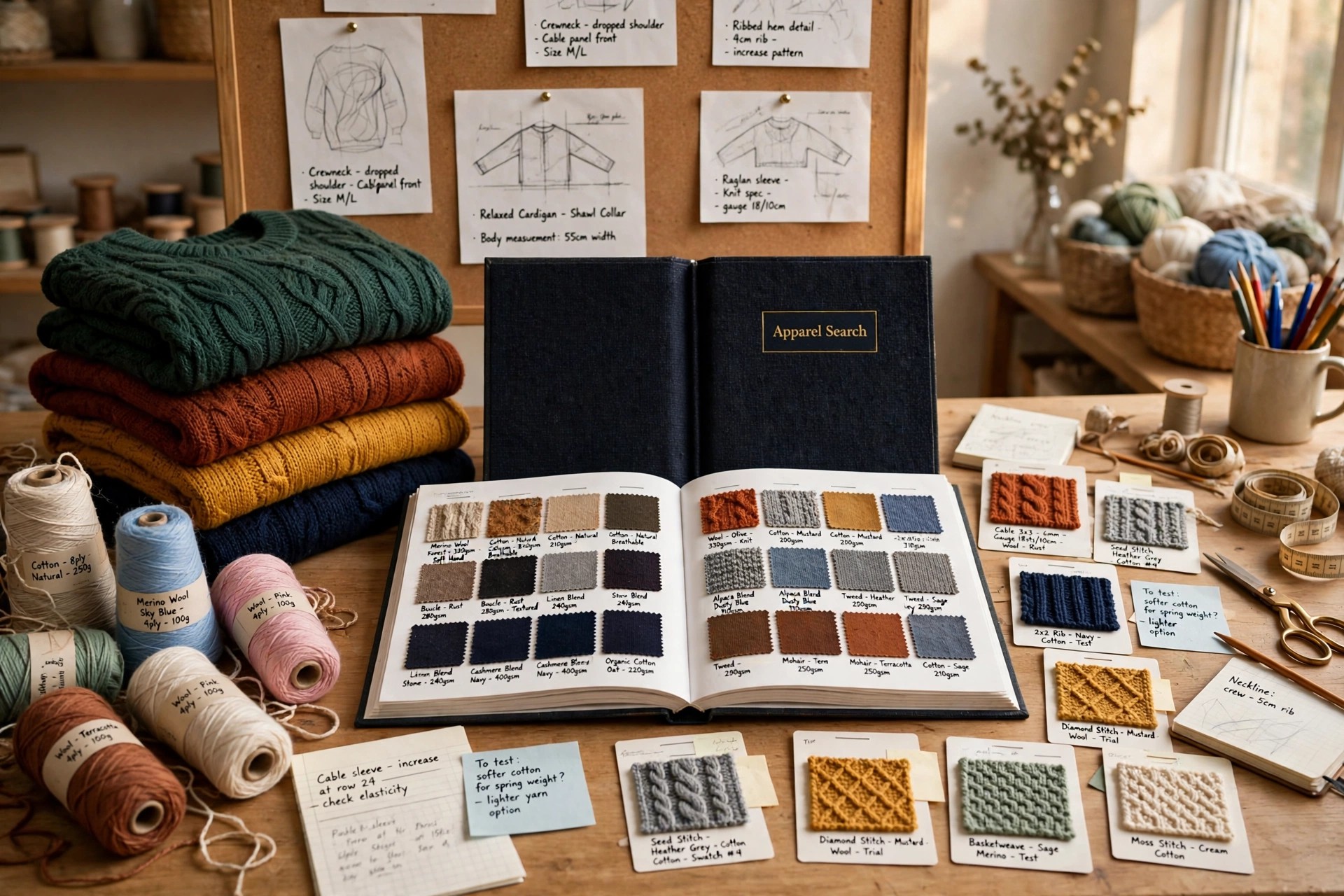
The work starts with yarn and stitch, months before a garment exists. The designer selects yarns for the season — fibre, blend, count and colour — from spinning mills' ranges, and develops stitch ideas on swatches: ribs, cables, textured stitches, jacquard and intarsia patterns, pointelle and lace stitches for finer gauges. From those swatches the season's sweater styles are sketched and specified with the knitting instructions a technician can programme: gauge, stitch structure, shaping, trims and finishing. Each style is a small engineering brief as much as a drawing.
Sample development is iterative and tactile. First samples come off the machine and are assessed for size, hand-feel, stitch clarity and fit; the designer adjusts yarn, tension, stitch and shaping through successive samples, because knitted fabric relaxes, grows and behaves differently after washing and linking. Fit is checked on the body and against the size specification, colourways are knitted down in each yarn colour, and production is approved only when the sealed sample matches the standard for weight, measurements and appearance — knitwear punishes loose specification in bulk.
Yarn, Gauge and Stitch Design
Gauge — the number of needles per inch on the knitting machine — sets a sweater's whole character. Fine gauges produce smooth, light, layering sweaters in merino, cotton or blended yarns; chunky gauges produce the heavy, textured sweaters knitted in wool and acrylic blends. The designer works fluently across that range, matching yarn count to machine gauge so stitches form cleanly, and understanding how fibre choice decides a sweater's warmth, pilling behaviour, care requirements and price. Natural fibres, regenerated fibres and synthetics each knit, wash and wear differently, and the specification records all of it.
Stitch is the sweater designer's surface language. Structure stitches — cable, moss, waffle, rib — build texture from the yarn itself; colourwork stitches — jacquard, intarsia, stripes and Fair Isle patterns — carry pattern, each with its own machine requirements and cost. Fully-fashioned construction shapes panels on the machine and links them at the seams for a cleaner, more valuable garment; cut-and-sew construction knits yardage and cuts it like cloth, faster and cheaper. The designer chooses the construction per style and price point, and designs trims — neckbands, cuffs, hems, button bands — as engineered parts of the garment, not afterthoughts.
Skills and Abilities the Role Requires
Knit knowledge is the entry ticket: yarns and their counts, machine gauges and capabilities, stitch structures and their properties, and how a knitted fabric behaves in wear and washing. Designers develop this on machines and at swatch level, and the best sweater portfolios show stitch development and made garments, not only illustrations. Drawing and CAD present colourways and patterns, but the decisive judgements — this yarn at this gauge in this stitch — are made by hand and eye on real knitted fabric.
Commercial and technical skills complete the role. Sweaters are costed by yarn weight and machine time, so the designer learns to design to a yarn-consumption target, to simplify a stitch where the customer will not see the difference and to spend where the hand-feel sells the garment. Development involves knitting technicians and factories — often specialist sweater manufacturers overseas — so clear specification, measurement discipline and patient sample correction across distance are weekly skills. Range sense matters too: the core crew and V-neck business that pays for the fashion pieces must be refreshed in colour and yarn without being broken.
Qualifications, Training and Career Path
Sweater designers typically come through fashion design or knitwear-specific courses — knitwear and knitted textiles programmes give the machine and stitch grounding directly — and enter as assistant knitwear or sweater designers with specialists, brands or retailers. Employers look for stitch swatches, yarn knowledge and finished sweaters in a portfolio, and for evidence the candidate understands gauge and construction rather than only styling. Placement time with a knitwear manufacturer is a strong preparation.
The ladder runs to sweater designer and senior knitwear designer owning a market's sweater range, then to knitwear design leadership. Specialisation options include fine-gauge knitwear, chunky and hand-knit-look product, and colourwork design. Skills transfer into the wider textile knit design field — designing knitted fabrics themselves — and into product development for knitwear categories. Sweaters are a perennial, high-volume category in every market, and designers who genuinely understand yarn and stitch are never a surplus in it.
Common Questions
What is gauge in sweater design?
Gauge is the fineness of the knitting machine, expressed as needles per inch. Fine gauges make smooth, light sweaters; chunky gauges make heavy textured ones. The designer matches yarn count to gauge so stitches form cleanly and the garment has the intended weight, drape and price.
What is the difference between fully-fashioned and cut-and-sew sweaters?
Fully-fashioned panels are shaped on the knitting machine and linked together, giving cleaner seams and less waste at a higher cost. Cut-and-sew sweaters are cut from knitted yardage and overlocked, which is faster and cheaper. Designers choose the construction for each style and price point.
How do you become a sweater designer?
Study fashion design or a knitwear course with machine and stitch teaching, build a portfolio of stitch swatches and made sweaters, and enter through assistant knitwear designer roles with specialists, brands or retailers, learning yarn selection and sample development on live ranges.
More to Explore
- Women's Sweaters Shopping Guide
- Sweater Factories — CMT Sweaters
- Men's Sweater Wholesalers
- Women's Sweater Wholesalers
- Merchandising Clothing
- Fashion Artists Guide
- Computer Assisted Design
- CAD Services
- Fashion Job Description Directory
- Fashion Employment Agencies
- Employment Search Engines
- Fashion Schools and Education
- Fashion Careers
- Fashion Directory
- Fashion Industry News
- Clothing Industry Portal