Chief Information Officer Job Description
Technology leadership for a fashion business — systems, data and digital strategy at executive level
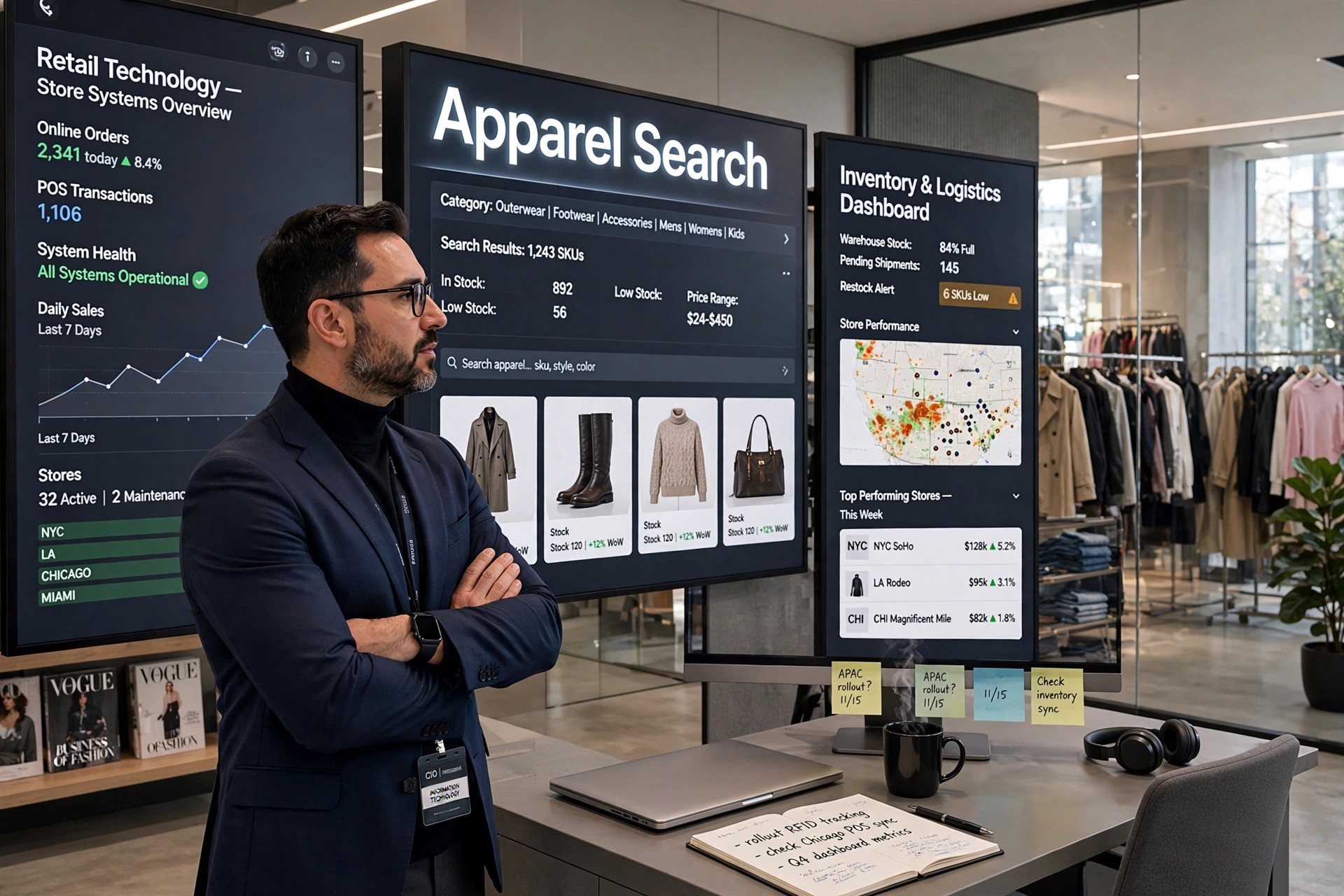
The chief information officer, or CIO, is the most senior executive responsible for the information technology and computer systems that support a fashion company's goals. In an apparel business that estate is wide: point-of-sale and store systems, e-commerce platforms, merchandising and inventory systems, product lifecycle tools, warehouse and supply-chain systems, finance and human-resources platforms, and the data that flows between all of them. The CIO sets the technology strategy for that whole landscape, leads the IT organisation that runs it, and typically reports to the chief executive officer, chief operating officer or chief financial officer.
More Miscellaneous Job Descriptions by Letter:
What a Fashion CIO Owns
The CIO owns technology as a business capability, not as a back-office utility. They decide which systems the company invests in and which it retires, how its platforms connect, and how technology spending is sequenced against commercial priorities such as opening stores, growing online sales or speeding up the supply chain. Major programmes — a new enterprise resource planning system, a replacement e-commerce platform, a company-wide data warehouse — are sponsored and governed from the CIO's office, with budgets, vendor selection and delivery risk carried at executive level.
Day to day, the CIO is accountable for the reliability and security of the systems the business trades on. A point-of-sale failure on a Saturday, a website outage during a launch or a breach of customer payment data are technology events with immediate commercial and reputational cost, so resilience, cybersecurity and compliance sit permanently on the CIO's agenda alongside new capability. The role balances those two pressures constantly: keeping today's operation safe and stable while building the platforms tomorrow's strategy requires.
How the CIO Differs from Store-Systems Leadership
Store systems are one important part of the CIO's estate, not the whole of it. A store-systems leader — such as an assistant vice president for store systems development — owns a defined domain: the point-of-sale, in-store hardware, store networks and the applications shop-floor teams use, and develops that domain in depth. The CIO's remit begins where domain ownership ends. The CIO integrates store systems with everything else — e-commerce, inventory, customer data, finance — sets the architecture and standards the domains share, and arbitrates investment between them when budgets compete.
That distinction shapes the work. Where a store-systems leader manages projects and vendors inside one portfolio, the CIO manages a portfolio of portfolios: people, budgets and suppliers across infrastructure, applications, data and security, judged as a single system. Fashion adds its own texture to that judgement, because the CIO must understand seasonal trading peaks, collection launches, markdown cycles and the way store, online and wholesale channels share one pool of stock — technology decisions made without that commercial feel fail in this industry in predictable ways.
Skills and Abilities the Role Requires
Technical literacy at architectural depth is the foundation: the CIO need not write code, but must be able to judge platforms, integration approaches, cloud and vendor claims, data design and security risk well enough to commit a company's money to them. Fashion retail sharpens the requirement — point-of-sale, merchandise planning, warehouse automation and customer-facing digital are all in scope, and the CIO must hold credible conversations with the executives who run each of those functions about what technology can and cannot do for them.
Commercial and leadership skills carry equal weight. The CIO builds and defends a technology budget in financial language, negotiates enterprise contracts, leads a department of specialists whose work they cannot personally replicate, and communicates technology risk and opportunity to a board in terms of sales, margin and customer trust. Judgement under incident pressure matters too: when systems fail in peak trading, the CIO is the executive who owns the response and the explanation.
Qualifications, Training and Career Path
CIOs usually arrive through senior technology leadership: head of IT, IT director, vice president of technology or leadership of a major domain such as store systems, e-commerce platforms or infrastructure, most often with experience of at least one large system transformation. Degrees in computer science, information systems or business are common, and many CIOs add an MBA or executive education, because the role's centre of gravity is business leadership exercised through technology rather than technology alone.
Within fashion and retail, CIOs are frequently hired from other retailers or consumer businesses, where the system landscape and trading rhythms resemble their own, as well as promoted from inside. Beyond the CIO desk, progression runs to chief technology and digital officer roles with a wider digital remit, to chief operating officer posts where technology dominates operations, and to advisory or non-executive work. It is the summit of the technology ladder, reached by people who learned to talk about systems as strategy.
Common Questions
What does a CIO do in a clothing company?
The CIO is the senior executive responsible for all of the company's information technology: store and point-of-sale systems, e-commerce platforms, merchandising, inventory and supply-chain systems, data, cybersecurity and the IT teams and vendors who run them, with a technology strategy aligned to the company's commercial goals.
How is a CIO different from a store systems manager?
Scope. A store-systems leader owns one domain — the technology used inside stores. The CIO owns every domain and, more importantly, how they fit together: shared architecture, customer and inventory data across channels, security, and investment choices between competing systems.
Who does a fashion CIO report to?
Most commonly the chief executive officer, and in some companies the chief operating officer or chief financial officer. The reporting line varies, but the CIO sits in the executive team because technology decisions affect every channel the business trades through.
More to Explore
- Fashion Employment Agencies
- Employment Search Engines
- Fashion Job Description Directory
- Fashion Directory
- Fashion Industry News
- Fashion Schools and Education
- Fashion Careers
- Apparel Industry Links
- Fashion Book Directory
- Fashion Week
- Fashion Blogs
- Fashion Newspaper
- Online Fashion News
- Clothing Industry Portal