Chief Operating Officer Job Description
Running the business day to day — stores, supply chain and operations turned into delivered results
The chief operating officer, or COO, is one of the highest-ranking executives in a fashion company — part of the C-suite — and the executive responsible for the daily operation of the business. Where the chief executive sets direction, the COO makes the direction happen: stores open and staffed, ranges delivered on time, warehouses flowing, websites fulfilled and costs controlled, season after season. The COO routinely reports to the highest-ranking executive, usually the chief executive officer, and may also carry the title of president, which makes the holder a clear second in command, especially where the top executive is both chairman and CEO.
More Miscellaneous Job Descriptions by Letter:
What a Fashion COO Runs
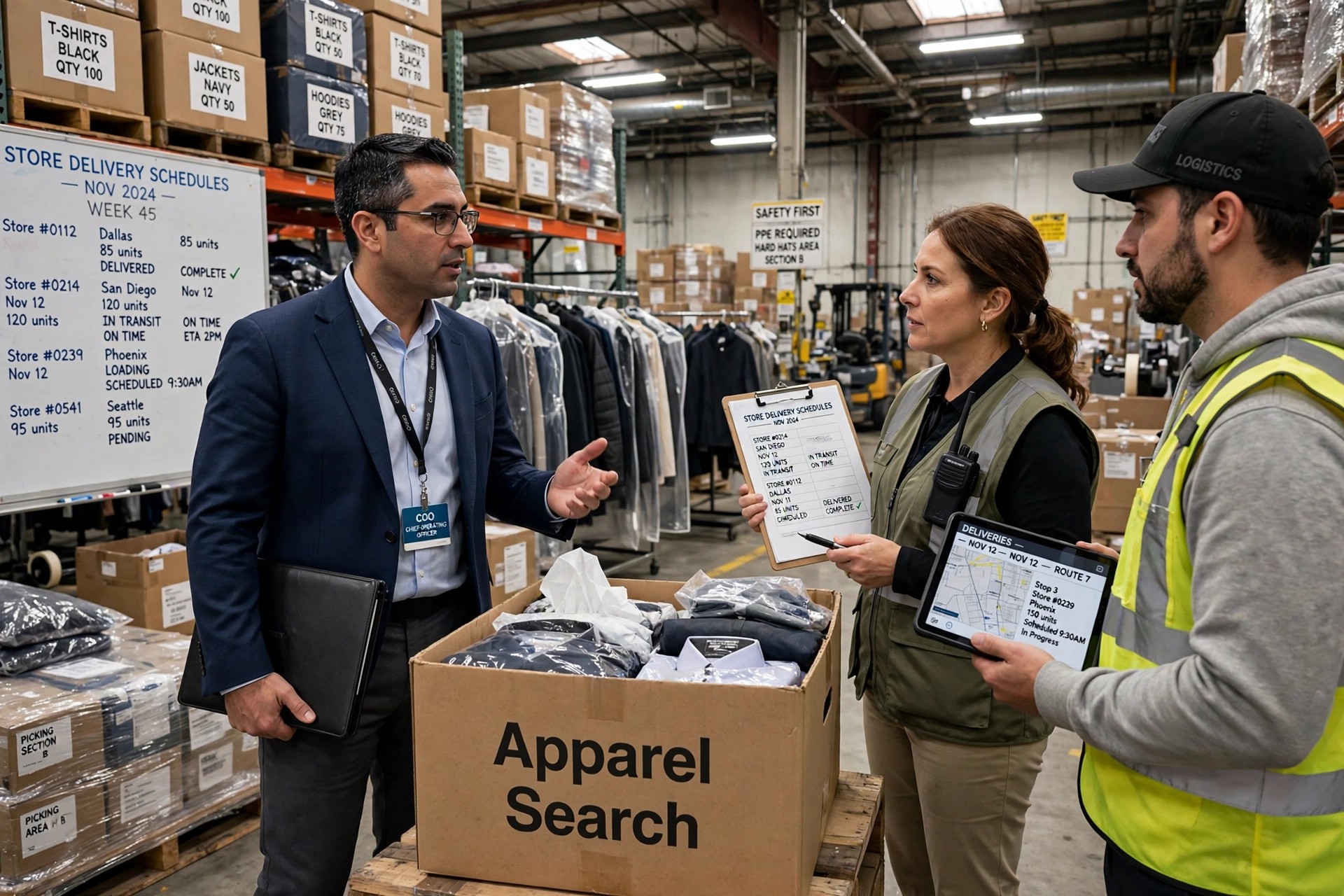
The COO's portfolio is the operating machine of the company. In a clothing business that typically means retail store operations, distribution and logistics, supply-chain and sourcing operations, and often customer service and the operational side of e-commerce fulfilment. Each of those functions has its own executives; the COO's job is to make them perform as one system, so that the range the buyers chose actually reaches the right stores and the website in the right quantities, at the right time, at a cost the margin can carry.
The rhythm of the role is set by the trading calendar. The COO reviews sales, stock, delivery and service performance weekly with operating leaders, clears the blockages between functions — a late shipment that threatens a launch, a warehouse bottleneck in peak week, a staffing gap across a store region — and owns the recovery when operations fail publicly: stock-outs on promoted lines, delivery promises missed, a distribution centre behind during the holiday peak. Strategy decks do not fix those things; operating grip does, and that grip is the role.
How the COO Differs from the CEO and the Chairman
The three top roles divide by question. The chief executive officer asks where the company should go — its markets, brands, growth and major commitments — and answers for the whole enterprise to the board. The chairman leads the board itself: governance, oversight and the long-term interests of the owners, a role concerned with whether the company is well directed rather than with directing it daily. The chief operating officer asks how the chosen direction becomes today's operation, and answers for execution: performance delivered, costs held, service kept.
In practice the boundary is a partnership. The CEO and COO agree the plan and its priorities; the COO then owns the operating decisions inside it — structure, staffing, process, supplier operations and capital spent on distribution and stores — and reports results and problems back with equal directness. In founder-led or chairman-led fashion companies the COO is often the professional operator who gives the business its discipline, which is why the combined president and COO title is common: it formalises the second-in-command reality of the job.
Skills and Abilities the Role Requires
Operating breadth is the first requirement: a fashion COO must credibly lead executives from unlike disciplines — a stores director, a supply-chain director, a distribution specialist — and judge each function's plans and excuses. Financial fluency follows closely, because operations is where most of a retailer's costs live: labour, rent-related operating cost, freight, warehousing and fulfilment. The COO reads a profit-and-loss account as an operating document and knows which lever moves which line.
Decisiveness and stamina complete the profile. Operations produces a daily queue of problems that cannot all be solved, and the COO is paid to choose, quickly and visibly, and to keep choosing through a whole selling season. Communication runs in both directions: translating board-level ambition into instructions a warehouse or a store region can act on, and carrying front-line reality back to the executive table without softening it. Fashion knowledge matters specifically here — seasons, lead times and markdown economics shape every operating decision.
Qualifications, Training and Career Path
COOs are appointed, not applied for at entry level: they arrive after leading a major operating function at scale — retail operations, supply chain, distribution or general management of a division — usually across more than one company and more than one trading cycle. Business or operations education is common and an MBA is frequent, but appointment decisions rest on a record of operations improved measurably: costs taken out without breaking service, distribution capacity built, store performance turned around.
The COO chair is also the recognised proving ground for the chief executive's job, because it is the one role below the CEO that touches the whole business daily. Many fashion and retail CEOs are promoted from COO, and sitting COOs also move between companies at the same level, carrying an operating reputation with them. For executives earlier in their careers, the lesson of the role is its route: master one operating function deeply, then widen deliberately until the whole machine is legible to you.
Common Questions
What does a COO do in a fashion company?
The COO runs the business day to day: store operations, distribution, logistics, supply-chain operations and service, making sure ranges arrive, stores trade and customers are served at a controlled cost. The COO turns the chief executive's strategy into delivered operating performance.
How is a COO different from a CEO?
The CEO decides direction — markets, brands, growth and the company's major commitments — and answers for the whole enterprise. The COO answers for execution: the daily operation that delivers that direction, usually as second in command, sometimes with the additional title of president.
Does the COO role exist in smaller clothing companies?
The title is most common in larger companies. In smaller fashion businesses the same work is usually done by an operations director, a general manager or the owner personally — daily control of stores, stock flow and fulfilment — without the C-suite title.
More to Explore
- Fashion Employment Agencies
- Employment Search Engines
- Fashion Job Description Directory
- Fashion Directory
- Fashion Industry News
- Fashion Schools and Education
- Fashion Careers
- Apparel Industry Links
- Clothing Retailers
- Fashion Week
- Fashion Blogs
- Fashion Newspaper
- Online Fashion News
- Fashion Book Directory
- Clothing Industry Portal