Research and Development (R&D) Job Description
Investigating what clothing could be next — materials, technologies and product ideas tested before they become ranges
Research and development in fashion is where new possibilities are tested before they are allowed near a selling range. R&D specialists — working in materials teams, innovation units, technical centres and larger design studios — investigate emerging fibres and fabrics, construction and manufacturing technologies, sustainability methods and product concepts, then build prototypes and evidence that tell product teams what is real, what it costs, and what it would take to produce at scale. The work is deliberately ahead of the season: an R&D result this year may become a fabric platform, a new garment category or a production method two or three years later.
More Miscellaneous Job Descriptions by Letter:
Investigating Materials, Technology and Ideas
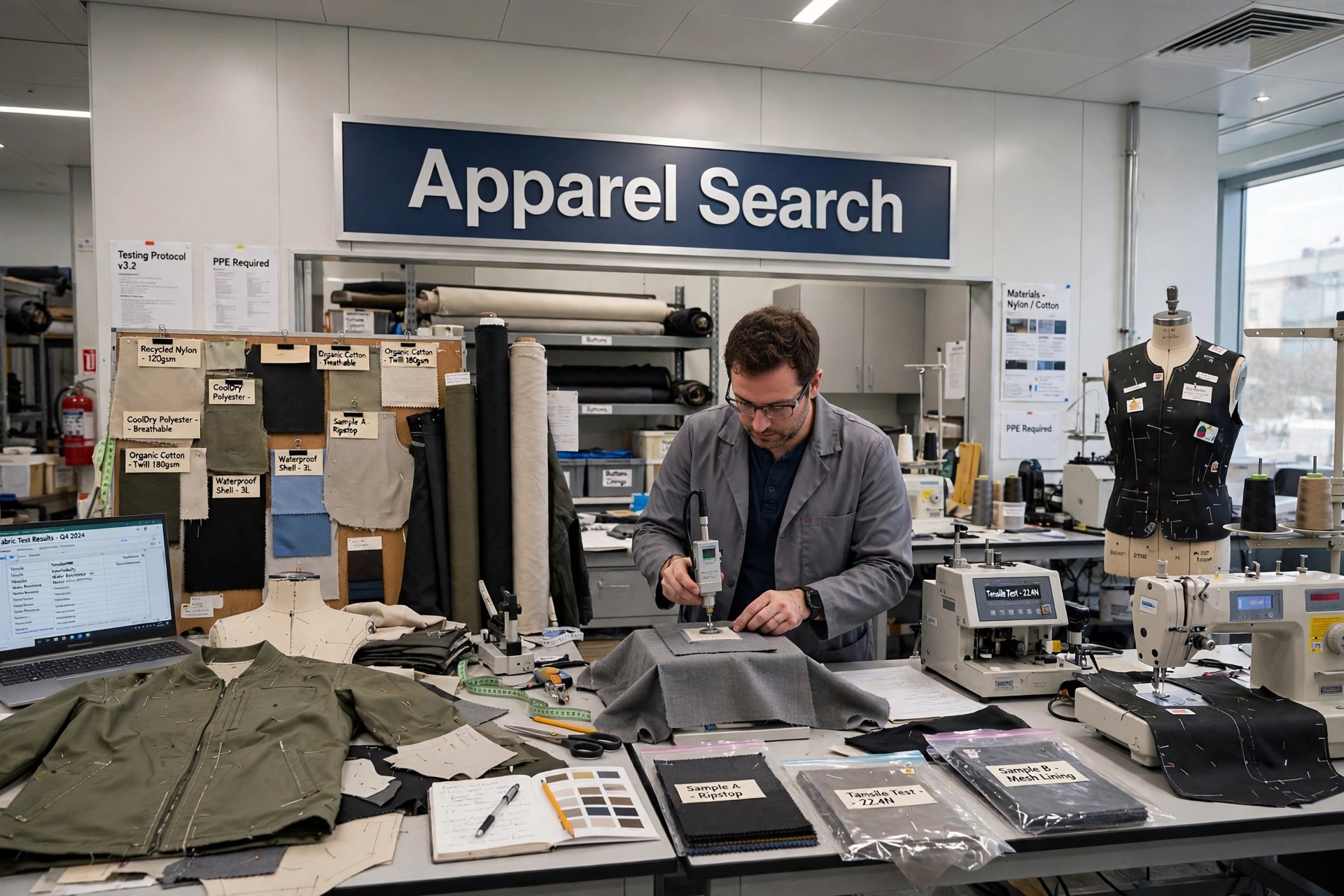
The research agenda comes from three directions at once: problems the business already has — returns caused by fabric failure, cost pressure on a core material, a sustainability commitment that current materials cannot meet — technologies arriving from outside, such as new recycled or bio-based fibres, digital knitting, bonding and printing methods, and the R&D team's own scouting of mills, trade fairs, universities and adjacent industries. Researchers read, visit, sample and question widely, because the cheapest experiment is learning from somebody else's results before committing a budget.
Investigation then turns physical. R&D staff commission or build trial fabrics and prototype garments, arrange laboratory and wear testing, and compare results honestly against the incumbent material or method — including the comparisons where the newcomer loses. Findings are documented to a standard other teams can act on: what was tested, how, with what result, at what indicative cost and risk. A development that cannot be explained in that form is not ready to hand over, however exciting the sample looks on a rail.
From Prototype to Production
The handover to product teams is where R&D earns its keep. Specialists work with designers, product managers and garment technologists to translate a proven development into briefs the range can use: specifications, approved suppliers, cost implications, care and performance limits, and the claims the business may truthfully make about it. Pilot production follows — small runs through real factories and real quality checks — because many developments that succeed in a laboratory fail at line speed, in bulk dyeing, or in the hands of a distribution centre, and discovering that in a pilot is the entire point of one.
R&D also protects what it creates. The team records development work so the business can defend its know-how, works with legal colleagues where a construction, material application or process is genuinely novel, and maintains the material and technology library — physical samples, test records and supplier evidence — that future seasons draw on. Failed developments are archived with their reasons rather than buried, because in research a documented dead end is an asset: it stops the next team paying to rediscover it.
Skills and Abilities the Role Requires
Scientific method inside a commercial setting is the core discipline: framing a testable question, controlling comparisons, measuring accurately and reporting what the evidence shows rather than what the sponsor hoped. Materials knowledge underpins it — fibres, yarns, fabric construction, dyeing and finishing, and how each behaves in wear, washing and production — together with enough garment construction understanding to prototype credibly and talk to factories as an equal.
Curiosity and communication complete the profile. R&D staff must hunt novelty without falling for it, explain technical findings to designers and executives in the language each audience acts on, and run projects whose payoff is uncertain against budgets whose scrutiny is not. Patience is a working skill: the development that matters may take three seasons of iteration, and the specialist's job is to keep its evidence improving and its sponsors informed until the business can decide with a clear head.
Qualifications, Training and Career Path
R&D specialists typically hold degrees in textile science or technology, materials science, apparel technology or a related discipline, and many arrive via fabric development, garment technology or textile engineering posts where testing and supplier work built their evidence habits. Research degrees and university collaboration experience are valued in larger innovation units, while smaller brands often combine the R&D remit inside senior fabric or product-development roles. Employers train specialists in their testing standards, prototype facilities and documentation systems.
Progression runs to senior R&D specialist, materials or innovation manager, and head of research and development roles owning a brand's multi-year materials and technology agenda, with sideways moves into sustainability leadership, advanced product development and technical consultancy. It suits investigators who want their research to end in garments people actually wear — and who can accept that proving an idea wrong, early and cheaply, is a success this profession counts properly.
Common Questions
What does R&D do in the fashion industry?
Research and development investigates new fibres, fabrics, technologies and product concepts before they reach selling ranges: building and testing prototypes, comparing results against current materials and methods, running pilot production, and handing proven developments — with costs, limits and evidence — to product teams.
How is fashion R&D different from product development?
Product development builds this season's range to a brief. R&D works ahead of the brief: testing what materials, technologies and ideas deserve to become briefs in future seasons, and proving or disproving them before the business commits.
What qualifications do fashion R&D specialists need?
Usually a degree in textile or materials science, apparel technology or a related field, plus experience in fabric development, garment technology or testing. Scientific method, materials knowledge and clear technical reporting are the skills employers screen for.
More to Explore
- Fashion Employment Agencies
- Employment Search Engines
- Fashion Job Description Directory
- Fashion Directory
- Fashion Industry News
- Fashion Schools and Education
- Fashion Careers
- Apparel Industry Links
- Textile Research
- Fashion Education
- Fashion Training
- Fashion Glossary
- Apparel Industry Calculators
- Retail Math
- Fashion Industry Guides and Directories
- Research and Education Trade Shows
- Child Labor in the Clothing Industry — 2005 Report
- Government Resources for the Clothing Industry
- Academic Dress Definition
- History of Knitting
- History of the Zipper