Brooks Brothers History
Earlier company descriptions, brand line-ups, store counts and photographs from the history of Brooks Brothers, kept for historical reference.
← Back to the current Brooks Brothers profile
The Company Description of Its Time
What a rich history Brooks Brothers has obtained - the historical profile's salute, preserved here because it is earned by the timeline that follows. This is one of the country's oldest clothing retailers, and Apparel Search files it as one of the nation's leading and most classic apparel retailers. Brooks Brothers is proud to uphold the same traditions and values for nearly two centuries, believing these are the reasons its customers consider it far more than a store. Brooks Brothers is an American icon. On April 7, 1818, at the age of 45, Henry Sands Brooks opened H. & D.H. Brooks & Co. on the northeast corner of Catherine and Cherry Streets in New York City. His guiding principle: 'To make and deal only in merchandise of the finest quality, to sell it at a fair profit and to deal with people who seek and appreciate such merchandise.'
The Inventions: Button-Down, Shetland, Repp and Madras
1890: the silk Foulard necktie, brought from England by senior partner Francis G. Lloyd; many of the tie designs selected during those visits are still used today, in the historical record. 1896: the Original Polo button-down shirt - John Brooks, grandson of the founder, made fashion history after attending an English polo match and observing players' shirts secured with buttons to keep them from flapping in the wind; the shirt became an instant success and one of the best-selling Brooks Brothers items. 1904: the Shetland sweater, originally hand-made by peasants of the Shetland Islands, its process refined by Brooks Brothers into an American classic. 1910: the English polo coat introduced to the US, later offered in the classic camel hair.
1915: Brooks Brothers relocated to its present ten-story flagship store at 346 Madison Avenue, in a neighborhood that had recently become the preferred location of New York's prominent social organizations. 1920 brought two signatures: the repp tie - fashioned after British regimental or club ties, Americanized by reversing the direction of the stripes, and by the fifties synonymous with Brooks Brothers and the 'Ivy League Look' - and Indian madras, introduced to the United States in jackets, trousers and beachwear. 1930: seersucker made available for the first time in America. 1949: a small women's department at last, with Vogue featuring the pink button-down shirt for women to overnight sensation, and argyle socks, adapted from a pattern the company's president spotted on a golfer.
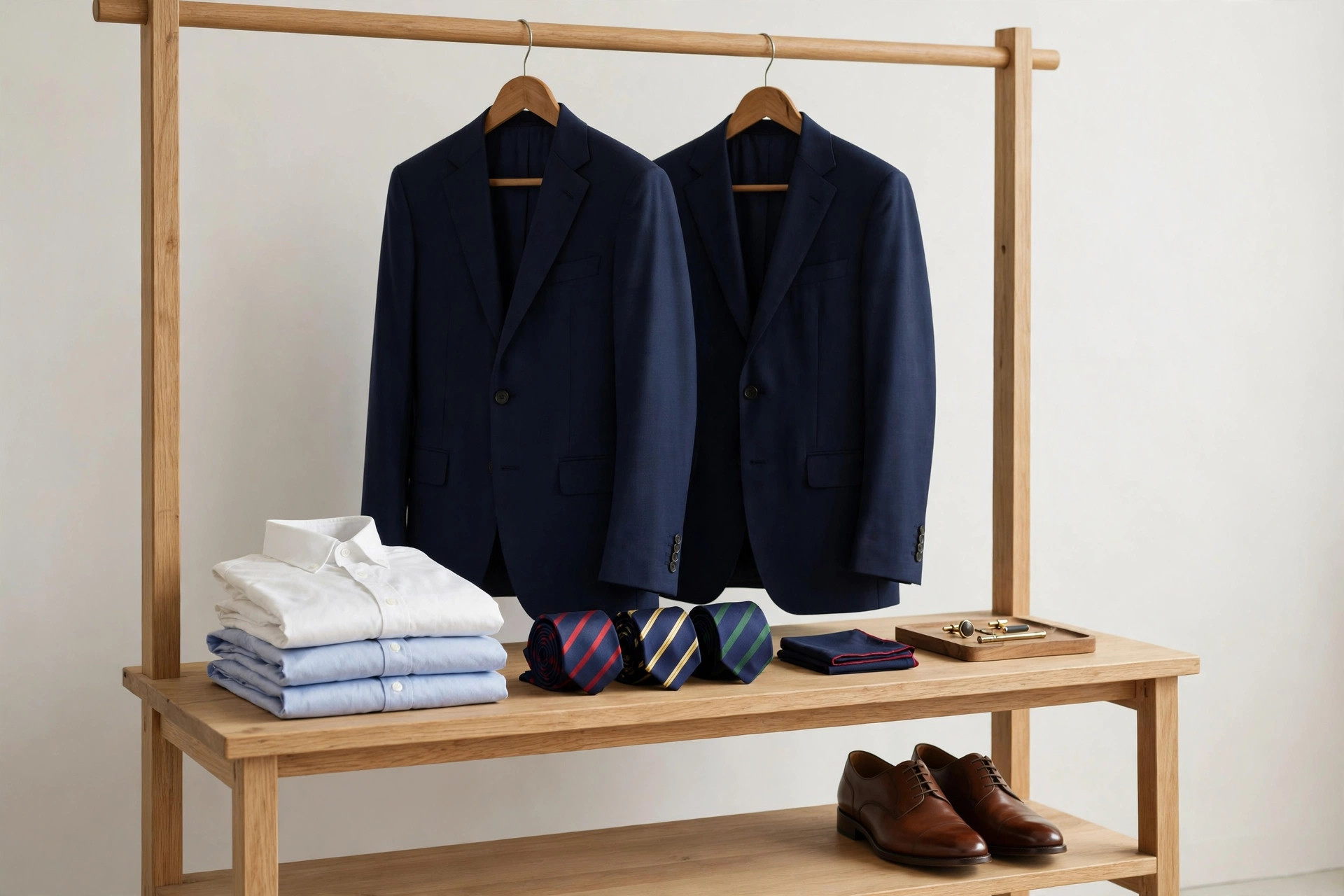
Photos

More to Explore on Apparel Search
- Fashion Industry Company Names
- Fashion Blogs
- Fashion Guide
- Fashion Jobs
- Men's Fashion
- Men's Shoes
- Retail Stores
- Luxury Fashion
- Defining Luxury
- Fashion Designers
- Men's Clothing Stores
- Men's Suit Stores
- Men's Suits
- Men's Dress Shirts
- Men's Dress Pants
- Men's Dress Socks
- fashion retailers
- Neiman Marcus
- Bergdorf Goodman
- Barneys
- Fashion Industry
References & Further Reading
Looking for More Fashion Companies?
This profile is one filing in the Apparel Search company names directory. Browse the full A-to-Z listing on the Fashion Company Names directory, or shop by category in the Apparel Search shopping directory.