Textile Design Software
Designing the surface of cloth on screen: repeats, colorways, separations and loom-ready files
Before a fabric exists, it exists as a design file. Textile design software is where prints are put into repeat, colorways are tried, woven structures are drafted and knit patterns are programmed — the digital studio in which the surface of cloth is created, colored and prepared for the mill. A good design on screen becomes sample yardage, presentation boards and finally production fabric.
This directory lists the specialist suppliers of that software, from Photoshop toolkits for print designers to the CAD systems that generate the actual control files a jacquard loom weaves from. The work divides into three crafts — printed, woven and knitted textiles — and most tools declare which they serve.
Related Software Guides
Repeats, Separations and Colorways
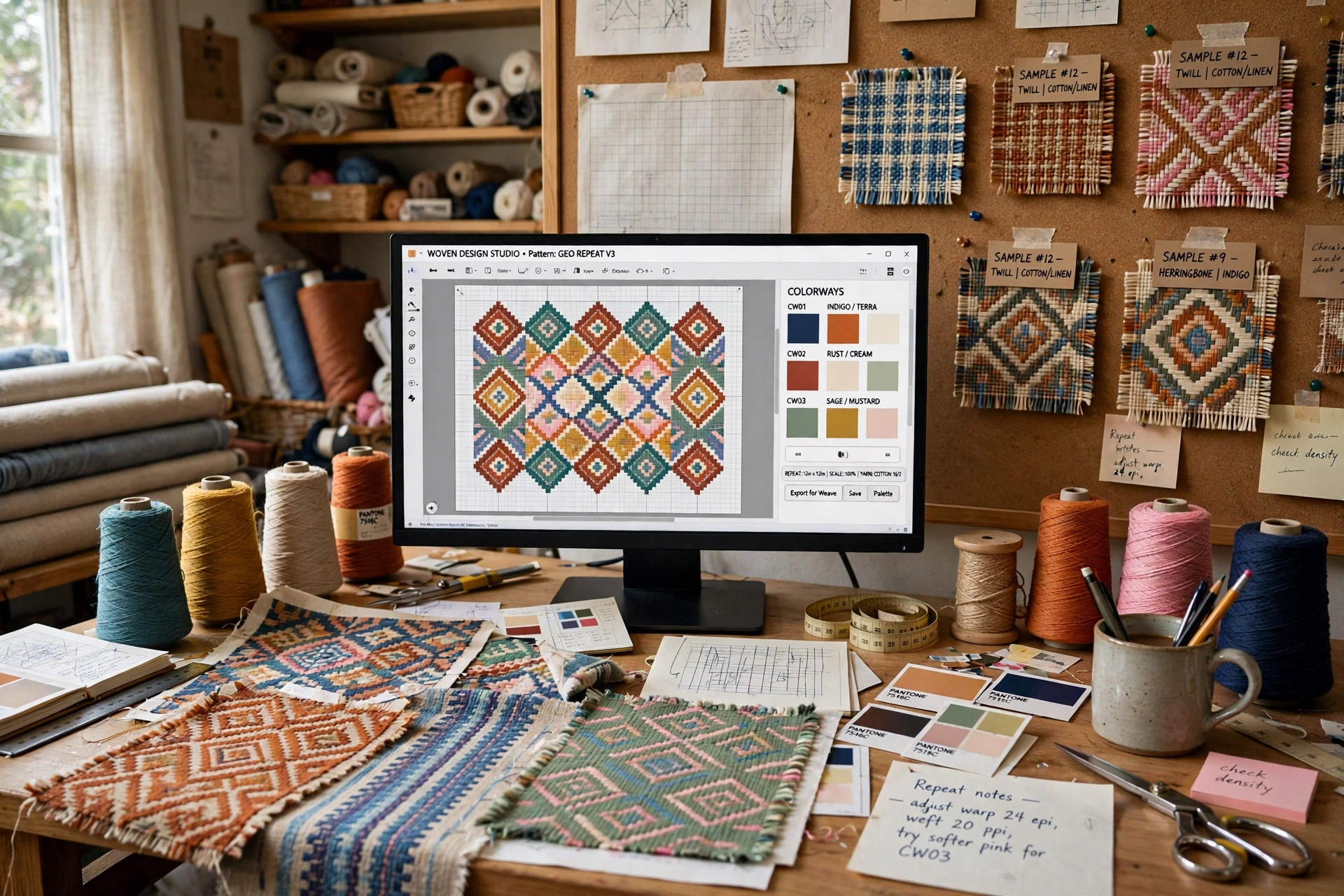
Print design dominates the category's daily work. A motif becomes a textile print only when it repeats seamlessly, so the software's core skills are repeat construction — straight, half-drop, brick and mirrored — and color separation: breaking the artwork into the screens or channels that will print it, one per color. Advanced color matching then lets the designer recolor the design into colorways on screen and print sample yardage and presentation boards directly, instead of waiting for mill strike-offs for every idea.
Flexibility is a selling point of the modern tools: scan in the office, design at home and print anywhere; buy the full system or only the tools for separate stations as the studio needs them. Plug-in toolkits extend the drawing programs designers already know — Clicdesign, for example, is a toolkit for textile design within Adobe Photoshop, and Artlandia's SymmetryWorks builds pattern-making into Illustrator — while dedicated suites such as DigiFab's Evolution cover the full path from artwork to separations to printed samples. Adobe Illustrator itself is the general vector drawing tool many of these plug-ins extend.
Woven and Knit Design: From Screen to Loom
Woven design software works in ends and picks — the warp and weft threads of the cloth. The designer drafts the weave structure, assigns yarns and colors, and views the design in its correct as-woven aspect ratio, because a design that ignores the warp-to-weft ratio distorts on the loom. JacqCAD MASTER illustrates the depth available: designs of up to 16,000 ends by 32,000 picks, warp/weft ratios from .05:1 to 20:1, up to 20 image windows open at once for moving elements between designs, industry-standard TIFF and PICT file support, and output of the loom control files and punched data the weaving machinery runs on.
The same principle — the file is the instruction — runs through knit design and into the integrated suites. Lectra's textile tools sit inside its fashion platform alongside pattern and PLM, and NedGraphics builds its business on textile and apparel design software for print, weave and knit. Bontex, a Milan-based supplier of more than 30 years, pairs textile CAD with software for garment collections and large image-archive databases for the catalogs a design studio publishes to its network or the web.
Textile Design Software Suppliers in This Directory
For print and surface design: Artlandia SymmetryWorks, Clicdesign for Photoshop, and DigiFab Systems' Evolution — the complete turnkey solution for designing and coloring, creating or recreating repeats and separations with advanced color matching, from a developer and manufacturer of software, fabrics, supplies and equipment for the digital printing industry. For woven design: JacqCAD MASTER, described above. For integrated platforms: Lectra and NedGraphics, both linked in the references. Bontex covers textile CAD, collection software and image archiving from Italy.
Triadem is also recorded in this directory; the page linked here no longer responds while the company site does, so the entry is kept unlinked. Studios choosing software should start from their output: a print shop needs separations and color management above all; a weaving mill needs loom-file compatibility confirmed against its exact machinery; a fashion brand's studio needs the design files to flow into the PLM and pattern systems the rest of the company uses.
More Software Guides
- Fashion Software
- ERP Systems
- Fashion Industry
- Textile Industry
- What does CAD mean?
- PDM Product Development Management
- CRM Software
- Supply Chain Management Software
- Import & Export Software
- Inventory Control Software
- Warehouse Software
- Embroidery Software
- Costing Software
- Point of Sale Software
- Knitting and Weaving Software
- Bar Code Software
- Mail Order Software
- Auction Software
- Trade Show Management Software
- Production Management Software
- Ecommerce Software Solutions
- Retail Software
- Quality Assurance Software
Common Questions
What does textile design software do?
It creates the surface design of fabric on a computer: putting print artwork into seamless repeat, making color separations and colorways, drafting woven structures in ends and picks, programming knits, and producing the sample prints, presentation boards and machine files production needs.
What is a repeat in textile design?
The unit of artwork that tiles across the fabric. Software builds repeats in layouts such as straight, half-drop and brick, hiding the tile edges so the printed or woven pattern appears continuous across the cloth.
How is woven design software different from print design software?
Woven designs are structures, not just images: the software works in warp ends and weft picks, shows the correct as-woven aspect ratio, and outputs loom control files. Print software works in artwork, separations and color channels for screens or digital printers.
References & Further Reading
- Artlandia SymmetryWorks
- Bontex
- Clicdesign
- Evolution Textile Design Software
- JacqCAD MASTER
- Lectra
- Ned Graphics
- Triadem — textile design software supplier listed in this directory; the page linked here returns a 404 while the company homepage responds, so the entry is kept as a record without that link.