Doc Martens (Dr. Martens)
Clothing Definitions — definitions of garments and clothing terms from Apparel Search
Search Apparel Search
At a Glance
Definition: Dr. Martens, known as Doc Martens, Docs or DMs, is a British footwear brand whose boots and shoes are built on an air-cushioned sole, above all the 1460 boot of 1960.
Also known as: Docs; DMs; Doc Martens
Category: Clothing Definitions
Word Origin
The brand name anglicises its inventor's surname. Dr. Klaus Märtens spelled his name with an ä; when the British maker R. Griggs Ltd. licensed his design it rendered the name Martens — which is why the boots are so often miswritten 'Doc Martins', a spelling the brand itself does not use.
Dr. Martens is a brand of shoe and boot — 'Doc Martens', 'Docs' or 'DMs' to most of the people who wear them — defined by one invention: a sole cushioned with air, developed by a German doctor for his injured ankle and turned into a British boot that workers adopted first and youth subcultures made famous. This page tells that story, from the 1945 prototype to the 1460 boot and beyond, and explains what to look for in the boots today. Our company directory carries a fuller Dr. Martens company profile.
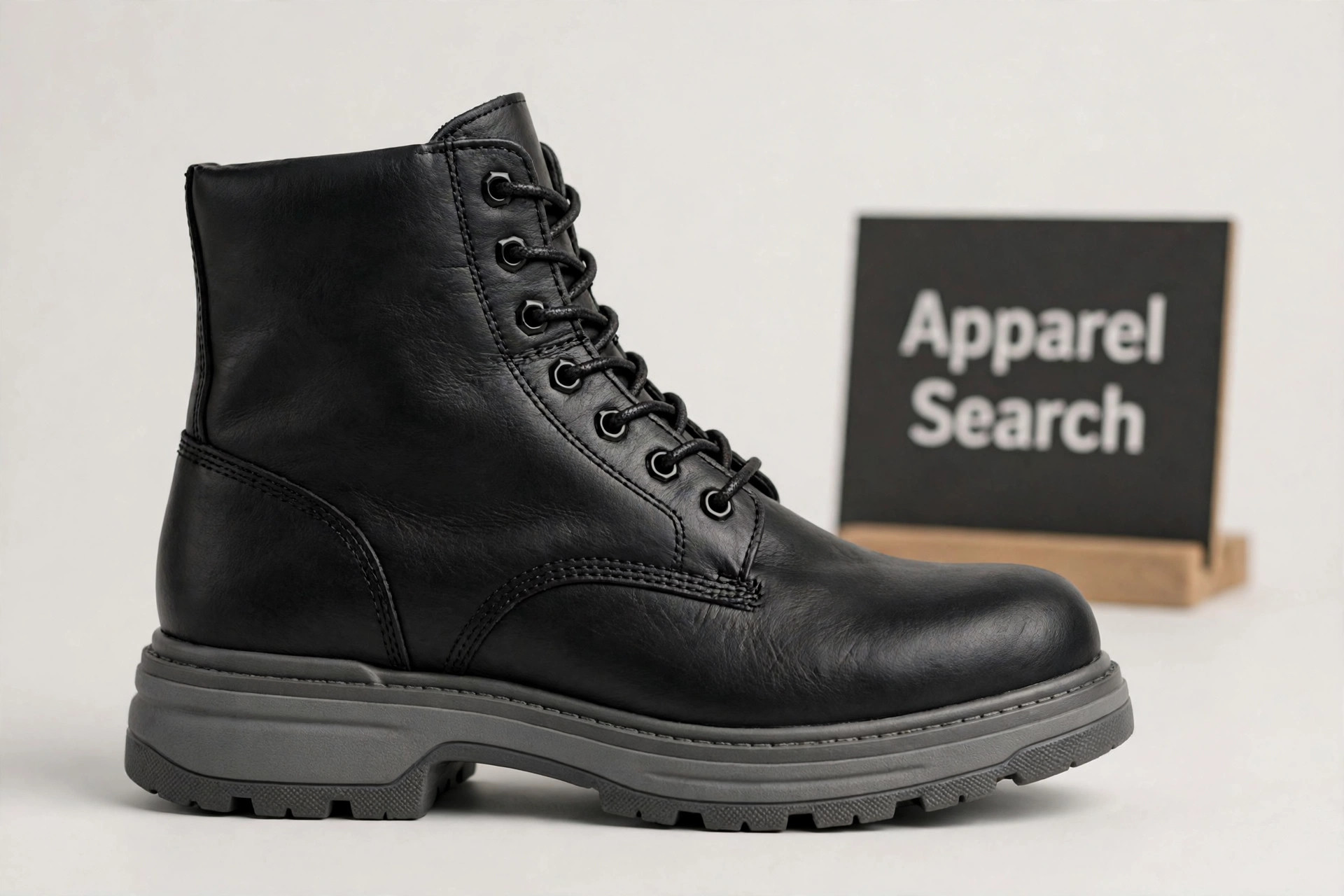
An Air-Cushioned Sole, Invented in Convalescence
The design began with an injury. Dr. Klaus Märtens, a doctor serving in the German army, hurt his ankle skiing in the Bavarian Alps in 1945 and found the standard army boot too hard on the damaged foot while it healed. His answer was a boot of soft leather on a sole padded with air — pockets of air sealed in the sole material to cushion every step. He made a prototype pair, and in 1947 he went into business in Seeshaupt, Germany, with an old university friend, Dr. Herbert Funck, making the boots with rubber recovered in part from discarded Luftwaffe airfield material.
The comfort sold itself, though not at first to the customers history remembers. Through the company's first decade its steadiest buyers were older women — around eighty per cent of early sales were to women over forty, housewives who spent the day on their feet. By 1952 the partners had opened a factory in Munich, and by 1959 the design was ready to be licensed abroad. The sole, not the styling, was the product: everything that followed was built on it.
Griggs, AirWair and the 1460
The British shoemaker R. Griggs Ltd. took the licence, anglicised the name, reshaped the heel for a better fit, added the yellow stitching around the sole that became the brand's signature, and trademarked the air-cushioned soles as AirWair. The first British boots left the factory on 1 April 1960 — and the date named the classic model: the 1460, an eight-eyelet boot, launched in cherry red as well as black. Date-coded model names became a house habit, and the 1460 remains the reference design against which the whole range is recognised.
In Britain the boots were work boots first. Postmen, police officers, factory workers and others who stood all day bought them for the same reason older German housewives had: the sole. They were comparatively cheap, hard-wearing and comfortable in a way ordinary work boots were not, and that working-class adoption is the foundation the later fashion story stands on — the boots meant something before they were style, which is precisely why style claimed them.
From Work Boot to Subculture Uniform
By the late 1960s the boots had been taken up by skinheads, for whom polished cherry-red 1460s became a deliberate uniform, and through the 1970s they passed to punk, whose musicians and audiences made the boot a badge of refusal — worn with everything from torn jeans to, later, dresses, in a combination that has never entirely left fashion since. Each generation since has re-adopted the same boot for its own purposes, which is rare in footwear: the design barely changes, so each adoption reads as a choice about identity rather than about novelty.
The loyalty runs both ways in the record. The boots have been sung about, drawn on record sleeves and kept in production through changes of ownership and fashion that ended many rival brands. As a category they sit with combat boots — the military ancestry is real, in the last shape and the lace-up height — but the air sole and the civilian history make them their own thing; our influence section surveys combat boots and boots more widely.
The Range Today and What to Check
The range now runs far beyond the 1460: low shoes on the same sole, sandals, Mary Janes, Chelsea boots and steel-toe work boots certified for industrial use, all sold under the AirWair name. Production history is part of the modern story: in 2003 the company ended almost all of its UK manufacturing and moved production overseas, keeping a small 'Made in England' line at its Northamptonshire home factory for the premium versions of the classic designs. The brand's own site, drmartens.com, carries the current range.
For buyers, three checks matter. Fit first: the classic boots are famously stiff at first wear and soften as the leather moulds to the foot, so sizing and a patient breaking-in period are part of owning them. Construction second: the signature sole is heat-sealed and stitched to the upper — the yellow stitching is structural branding, not decoration alone. Care third: smooth leather versions respond to ordinary leather care, while patent, suede and vegan-material versions each need their own treatment. Set among footwear generally, and the boots category in particular, Doc Martens remain the clearest example in modern dress of a work boot becoming a cultural uniform without ever quite stopping being a work boot. Shoe laces, swapped for coloured pairs, are the one customisation wearers have always made their own.
Common Questions
What are Doc Martens?
Doc Martens — properly Dr. Martens, also called Docs or DMs — is a British footwear brand known for boots and shoes built on an air-cushioned sole. The classic model is the 1460, an eight-eyelet boot first made in Britain on 1 April 1960, with the brand's signature yellow sole stitching.
Who invented the air-cushioned sole?
Dr. Klaus Märtens, a German army doctor, designed the air-padded sole while recovering from an ankle injured skiing in the Bavarian Alps in 1945, after finding standard army boots too uncomfortable. He went into business with Dr. Herbert Funck in 1947, and the British firm R. Griggs Ltd. later licensed and developed the design.
Why are they called 1460 boots?
The number is a date. The first British Dr. Martens boots were made on 1 April 1960 — 1/4/60 in British date order — and the classic eight-eyelet boot took that date as its model name. The naming habit continued across the range.