Licensing Coordinator Job Description
Tracking every deadline across live licensing deals — approvals, royalty reports, samples and launches kept moving
A licensing coordinator keeps live licensing deals on schedule. Where the licensing assistant supports the team's administration, the coordinator owns the flow of a portfolio of agreements: which licensee owes a royalty report this month, which product samples are waiting for approval, which contract expires next season, and which launch date is at risk. Coordinators work between licensors, licensees, designers and finance, chasing the right person at the right moment so that nothing a contract requires is missed. It is the operational middle of the licensing ladder, and the role in which licensing professionals learn how deals actually behave.
More Miscellaneous Job Descriptions by Letter:
Coordinating Deals Day to Day
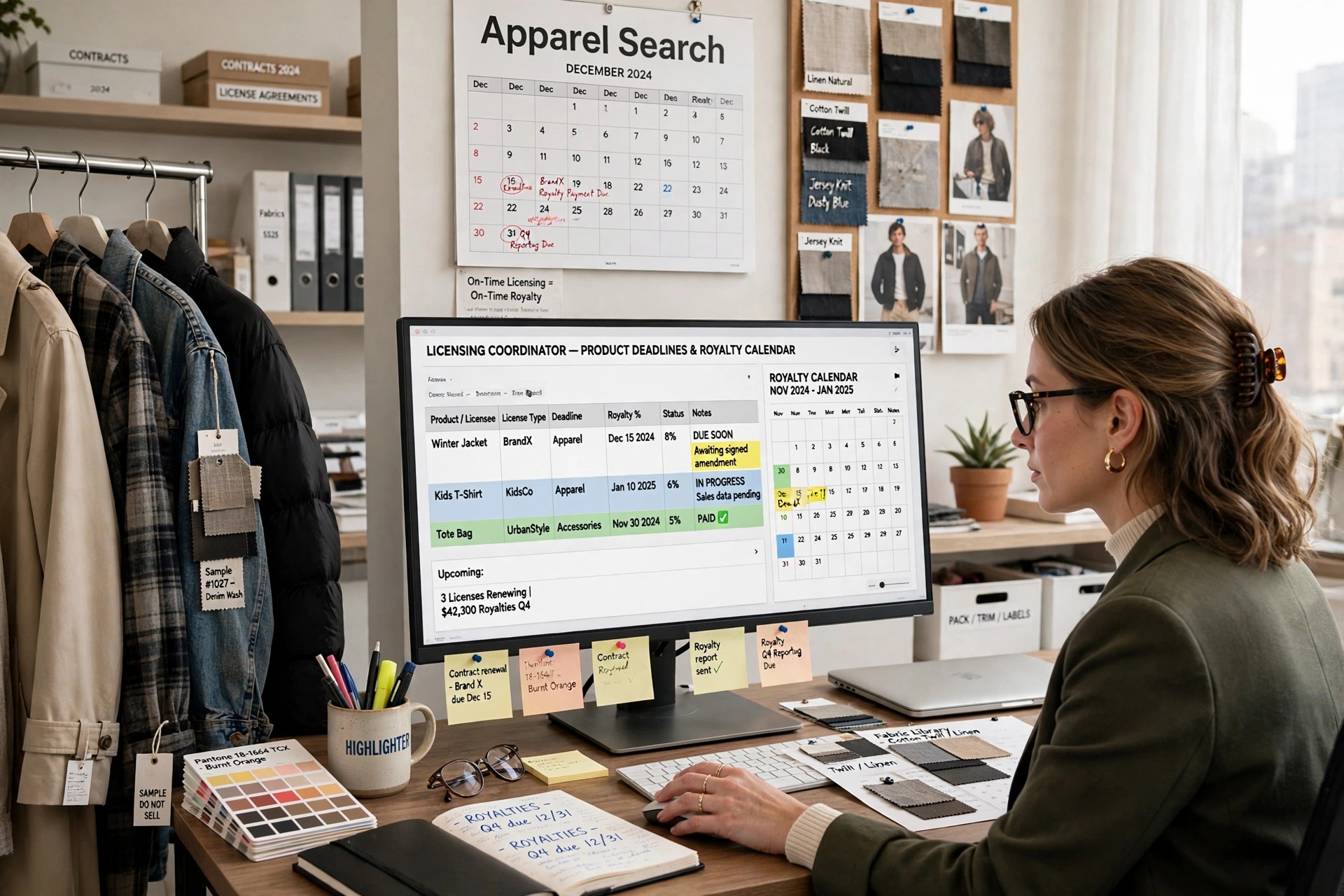
The coordinator's core tool is the deal calendar. Every agreement generates dated obligations — advance and royalty payments, sales reports, sample submissions, marketing commitments, insurance certificates and renewal notices — and the coordinator tracks all of them across all assigned deals, issuing reminders before deadlines and escalating to the licensing manager when a licensee falls behind. A missed royalty report or an unnoticed expiry date is a commercial problem, so this tracking is treated as control work, not diary-keeping.
Coordination also means being the daily point of contact. Licensees ask the coordinator where an approval stands, what a report should contain, and when artwork will be released; internal colleagues ask which products are licensed, by whom, and for which territories. The coordinator answers from the deal records, routes questions they cannot settle to the manager, and keeps a clear written trail so any colleague can pick up a deal and see its current state.
Royalties, Samples and the Approval Flow
Royalty reporting is the coordinator's financial rhythm. As statements arrive, the coordinator checks them against the agreement — correct royalty rate, correct period, minimum guarantee properly accounted for — logs the figures for finance, and queries discrepancies with the licensee. The coordinator does not set the deal's economics, but is usually the first person to spot that reported sales and expected sales have parted company, and that early warning has real value.
Sample and product approvals are the other continuous flow. The coordinator manages submission schedules, makes sure design comments are returned within the time the agreement allows, and follows up samples that stall — because a licensee cannot manufacture until approval lands, and a late approval can cost a selling season. Coordinators who understand product and artwork, including how design files and CAD material are exchanged, resolve these stalls far faster than those who only forward messages. The coordinator also keeps licensors and licensees working from the same version of events: one shared status for every submission, report and launch date, updated as soon as anything changes, so that a manager walking into a licensee meeting is never working from older information than the licensee is.
Skills and Abilities the Role Requires
Project-tracking discipline is the defining skill: many simultaneous deadlines, each attached to a different company, tracked without confusion and pursued without drama. Diplomacy is its partner — the coordinator routinely chases busy people in other companies for overdue reports and samples, and must be persistent enough to get them while keeping the working relationship warm. Numerical confidence matters for royalty checking, and systems fluency for the databases and spreadsheets the tracking lives in.
Coordinators also need a working understanding of the agreements themselves: royalty structures, approval rights, territories, exclusivity and term dates, well enough to know which deadline matters and which question must go to a manager or to legal. Fashion and brand awareness sharpens the judgement — knowing a product category's seasonality explains why one approval is urgent in March and routine in June.
Qualifications, Training and Career Path
Coordinators are typically promoted licensing assistants or hired with experience in licensing, merchandising or contracts administration. A degree in business, fashion business or marketing is common but the decisive credential is a record of reliable coordination in a detail-heavy environment. Employers train coordinators in their contract systems and royalty processes; the broader licensing knowledge — deal structures, negotiation practice, brand strategy — is picked up deliberately by those aiming higher.
The next step is licensing manager, where a portfolio of licensees is owned commercially and renewals are negotiated, and beyond that the director level. Coordinators also move into brand management, partner account coordination and royalties administration leadership. The role suits organised people who like finished lists: in licensing, the coordinator is the person whose tracking lets everyone else trust the calendar.
Common Questions
How is a licensing coordinator different from a licensing assistant?
An assistant supports the team's administration — filing, data entry, sample logging. A coordinator owns the flow of live deals: tracking deadlines and obligations across a portfolio, checking royalty reports, moving approvals, and chasing licensees when obligations fall due.
What does a licensing coordinator track?
Everything a licence agreement makes time-sensitive: royalty statements and payments, sample and product approvals, artwork releases, marketing commitments, insurance and compliance documents, and contract expiry and renewal dates.
What comes after licensing coordinator?
Licensing manager is the usual next step, adding ownership of licensee relationships and renewal negotiations. Coordinators also move into brand management and royalties administration roles.
More to Explore
- Fashion Employment Agencies
- Employment Search Engines
- Fashion Job Description Directory
- Fashion Directory
- Fashion Industry News
- Fashion Schools and Education
- Fashion Careers
- Apparel Industry Links
- Licensed Apparel Directory
- Licensing Agents
- Licensing Company Directory
- License by Fashion Brand
- Licensed Apparel Designer Jobs
- Graphic Designers
- Merchandising
- Fashion Industry Artists Guide
- CAD Software
- CAD Services