Women's Nursing Bras: Shop by Style, Detail & Fit
Everything to know before you buy a nursing bra.
Shop Nursing Bra Now
Shop Nursing Bra on eBay Shop Nursing Bra on AmazonThe eBay and Amazon links on this page are affiliate links. If you make a purchase through them, Apparel Search may earn a commission.
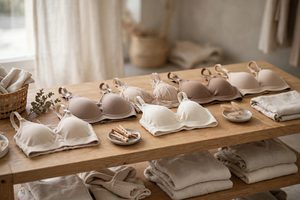
Nursing bras are engineered around one-handed access: drop-down cups with clasps you can undo while holding a baby, plus the comfort and flexibility a changing body needs. Most are wireless or flexi-wire, with extra hook columns to accommodate ribcage expansion and contraction.
Buy them late in pregnancy or in the first weeks postpartum, when your size stabilizes somewhat — and buy for your current size, not your pre-pregnancy one. You will want at least three: one to wear, one in the wash, one in reserve, because newborns are messy. Look for soft, breathable fabrics; you will be wearing these around the clock, including overnight.
What Actually Matters
The clasp must be genuinely operable one-handed — test it in the store, ideally while holding something. Full-drop cups give the best access; partial slings work for discreet feeding. Avoid underwires in the early months: they can press on milk ducts and contribute to clogged ducts. A sleep nursing bra (soft, pull-aside) plus two structured daytime bras is the ideal starter kit.
Sizing Through Change
Your band may measure larger right after birth and shrink over weeks; extra hook rows handle this. Cups fluctuate through the day — a little stretch in the cup fabric is a feature, not a flaw. Re-measure monthly in the early going.
More Bra Guides
- Bras
- Air Bra
- Backless Bra
- Comfort Bra
- Convertible Bra
- Cross Shaping Bra
- Cushioned Bra
- Demi Cup Bra
- Embroidered Bra
- Fashion Bra
- Floral Bra
- Foam Bra
- Front Closure Bra
- Full Figure Bra
- Mesh Bra
- Minimizer Bra
- Molded Bra
- No Wire Bra
- Nursing Bra
- Padded Bra
- Push-Up Bra
- Racerback Bra
- Seamless Bra
- Soft Cup Bra
- Strapless Bra
- Underwire Bra
- Water Bra
Looking for Women's Clothing Stores?
This guide helps you shop women's bras and lingerie by style, detail and fit. To browse where to buy, visit our women's clothing store directory.