Women's Swimwear Designer Job Description
Designing women's swim — support engineering, separates systems and the most fit-sensitive range in the wardrobe
A women's swimwear designer designs swimsuits, bikinis, tankinis and cover-ups for the women's market — the most fit-sensitive range in most women's wardrobes. A women's swimsuit is an engineered garment asked to support, shape and stay in place with no structure but stretch fabric, elastic and its own construction, and it is bought after the most critical fitting-room judgement in fashion. The designer who succeeds here combines a stylist's eye for print and colour with a contour engineer's understanding of support, and plans ranges as systems of separates that let each customer build her own fit. This page explains that work.
More Design Job Descriptions by Letter:
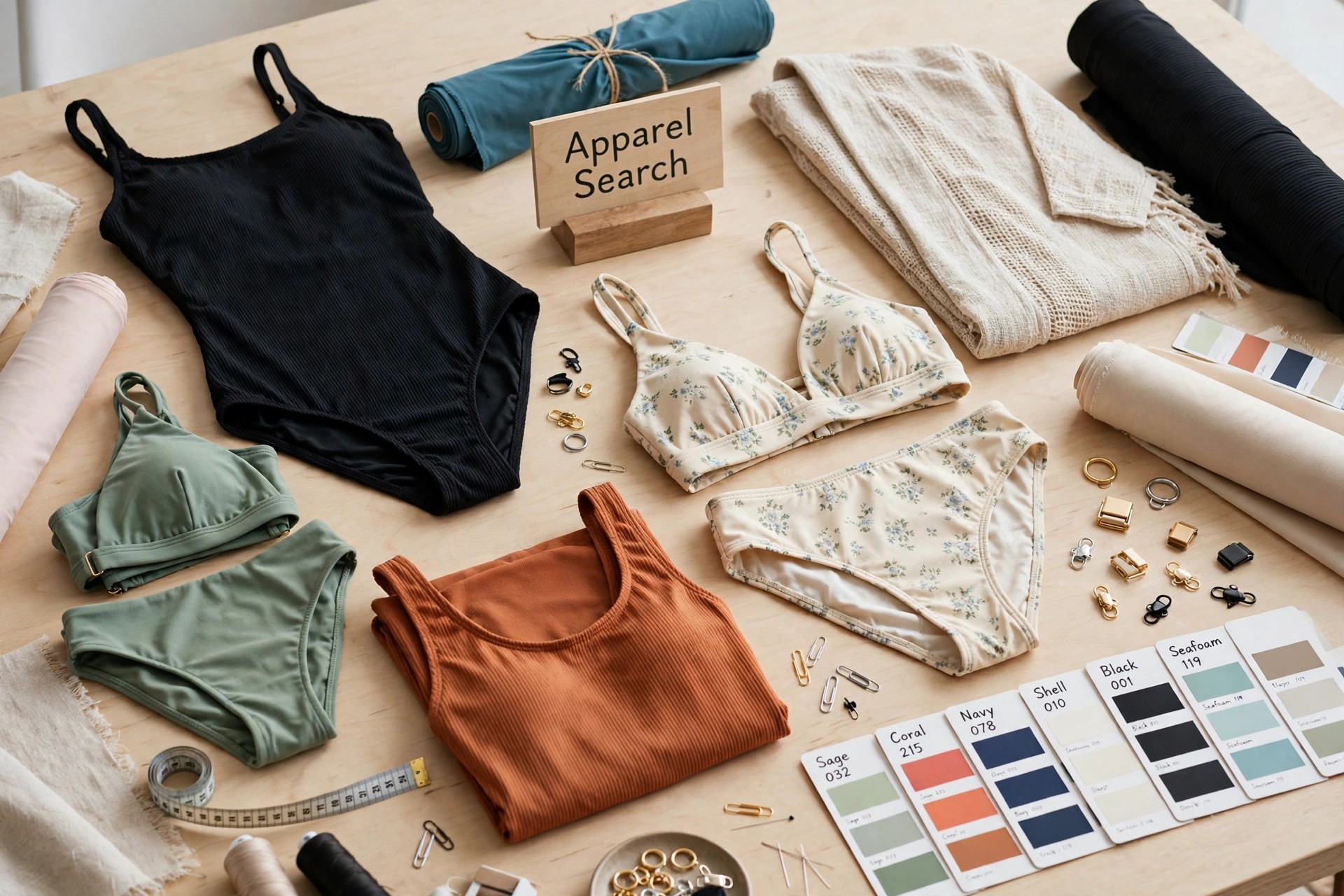
What a Women's Swimwear Designer Does
The range is planned as a system before it is styled as garments. One-piece suits carry the season's print and silhouette stories; bikinis and tankinis are designed as separates — tops and bottoms in matched fabrics, sold apart — so customers can combine sizes, shapes and coverage; cover-ups and beach dresses coordinate over both. The designer develops each piece with its fit system stated: cup sizing or dress sizing, the support level intended, the leg line, back and strap configuration, and the size range it will serve, including the fuller-bust and longer-body fittings that decide whether a range genuinely fits its market or only photographs it.
Sampling is the calendar's centre. Suits are fitted on fit models across the size range and assessed standing, moving, sitting and wet: bust support that works dry can fail when fabric is saturated, straps migrate, leg elastics dig or ride, light colours lose opacity. The designer corrects cup, band and strap geometry, adjusts power-mesh placement and elastic tensions, and checks print placement on the stretched garment, because a motif designed on flat fabric lands differently on a body. Only when support, coverage and appearance hold together across sizes is a style sealed for production.
Support Engineering and the Separates System
Support is the women's swim designer's defining construction discipline. Bust support is built from underbands, moulded or removable cups, side boning, internal power mesh and strap engineering — width, placement, adjustability and conversion between straight, halter and cross-back configurations — each combination producing a different level of support for a different customer. Body support uses front lining and power-mesh panels placed to smooth and hold without compressing movement. The designer specifies these systems per style and states the support level honestly in product information, because a customer who buys support that is not there returns the garment and remembers the brand.
The separates system is the commercial half of the same skill. Tops are offered in several shapes — triangle, halter, bandeau, underwired, sport — and bottoms in several rises and leg lines, all in the season's shared prints and solids, so the range multiplies combinations without multiplying styles. Colour stories are built to mix: a print top with a solid bottom, a solid top with a print bottom. Cover-ups close the system, designed in fabrics that dry fast, pack small and coordinate by colour rather than matching by obligation. Designing the matrix — which shapes, which fabrics, which sizes, at which prices — is range architecture, and it is done by the designer with buyers before a single suit is sampled.
Skills and Abilities the Role Requires
Contour construction knowledge leads: stretch pattern drafting with negative ease, cup and band geometry, support componentry, and grading that preserves support and proportion from the smallest size to the largest. Print skill is the second pillar — women's swim is the most print-led category in the wardrobe, and the designer places engineered and all-over prints on garments that stretch, builds the colour stories the separates system mixes from, and judges scale against body and size with unusual precision.
Empathy with the fitting room completes the profile. Women's swim customers judge fit more harshly, return more readily and stay more loyal when a brand fits them well than in almost any other category; the designer who reads fit feedback and returns data by size and shape, who extends size and cup ranges with genuine pattern work rather than scaling, builds the loyalty this market runs on. The supporting craft is standard senior design practice: costing stretch garments accurately, working with specialist contour factories, and holding a long sampling calendar against an immovable summer season.
Qualifications, Training and Career Path
Women's swimwear designers typically train in fashion design with contour or lingerie and swim content — contour courses teach the support and stretch disciplines directly — and enter through assistant roles with swim brands, lingerie and contour companies or retailers' swim departments. Portfolios should show made, fitted swim garments with support systems explained and print placement worked on garment shapes, plus evidence of designing separates as a system rather than as single styles.
Progression runs to designer and senior designer owning the women's swim range, and to design leadership across swim, contour and resort categories. The support and stretch expertise transfers directly into lingerie, shapewear and activewear design, where the same engineering serves different garments, and senior women's swim specialists are recruited across all four fields. In a category where fit is the brand, the designer who can genuinely engineer it holds one of fashion's most portable skills.
Common Questions
How is bust support built into a swimsuit?
Through combinations of underbands, moulded or removable cups, side boning, internal power mesh and strap engineering — width, placement and adjustability. Each system gives a different support level, which the designer specifies per style and states honestly in the product information.
Why are women's swim separates sold as a system?
Because tops and bottoms rarely fit the same customer in the same labelled size. Designing tops and bottoms in shared prints and solids, sold separately in several shapes, lets each customer combine her own sizes and coverage — and multiplies the range's combinations without multiplying its styles.
How do you become a women's swimwear designer?
Study fashion design with contour, lingerie or swim content, build a portfolio of made and fitted swim garments with support systems explained, and enter through assistant roles with swim, contour or lingerie companies, where stretch fit and support engineering are learned on live ranges.
More to Explore
- Swimwear — Fashion Influence Products
- Swimwear Factories — CMT Swimwear
- Men's Swimwear Wholesalers
- Women's Swimwear Wholesalers
- Women's Swimwear Stores
- Women's Swimwear Colours
- Women's Swimwear Guide
- Merchandising Clothing
- Fashion Artists Guide
- Computer Assisted Design
- CAD Services
- Fashion Job Description Directory
- Fashion Employment Agencies
- Employment Search Engines
- Fashion Schools and Education
- Fashion Careers
- Fashion Directory
- Fashion Industry News
- Clothing Industry Portal