Tailor Job Description
The craft of fitting cloth to a person — bespoke making, alterations, repairs and the tailor's bench
A tailor makes and adjusts clothing to fit individual people. It is one of the oldest skilled trades in dress: the bespoke tailor measures a customer, drafts a pattern to that body, cuts the cloth and sews a garment through a series of fittings until it sits exactly as intended, while the alterations tailor applies the same knowledge in reverse — taking ready-made clothing apart and re-making it to fit its wearer. Machines assist the work, but tailoring remains a hand craft judged by eye: a collar that rolls correctly, a sleeve that hangs clean, a waistline altered so invisibly that the garment looks born to its owner.
More Production Job Descriptions by Letter:
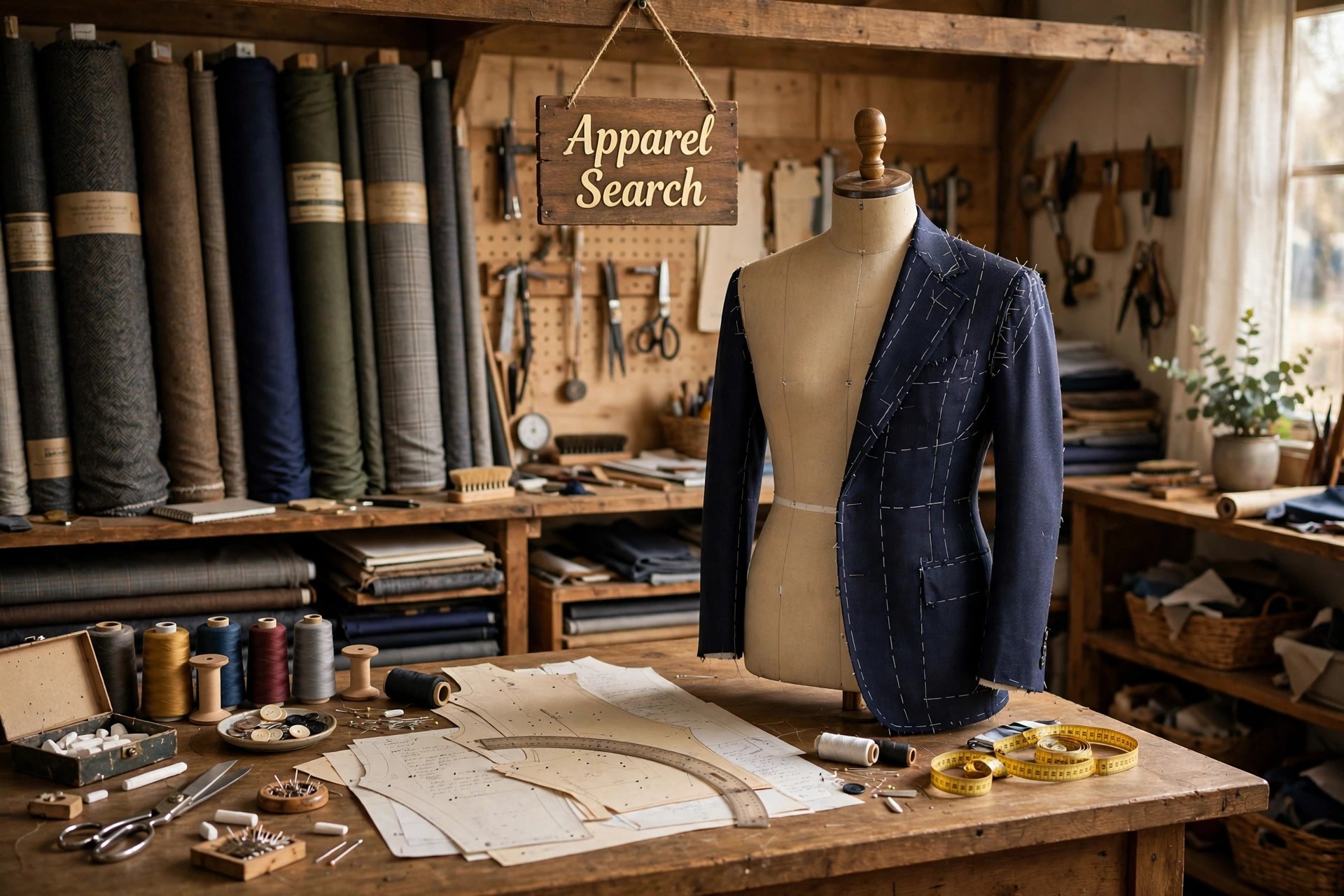
Measuring, Fitting and Cutting
Tailoring starts with the body. The tailor measures the customer — chest, waist, seat, shoulder, arm and leg lengths, posture and stance noted as carefully as the numbers — and discusses how the garment will be worn, because fit is partly preference: ease, drape and silhouette are agreed, not assumed. For bespoke work the tailor then drafts the pattern, by hand on paper or with CAD assistance, strikes the cloth — laying the pattern to the fabric's grain and matching checks and stripes across seams — and cuts it, adding the inlays and allowances that let the garment be let out or taken in over its life.
Fittings turn a cut garment into a fitted one. The basted-together first fitting checks balance and proportion on the body; the forward fitting refines collar, sleeve and closure; the final fitting confirms the finished garment before pressing and delivery. Between fittings the tailor rips, re-marks and re-sews — tailoring's central discipline is that cloth is corrected on the person, not on the table, and a tailor's reputation is built on how a garment looks standing, walking and seated, not on how neatly it was sewn.
Making, Altering and Repairing
The making itself blends machine and hand sewing. Long structural seams are machined; the work that shapes a tailored garment is largely hand work — pad-stitching lapels so they roll, setting sleeves by hand to control their hang, hand-finishing buttonholes, felling linings, and pressing each stage into shape with iron, steam and wooden tools, because pressing is half of tailoring: it moulds cloth in ways sewing alone cannot. Bespoke suits, coats, dresses and uniforms are built this way over weeks, and the tailor keeps each customer's pattern and record for future orders.
Alterations and repairs are the trade's daily bread in most workshops. Taking in, letting out, shortening and lengthening, re-lining, replacing zips, re-weaving small damages and re-cutting a garment to a changed body all demand the same construction knowledge as making from scratch — often more ingenuity, since the alterations tailor works within cloth already cut, seams already trimmed and a price the customer has already judged reasonable. Good alterations work is invisible, fairly priced and honestly advised: a good tailor also tells a customer when a garment cannot be altered to fit and should not be attempted.
Customers, Workshops and Work Settings
Tailors work in several settings. Bespoke houses and high-end retailers employ tailors in workrooms behind the shop; independent alteration shops and dry-cleaner-based services handle the volume trade; theatres, film and television wardrobe departments employ tailors to make, fit and maintain costumes to production deadlines; and many experienced tailors work for themselves, in their own premises or visiting clients. Wherever the setting, the work is customer-facing: the tailor advises on cloth, style and fit in fittings that are personal appointments, and discretion and punctuality matter as much as sewing — a wedding or a funeral does not move its date for a late garment.
The working pattern follows the bench: long seated and standing hours at the table and machine, close work under strong light, and seasonal peaks around weddings, race meetings, holidays and the start of school and university terms for alterations. Pricing craft work fairly — estimating hours honestly, costing cloth and trims, and scheduling fittings so several garments progress together — is part of the trade for any tailor running or hoping to run a shop.
Skills, Training and Career Path
Tailoring skill rests on four foundations: hand and machine sewing of the highest neatness, pattern drafting and cutting, fitting judgement — seeing why a garment pulls, drags or collapses and knowing which correction cures it — and pressing. Eyesight for detail, patience, and a feel for cloth behaviour across weights and weaves complete the craft profile; customer skills carry unusual weight because fittings are one-to-one and trust-based.
The classic training is apprenticeship: years at a master's bench learning cutting, making and fitting in sequence, still the route the great tailoring houses respect most. College courses in tailoring, garment construction and fashion technology provide the structured alternative and feed the same workrooms. Career progression runs from coat hand or trouser maker to cutter — the senior role that measures, drafts and fits — to head cutter and master tailor, with shop ownership the common summit; alterations specialists progress to running high-volume services, and costume tailors into wardrobe supervision in theatre and screen.
Common Questions
What is the difference between a tailor and a seamstress or dressmaker?
The titles overlap in daily use, but tailoring centres on structured, fitted garments — suits, coats, trousers — and on altering garments to fit, with its own pattern, cutting and pressing craft. Dressmaking centres on making women's garments, and seamstress describes skilled sewing work generally; many practitioners work across all three.
How long does it take to train as a tailor?
Traditionally several years. An apprenticeship at a tailoring bench builds cutting, making and fitting skills in sequence; college tailoring courses give a structured start, after which workroom experience develops the fitting judgement the trade is hired for.
What work does an alterations tailor do?
Adjusting ready-made clothing to fit its wearer — taking in and letting out, shortening and lengthening, moving closures, re-lining and repairing — plus advising honestly when a garment cannot be altered successfully.
More to Explore
Tailoring & Making Resources
Production Directory Pages by Letter
References & Further Reading
More Job Description Categories
- Buying Job Descriptions
- Design Job Descriptions
- Marketing & PR Job Descriptions
- Miscellaneous Job Descriptions
- Planning & Allocation Job Descriptions
- Production & Sourcing Job Descriptions (current)
- Sales & Selling Job Descriptions
- Transportation & Warehouse Job Descriptions