Women's Jeans Store on Amazon
Brands, price tiers and store navigation for your next pair of jeans
Who doesn't love a new pair of jeans? Everyone already owns several, yet a fresh pair is always a welcome addition to the closet — and when an old favorite finally rips where no rip was intended, replacement becomes urgent. The women's jeans store on Amazon gathers the category into one aisle: popular brands across every price tier, from everyday workhorse denim to designer jeans, in the washes and styles that rotate through a wardrobe. This page is about shopping that store well.
The angle here is deliberately the store itself: how its brands and price tiers are arranged, how to use its filters and reviews to narrow a huge range down to a shortlist, and how to judge when a pair has earned replacement. Detailed guidance on cuts and fits lives in the Apparel Search women's jeans guide; this page keeps fit brief and focuses on the buying — finding the right brand, tier and pair without drowning in thousands of near-identical listings.
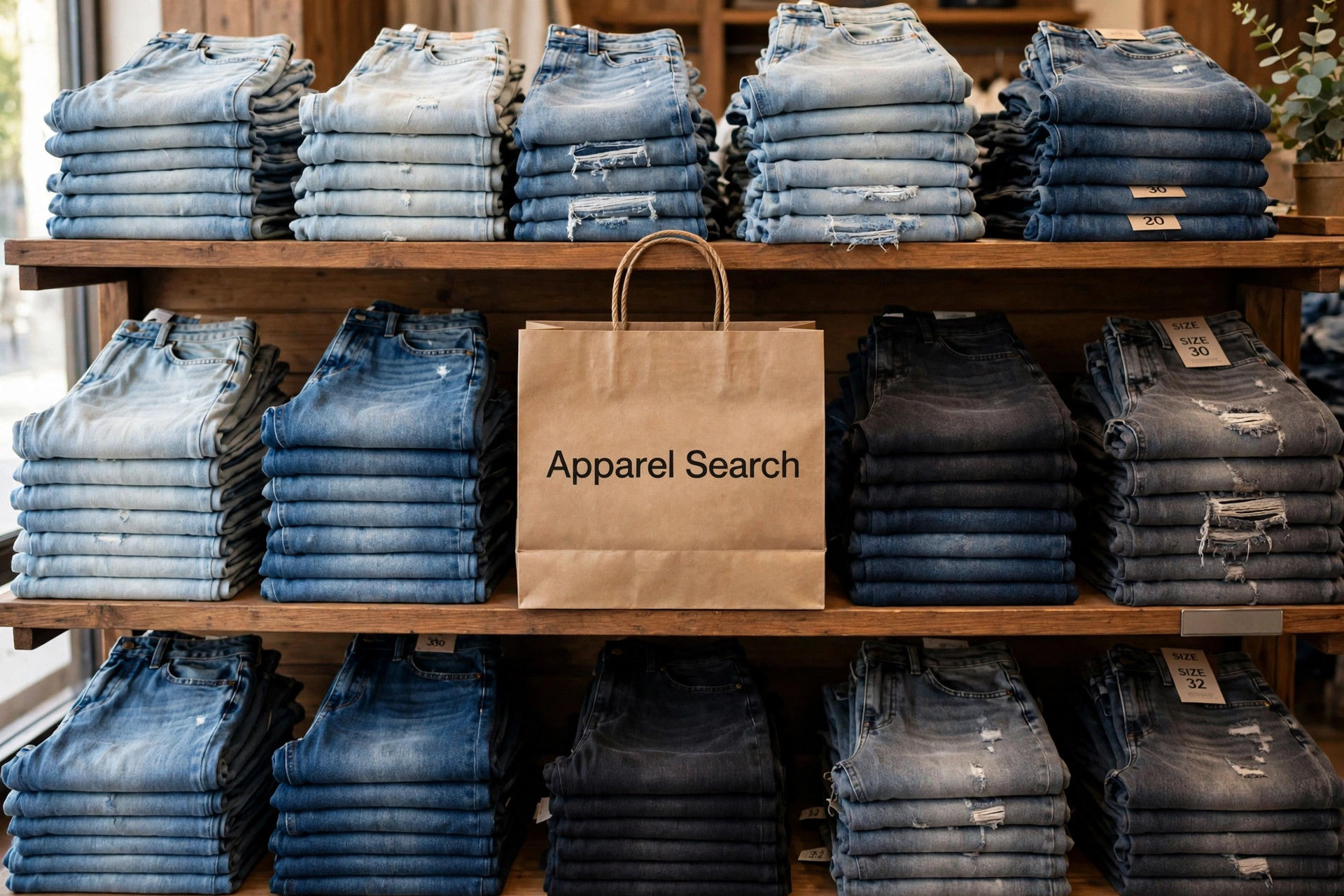
Everyone already owns jeans, yet a new pair is always welcome — the Apparel Search Amazon clothing guide is the doorway this store hangs off.
Brands and Price Tiers in the Store
The store's range stacks in recognizable tiers. Everyday brands compete on durable cotton denim, classic five-pocket styling and easy care at accessible prices — the jeans bought for work, weekends and everything unglamorous. Mid-tier fashion brands add current washes, stretch blends and seasonal styling. Designer jeans occupy the top tier, where the price buys finer denim, more considered washes and finishing, and brand identity worn openly on the pocket and label.
None of the tiers is the correct one in the abstract; they answer different uses. A sensible denim wardrobe often mixes them — everyday pairs that take the wear, one better pair kept for evenings and photographs. Cotton and cotton-rich denim remains the category's backbone at every tier, with flannel-lined jeans appearing in winter for warmth and ankle-zip and other detailed styles appearing as fashion variations within the brands' lines.
Navigating the Store to a Shortlist
Start with the filters, not the browsing. Set size, inseam and wash family first — light, medium or dark — and the store's thousands of pairs shrink to a reviewable set. Then sort by brand if a known brand's sizing already works, since denim sizing is brand-specific and a size that fits in one label is only a rough guess in another. Best-seller order within the filtered set is a useful reality check on which pairs satisfy buyers repeatedly.
Product pages carry the details that decide success: fabric composition with its stretch percentage, rise and inseam measurements, and care instructions. Reviews repay reading for two specific notes — whether the pair runs true to the brand's usual size, and how the denim behaves after washing, since jeans that shrink or bag out disappoint more than jeans that arrive slightly wrong. Ordering a known brand and style to replace a worn pair is the store's lowest-risk purchase; experimenting is best done one variable at a time.
When a New Pair Is Due
Jeans announce their retirement honestly: thinning at the inner thigh and seat, a waistband that no longer recovers, knees gone baggy, or a rip that arrived by wear rather than design. Ripped jeans bought as fashion are a style; ripped jeans arrived at by mileage are a replacement notice. Vintage-look denim is also a deliberate purchase in the store — washes and distressing applied by the maker, on fabric that still has its strength.
A new pair slots into the wardrobe most easily in a wash the closet lacks — a dark rinse for evenings if every existing pair is faded, a clean medium wash if everything is distressed. Jean shorts extend the same store logic into summer. However the pair is chosen, breaking it in is part of the pleasure: denim softens to its owner over the first wears, which is why the right pair, once found, tends to be reordered rather than replaced by something new.
Common Questions
What price tiers of women's jeans does Amazon carry?
Every tier: everyday brands for durable workhorse denim, mid-tier fashion brands with current washes and stretch blends, and designer jeans at the top, where finer denim, finishing and brand identity set the price.
How do I narrow down thousands of jeans listings?
Filter first by size, inseam and wash family, then by a brand whose sizing you know. Read fabric composition on the product page and reviews for notes on sizing accuracy and how the denim wears after washing.
How do I know when jeans need replacing?
Thinning fabric at the thigh and seat, a waistband that no longer recovers its shape, baggy knees, or an unintended rip all signal retirement. A fresh pair in a wash your wardrobe lacks is the easiest upgrade.
Photos

More to Explore
- Amazon Fashion Stores
- Women's Pants Store
- Women's Jeans Guide
- Women's Jeans on eBay
- Women's Pants Guide
- Fashion Stores
- Women's Fashion
- Apparel Search Shopper
- Women's Apparel
- Women's Camo Pants Guide
- Women's Cotton Pants Guide
- ripped jeans
- jeans
- Women's Designer Jeans
- Women's Cotton Jeans
- Women's 5-Pocket Jeans
- Women's Flannel Lined Jeans
- Women's Flare Jeans
- Women's Skinny Jeans
- Women's Ankle Zip Jeans
- Women's Jeans Stores
- Women's Fashion on Amazon
- Women's Clothing Stores
- Women's Clothes Guide
- Women's Fashion Brands
- Women's Fashion Shopper
- jean shorts
- history of ripped jeans
- vintage
- women's shoe store
- handbag store
- women's shirts store
- women's fashion store