Airline Uniforms by Airline · Netherlands
The KLM Uniform by Mart Visser
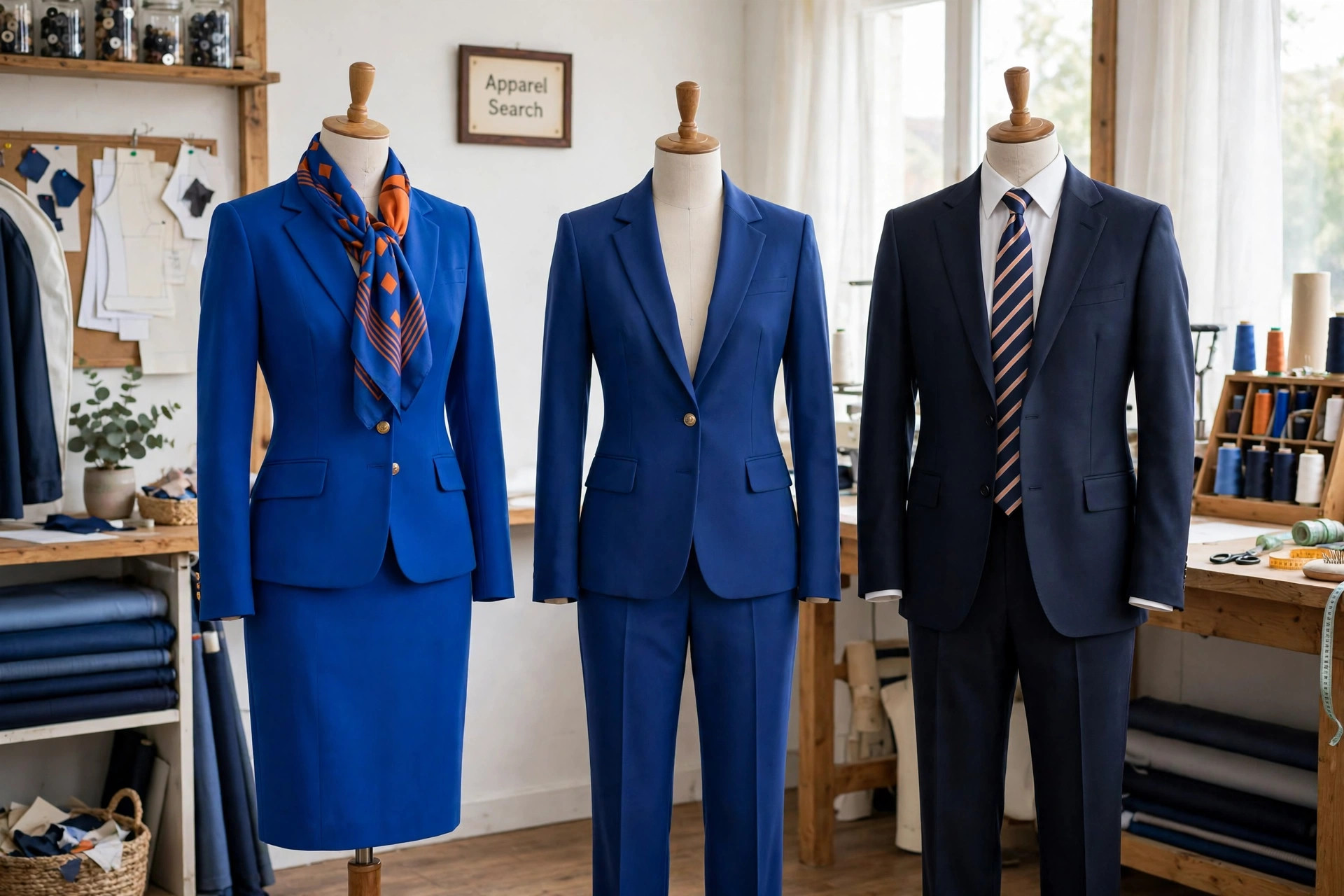
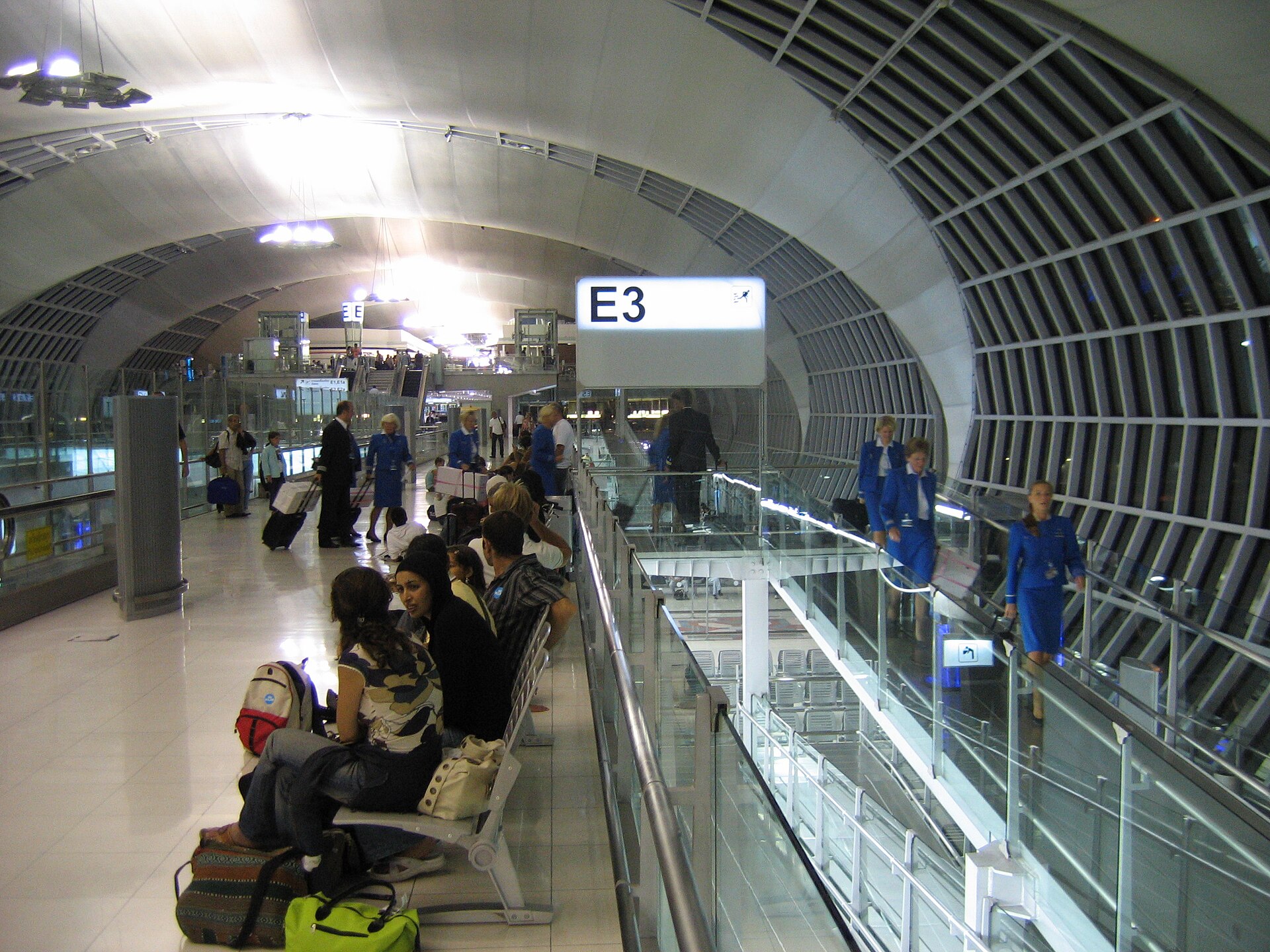
Few airlines are a colour, but KLM is: the bright blue its crews have worn since 1971 is so much the airline’s identity that passengers name it before they name the airline. In April 2010 that blue was recut by Dutch couturier Mart Visser into an 11-piece ladies’ wardrobe with a touch of Dutch orange — a redesign for more than 11,000 women that deliberately left the men’s uniform alone. This is the wardrobe, piece by piece, stripe by stripe.
The Design
A Couturier Recuts the Blue
When KLM decided to renew its uniform, it went to one of the Netherlands’ best-known couturiers. Mart Visser was commissioned to create a new ladies’ uniform, presented in October 2009 and visible on the ground and on board from April 2010, when KLM’s own press release — “KLM introduces new ladies uniform”, dated 14 April 2010 — marked the launch. The scale was considerable: the wardrobe dressed more than 11,000 women — cabin crew, ground staff and female pilots across both KLM and its regional arm, KLM Cityhopper.
The scope matters as much as the designer. This was a ladies’ redesign, and only a ladies’ redesign: the men’s uniforms were not part of the Visser commission, a point KLM’s own announcement makes plain and one this guide keeps plain too, because the blue wardrobe is often described as if the whole airline changed clothes in 2010. It did not. What changed was the women’s capsule — an 11-item wardrobe built around the colour the airline had already owned for four decades.
That colour is the design’s real brief. KLM blue had been the uniform colour since 1971, and Visser kept it — the new wardrobe is unmistakably the same blue, worn the same way, so that a passenger who last flew in 2009 would recognise the crew of 2010 instantly. What he added was a touch of orange, the Dutch national colour, worked into trim and scarf accents: a small, deliberate flag sewn into a blue uniform. The capsule was produced in sizes 32 to 52 and designed to work across all seasons, a practical necessity for a wardrobe that has to serve a July departure from Amsterdam and a January arrival in a very different climate on the same roster.
The Components
The Outfit, Piece by Piece
- The Jacket
- The tailored centrepiece of the capsule, cut in KLM blue and worn over the blouse or shirt — the garment that carries the uniform’s silhouette and, on the sleeve, its rank stripes.
- Two Skirts
- The capsule offers two styles of skirt, so wearers can choose the cut that suits them within the one design language.
- Trousers
- A trouser option in the same blue, part of the capsule from the start rather than a later concession.
- Blouse and Shirt
- Blouse and shirt options layer under the jacket; launch coverage of the wardrobe also described waistcoat options within the capsule mix.
- The Scarf
- The wardrobe’s flourish, carrying the new orange accents against the blue — the point where the national colour meets the airline colour. Our scarf definition covers the accessory itself.
- Sneakers, from 2024
- The wardrobe’s one documented later addition: from 6 May 2024 crew may wear sneakers under the uniform — their own, provided they meet KLM’s requirements, or a KLM sneaker designed by the Amsterdam label Filling Pieces.
Female pilots were dressed from the same capsule in 2010, so the Visser blue reached the flight deck as well as the cabin and the gate. Female ground staff wore it too — the same blue capsule at the check-in desk as at the aircraft door, which is precisely what a capsule wardrobe is for: one recognisable kit of parts, mixed by role and season.
The capsule idea deserves a moment, because it is the wardrobe’s real design intelligence. Eleven items do not sound like many for an airline of KLM’s size, but a capsule is not a small wardrobe — it is a combinatorial one. Two skirts, trousers, jacket, blouse and shirt options and the scarf can be assembled into outfits for a summer turnaround in Amsterdam, a winter arrival in a far colder station, a ground shift and a long-haul service, without any single outfit looking like a compromise. The size range tells the same story of design-for-wearers: sizes 32 to 52 is a span that treats the uniform as clothing for a whole workforce’s worth of bodies, not as a sample size scaled up. And designing one capsule for all seasons, rather than issuing summer and winter wardrobes, keeps the blue identical in every photograph, every terminal and every month of the year — consistency the airline can roster around.
The Rank Code
Silver Stripes on a Blue Sleeve
KLM reads cabin rank the classic way — in stripes on the sleeve — but in silver rather than the gold of the flight deck, and with a colour twist at the very top. The ladder, described by KLM purser Cliff Muskiet, runs like this:
| Sleeve stripes | Rank | Role |
|---|---|---|
| 1 silver stripe | Cabin Attendant | Serving Economy and Premium Comfort cabins. |
| 2 silver stripes | Cabin Attendant, World Business Class | Qualified to serve the business-class cabin. |
| 3 silver stripes | Assistant Purser | Deputising within the cabin leadership. |
| 4 silver stripes | Purser | In charge of the cabin service. |
Above the purser sits the senior purser, reported to wear the four silver stripes plus an orange stripe — the Dutch colour promoted, at the top of the ladder, from accent to rank. That orange detail is widely repeated in crew explanations of the uniform, but it is worth being precise: no KLM press page stating it was found for this guide, so it is carried here as a reported detail rather than an airline-published one. The one-to-four silver ladder itself is solidly documented. On the flight deck the metal changes: male pilots wear gold sleeve stripes — four for a captain, three for a first officer — the near-universal pilot code, while their female colleagues wear the Visser wardrobe issued in 2010.
The Men’s Uniform
The Suit That Stayed
The men’s uniform is the control group in the 2010 experiment: unchanged by Visser, and none the worse for it. Male cabin crew wear a navy, dark-blue suit with a white shirt and a choice of four ties, finished with gold-and-silver sleeve buttons — a detail KLM purser Cliff Muskiet singles out in his account of the uniform. Against the women’s bright blue, the men’s deep navy reads as the wardrobe’s bass note: same airline, darker register.
Male pilots are distinct again: the dark navy flight-deck uniform with gold sleeve stripes, four for the captain and three for the first officer. So a KLM aircraft carries three related but separate dress systems — the Visser blue capsule for women, the navy suit for male cabin crew, and the gold-striped navy of the male flight deck — and only the first of the three dates from 2010.
There is a lesson in that restraint. A full-fleet redesign makes a bigger headline, but it also spends the uniform budget on the people whose clothes were not the problem. By renewing the women’s wardrobe — the larger, more visible and older-serving half of the system — and leaving a perfectly serviceable men’s suit in place, KLM kept one continuous thread of recognition across the 2010 change: passengers who knew the navy suit and the gold stripes kept seeing them, while the blue they associated with the airline got its couturier’s recut. Uniform programmes elsewhere in this series have replaced everything at once; KLM’s partial renewal is the counterexample, and sixteen years of continued service suggest it was judged correctly.
Blue Since 1971
Airlines change liveries the way fashion changes hemlines, but KLM’s crew colour has held for over half a century: blue since 1971, through every aircraft type and alliance since. That consistency is why a designer in 2009 was not asked to invent an identity, only to renew one — and why the orange Visser added reads as an accent rather than a rebrand. The old wardrobe even stayed in service after retirement: some 90,000 kg of pre-2010 uniforms were upcycled, their fibres going into the carpet material of KLM cabins — the Nina Ricci era quite literally under the passengers’ feet.
The Rules
Grooming: What Is Publicly Documented
KLM does not publish a grooming manual, and this guide will not invent one. What is publicly documented sits at the recruitment door: KLM’s own careers page for cabin crew states that applicants must have no visible tattoos, piercings, or dental decorations — a requirement stated for joining the airline, and the clearest public line on appearance standards this research found. Beyond that line, the detailed hair and make-up rules that some airlines discuss openly are, for KLM, not publicly documented in press or reputable reporting. The honest summary is a short one: a famous uniform, a strict-looking result, and a rulebook the airline keeps to itself.
Evolution
From 1935 to Visser — by Way of Nina Ricci
KLM uniforms date from 1935, but the blue does not: the colour arrived only in 1971, and everything about the modern uniform — including Visser’s — is a variation on that 1971 decision. The wardrobe Visser replaced came from the House of Nina Ricci, and by 2009 it was, in the launch coverage’s phrase, “almost 20 years old” — which points to a Ricci wardrobe of around 1990. The Ricci association plainly runs deeper than a single design, though: a Dutch National Archive photograph from 10 September 1981 already shows a Nina Ricci-designed KLM uniform being presented, so the house dressed KLM across more than one generation. The exact sequence of Ricci updates is not fully documented in the sources for this guide, and the honest account is the hedged one: Ricci before Visser, for a long time, in more than one version.
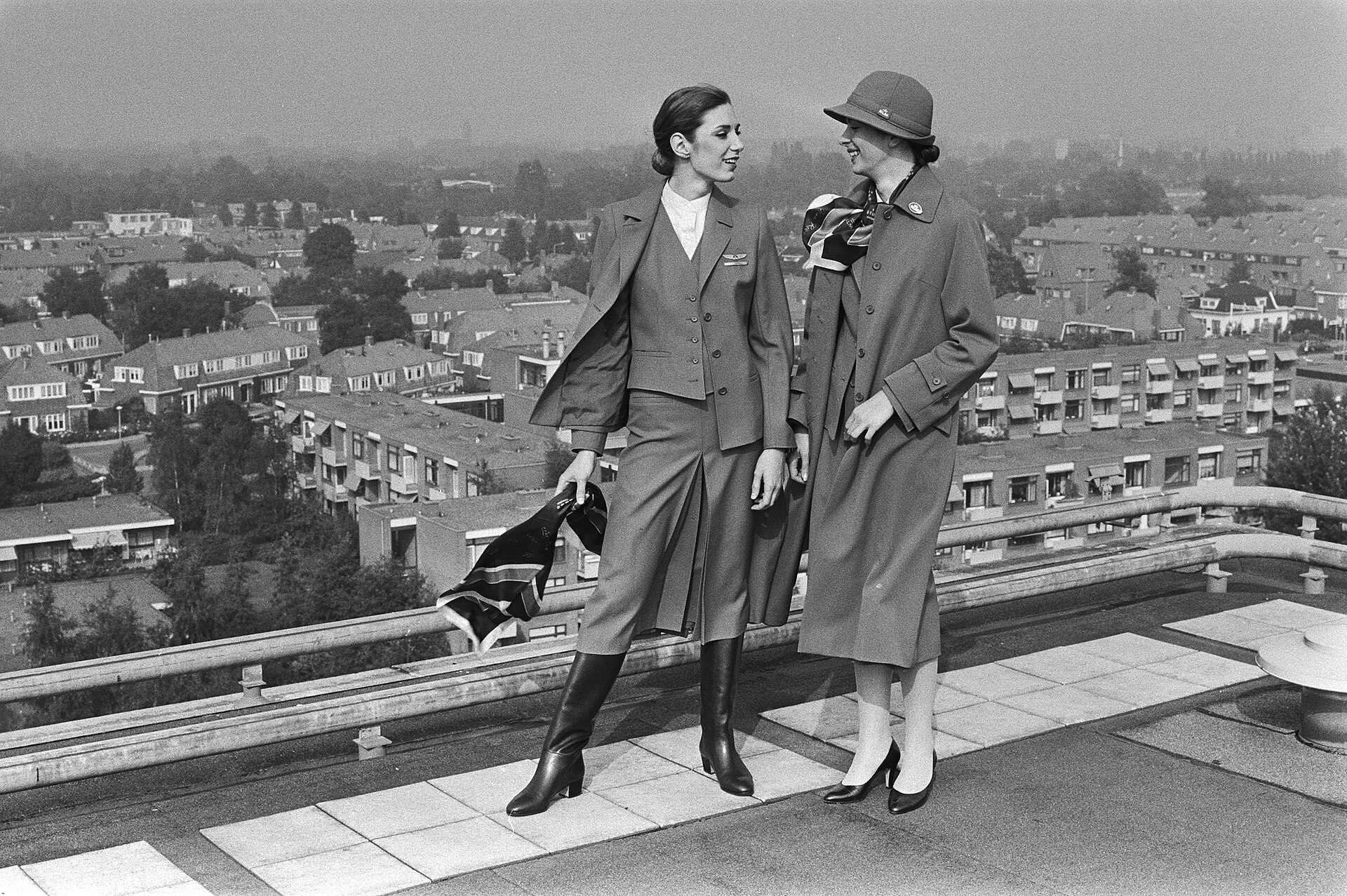
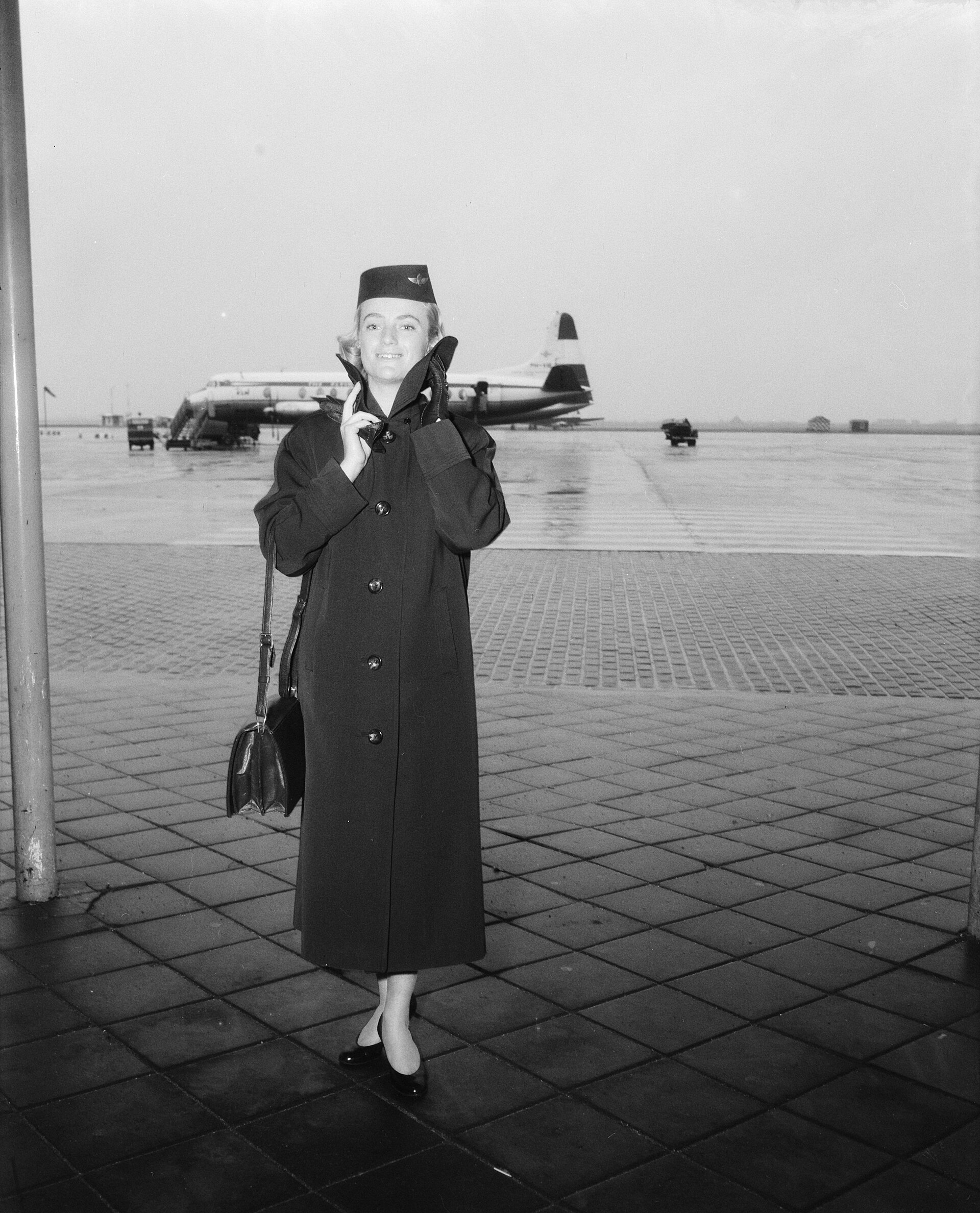
An even earlier photograph in the same archive, from January 1958, shows KLM stewardesses in their then-new uniform — a reminder that the airline was refreshing its crew’s dress decades before blue arrived. The 2010 Visser wardrobe is therefore best understood as the latest step in a long line, not a break with it: new designer, new capsule, same colour. Since then the wardrobe has had exactly one documented change — the 2024 sneaker permission — and, as of late 2026, no successor redesign has been announced. For an airline that kept its previous wardrobe for roughly two decades, a sixteen-year-old uniform is not overdue; it is on schedule.
The Icon
Why a Colour Became a Uniform’s Signature
Most airline uniforms are identified by a garment — a kebaya, a scarf, a hat. KLM’s is identified by a colour, and that is a harder trick: it means the identity survives every recut, including a change of designer, because the blue itself does the recognising. Visser understood the assignment. His capsule kept the blue, refreshed the tailoring, gave 11,000 women a wardrobe with real choice inside it, and signed the whole thing with a stripe of orange no other airline could wear with a straight face. The result is a uniform that reads, at fifty paces across a terminal, as simply the Netherlands, flying — which is what a flag carrier’s uniform is for. For the country behind it, see our Netherlands clothing industry page.
Airlines refresh their uniforms from time to time, so the details here describe the uniform as documented for this guide — the airline’s own site always carries the latest version.
Common Questions
Common Questions
Who designed the KLM uniform?
Dutch couturier Mart Visser. His new ladies' uniform was presented in October 2009 and worn from April 2010 by more than 11,000 female cabin crew, ground staff and female pilots at KLM and KLM Cityhopper. It was a women's redesign only: the men's uniforms were not part of the Visser commission.
What colour is the KLM uniform?
The trademark KLM blue, which has been the uniform colour since 1971, with a new touch of orange — the Dutch national colour — in the trim, the scarf accents and, reportedly, the senior purser's sleeve stripe. The wardrobe was made in sizes 32 to 52 and designed for all seasons.
What do the stripes on a KLM uniform mean?
Cabin crew wear narrow silver sleeve stripes. One stripe is a cabin attendant, two an attendant qualified for World Business Class, three an assistant purser and four a purser. The senior purser is reported to add an orange stripe to the four silver ones, though that detail is not stated on a KLM press page. Pilots wear gold stripes instead.
Did the KLM men's uniform change in 2010?
No. The 2010 Mart Visser redesign covered the ladies' uniform only. Male cabin crew kept the existing dark-blue suit with a white shirt and a choice of four ties, and male pilots kept the dark navy uniform with gold sleeve stripes — four for a captain, three for a first officer.
Can KLM crew wear sneakers?
Yes. From 6 May 2024 KLM crew may wear sneakers under the uniform — their own, if they meet the airline's requirements, or a KLM sneaker designed by Filling Pieces. It is an update to the wardrobe's footwear, not a redesign: the Visser uniform itself remains in service, with no successor announced.
Keep Exploring
More to Explore
In This Series
Airline Uniforms by Airline
The series hub — every airline’s guide, the designers behind them, and the ones in preparation.
Read ↑Netherlands Clothing Industry
The airline’s home country in the World Clothing Industry directory.
Read ↑Go Deeper
Uniforms — Definition
What a uniform is, and why organisations dress their people alike.
Read ↑Scarf — Definition
The accessory that carries the KLM wardrobe’s touch of orange, defined.
Read ↑Tie & Necktie — Definition
The men’s finishing piece — four ties to choose from, defined.
Read ↑Epaulette — Definition
Shoulder and sleeve rank systems in uniform dress, defined.
Read ↑Keep Exploring
Explore Fashion for Travel
The crew are only half the fashion on a flight — the other half is what the passengers are wearing. Our travel guides cover the traveller’s side of the same subject, and they link back here.
Outfits for Flying
Travel Outfits
What to wear when you are going somewhere — outfit systems built for transit days.
Read ↑Airport Outfits
Security-friendly shoes, cabin layers and the full airport dressing system.
Read ↑What to Wear on a Long Flight
Dressing for the overnight haul — comfort, warmth and arriving presentable.
Read ↑What to Wear When Traveling
The destination-rules guide to building a travel wardrobe that works on arrival.
Read ↑Business Travel Wardrobe Guide
A working wardrobe that travels — suits, wrinkle strategy and boardroom-ready arrivals.
Read ↑Packing & Capsule Wardrobes
Travel Capsule Wardrobe Guide
A small set of pieces that combine into a trip’s worth of outfits.
Read ↑Travel Packing Guide
The complete packing method — lists, order and wrinkle control.
Read ↑How to Pack a Suit
Getting a tailored jacket and trousers across the world without the creases.
Read ↑Carry-On Packing Guide
Everything in one bag — the carry-on-only system, piece by piece.
Read ↑Travel Comfort & Accessories
Search Apparel Search