Airline Uniforms by Airline · Scandinavia
The SAS Uniform: Blue on Blue, Designed In-House
In February 2025 SAS began rolling out a new uniform to some 9,000 staff — and for the first time in decades, there was no famous name on the label. The wardrobe was designed in-house, led by Design Director Kristine Mayer, in royal and navy blue, with gender-inclusive pieces, optional sneakers and visible tattoos allowed. Behind it stands the most designer-studded history in this series: Carven, Christian Dior and Calvin Klein. This guide tells both stories, and keeps their dates straight.
The Design
Designed In-House, Led by Kristine Mayer
The current SAS uniform is the rare modern launch with no designer to headline — by design. SAS’s own press release, issued on 3 February 2025, credits the wardrobe to “close collaboration across departments at SAS”, led publicly by Kristine Mayer, SAS Design Director, and names no external fashion designer. Independent coverage agreed: there is no name associated with the uniform this time, because it was designed mainly in house. The rollout commenced in February 2025 for around 9,000 representatives, with old and new items coexisting through a yearlong transition to early 2026.
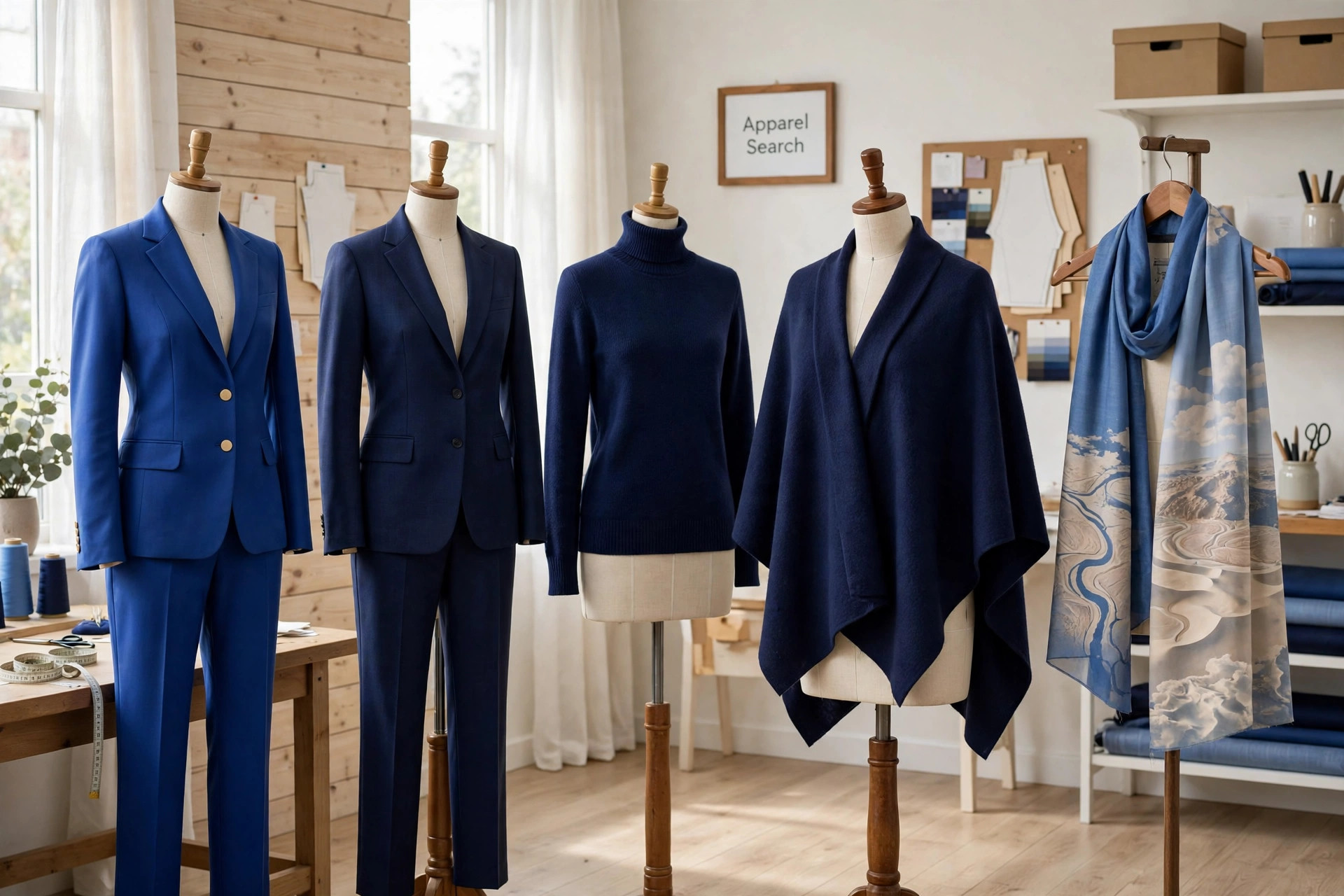
The colours are a family, not a statement: royal blue and navy blue, the “blue on blue” brand palette carried over from the 2016 wardrobe. The release describes a gender-inclusive wardrobe with neutral items, and pieces suited to varying roles, seasons and weather, in a single collection covering pilots, cabin crew and ground and frontline staff. The silhouette, SAS says, draws inspiration from the airline’s iconic past uniforms — the ones by Christian Dior and Calvin Klein among them. Inspiration is the correct word, and this guide keeps it: Dior and Klein designed historical SAS uniforms; neither has any part in the current one, and neither do the 2016 team, as the evolution section sets out.
The yearlong transition is part of the design story too. Nine thousand people cannot change clothes on a single morning: sizes must be fitted, stock issued across three countries’ bases, and old and new items worn side by side without the airline looking undecided. SAS said plainly that old and new would coexist through the changeover to early 2026 — an unusually honest piece of launch communication, and a practical reason the palette stayed blue on blue. A wardrobe that must blend with its predecessor on the same aircraft, in the same photograph, cannot change colour and survive the transition; continuity of palette is what makes a phased rollout look like one airline rather than two.

The Components
The 2025 Wardrobe — and the Documented 2016 Kit It Replaced
Honesty about sources shapes this section. SAS’s 2025 release does not publish a garment-by-garment list, and no authoritative itemised list of the 2025 wardrobe was found in the sources for this guide — so the current wardrobe is described here only at the level the airline supports: tailored navy jackets and blazers, shirts, trousers and knit options suited to role and season, within one gender-inclusive, blue-on-blue collection. Inventing a 2025 component list would be easy and wrong, and this guide does not do it.
The wardrobe it replaced is documented in detail, and its kit shows what a SAS uniform wardrobe contains when the airline itemises it. The 2016 wardrobe, by Gothenburg-based Ted Bernhartz in collaboration with SAS employees and branding, comprised:
- Blue-on-Blue Tailoring
- The 2016 wardrobe’s tailored core in the royal-and-navy palette the 2025 collection kept — the colour family is the continuity between the two wardrobes.
- The Turtleneck
- A new garment type for SAS in 2016 — knitwear admitted into the tailored wardrobe, a Scandinavian answer to cabin temperatures.
- The Poncho
- The other headline addition of 2016: a poncho layer in the kit, outerwear designed as part of the uniform rather than over it.
- The Scarf
- The 2016 wardrobe’s signature accessory, by Swedish designer Amandah Andersson (AMA AWE): blue on blue, with a sand-coloured graphic of the Scandinavian landscape seen from the air. Our scarf definition covers the garment itself.
- The Scale
- Some 90,995 elements were made for more than 8,000 staff in 2016 — the arithmetic of a uniform wardrobe, and the reason transitions like 2025’s take a year.
Reading the Uniform
Rank: Not Documented for 2025
No scarf-colour code, purser coding or rank table for the 2025 wardrobe was documented in the reputable sources opened for this guide, and the guide says so rather than inventing one. Standard pilot rank insignia applies in practice, but SAS does not itemise pilot-versus-cabin differences in the 2025 release. The documented historical note is the 2016 one above: from 2016, the Andersson scarf — blue on blue with its sand-coloured landscape-from-the-air graphic — was the signature cabin-crew accessory, the closest thing the recent wardrobes have had to a readable emblem.
There is a consistency to the silence. An airline that organises its wardrobe by role and weather rather than by hierarchy has less rank information to publish; the 2025 release talks about inclusivity, seasons and fit because those are the axes the collection is actually built on. Readers comparing SAS with the stripe-coded airlines elsewhere in this series should treat the absence as a design position, not a gap in the airline’s tailoring — though, to be exact, it remains an absence in the published record, and future SAS material may fill it.
One Wardrobe for Everyone
The Gender-Inclusive Turn
The 2025 collection’s real design story is who it is for. A single wardrobe covers pilots, cabin crew and ground staff; within it, gender-inclusive pieces and neutral items sit alongside role-specific tailoring, so the collection is organised by job and weather rather than by a men’s rail and a women’s rail. That is a structural change, not a styling one — the first SAS wardrobe in which the organising idea is inclusion, and it arrived together with the appearance-policy changes in the rules section below. For an airline whose uniforms were once commissioned from Paris couture houses for its hostesses alone, a neutral, all-staff, in-house wardrobe is a genuinely new answer to the question of what an airline uniform is.
It is also, read against the history below, the second time SAS has trusted itself. The 1999–2016 wardrobe was designed by an in-house team drawn from all three home countries — a Norwegian, a Dane and a Swede — and it served seventeen years. The 2025 team worked the same way, through collaboration across the airline’s own departments, with the people who would wear, launder, repair and roster the clothes inside the process from the start. The Bernhartz wardrobe of 2016 had already shown the value of that closeness, designed in collaboration with SAS employees; the 2025 project simply removed the outside name and kept the method. Where a couture commission buys a silhouette, an in-house programme buys fit with the operation — and for a three-country airline dressing nine thousand people for Arctic winters and Mediterranean summers in one collection, the operation is the harder brief.
Tattoos, Piercings and Sneakers — in the Press Release
Most airlines liberalise grooming quietly, in internal manuals nobody publishes. SAS put it in the launch material. Its appearance policy was updated in summer 2024 — visible tattoos and piercings allowed, optional sneakers in uniform — and the 2025 uniform release repeats the allowances as part of the new wardrobe’s identity. A uniform designed in-house, worn with the wearer’s own tattoos visible and trainers on their feet, is about as far from the Dior hostess uniform of 1971 as airline dress has travelled — and SAS travelled it on the record.
The Rules
Grooming: The Documented Liberalisation
SAS’s grooming story is documented by the airline itself, in 2024–2025, and it is short enough to state completely. From summer 2024: visible tattoos and piercings are allowed, and sneakers are optional in uniform. The 2025 release repeats all three allowances and adds the wardrobe-level policy: a gender-inclusive uniform with neutral items. Beyond these published points, no fuller SAS grooming code was documented in the sources for this guide — but the published points are the story: the rules changed first, in 2024, and the wardrobe of 2025 was designed to match them.
The order of those changes matters. Airlines usually launch clothes and quietly adjust the rulebook afterwards; SAS liberalised the appearance policy a full season before the new wardrobe arrived, so the 2025 collection was never photographed, trialled or launched under the old rules it was designed to replace. The sneakers are the clearest example: footwear designed into the uniform conversation from the start, as an option the wearer chooses, rather than a concession extracted later. For crew, that sequence reads as respect — the policy trusted them first, and the wardrobe followed.
Evolution
Fröjds to Carven to Dior to Klein to Bernhartz
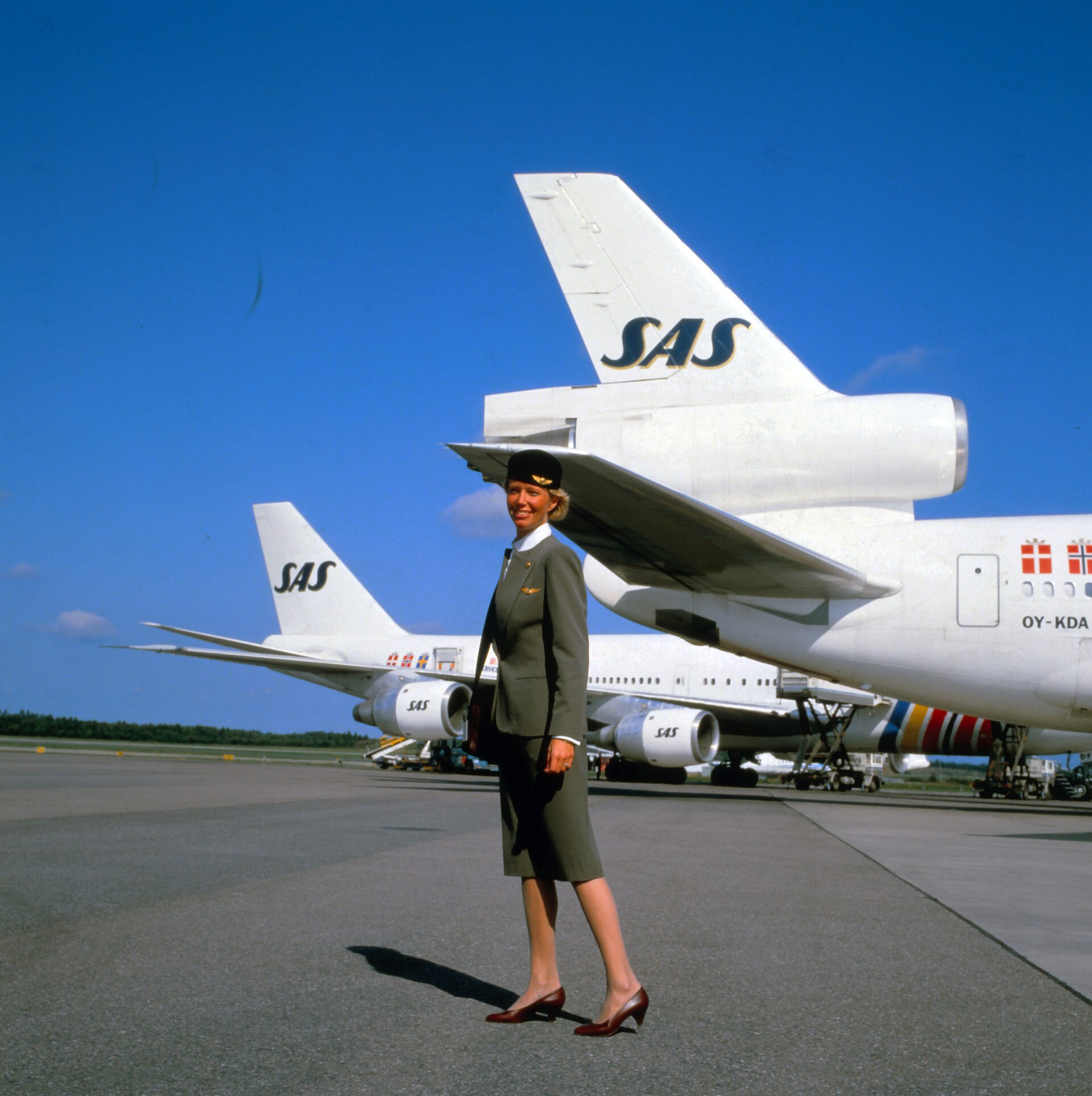
1946: the first SAS uniform, dark blue, made by Fröjds, an English tailor in Stockholm. 1965: the Paris house of Carven was commissioned for the flight-attendant outfits — the airline’s first couture chapter. 1971–1983: the Christian Dior uniform, a 25th-anniversary commission in a strong turquoise, with a Dior winter uniform alongside; SAS’s own image bank captions date it 1971–1983, and this guide uses those dates — the “1950s” phrasing in the airline’s 2025 release, repeated in some coverage, does not match the archive. Read more in our Christian Dior designer profile.
1983–1999: the Calvin Klein uniform — American minimalism succeeding Paris couture, again per the airline’s own image-bank captions; see our Calvin Klein designer profile. 1999–2016: an in-house SAS uniform design team — Christopher Bjercke of Norway, Susanne Levring Rützov of Denmark and Pernilla Forsman of Sweden, one designer per home country. 2016–2025: the Bernhartz wardrobe described above, the first update in 17 years. 2025: the current in-house wardrobe — the second time SAS has designed for itself, and the first time it has said so as the headline.
The Dior chapter rewards a closer look, because it is the one most often misdated. The commission marked the airline’s 25th anniversary, and Dior supplied not only the strong-turquoise uniform the photographs remember but a winter uniform as well — a two-season couture wardrobe, at a moment when most airlines issued a single outfit and a coat. Sixteen years of service, 1971 to 1983, made it one of the longer couture tenures in airline history, and its colour is the exception that proves the SAS rule: turquoise is the only non-blue chapter in a wardrobe history that runs navy in 1946, blue on blue in 2016 and royal-and-navy in 2025. Even the airline’s most flamboyant uniform was, in the end, a shade of blue.
The Icon
Three Countries, One Blue
SAS is the flag carrier of three countries at once, and its uniform history reads like a tour of twentieth-century fashion capitals — Stockholm tailoring, Paris couture twice over, New York minimalism — before coming home to Scandinavian in-house teams, first in 1999 and again, decisively, in 2025. The 2025 wardrobe’s blue-on-blue restraint, its neutral items and its published tolerance for tattoos and trainers make a different claim than Dior’s turquoise did: that a Scandinavian uniform should now dress its wearers the way Scandinavia dresses itself. For the home countries behind it, see our Sweden clothing industry, Denmark clothing industry and Norway clothing industry pages.
Airlines refresh their uniforms from time to time, so the details here describe the uniform as documented for this guide — the airline’s own site always carries the latest version.
Common Questions
Common Questions
Who designed the current SAS uniform?
The 2025 SAS uniform was designed in-house, through close collaboration across departments at SAS, led publicly by Kristine Mayer, the airline's Design Director. No external fashion designer is named for it — a deliberate contrast with the airline's past, when Carven, Christian Dior and Calvin Klein all designed SAS uniforms.
When did the 2025 SAS uniform arrive?
The rollout commenced in February 2025, announced on 3 February 2025, for around 9,000 SAS representatives — pilots, cabin crew and ground and frontline staff in a single collection. Old and new items coexisted during a yearlong transition, so the full changeover runs to early 2026.
Did Christian Dior design a SAS uniform?
Yes — from 1971 to 1983, as a 25th-anniversary commission, in a strong turquoise; SAS's own image bank captions date the Dior uniform 1971-1983. It was followed by a Calvin Klein uniform from 1983 to 1999. The airline's 2025 release loosely mentions Dior's 1950s designs as inspiration, but the archive captions are the reliable dates.
Are SAS crew allowed tattoos and sneakers?
Yes. SAS updated its appearance policy in summer 2024 to allow visible tattoos and piercings and optional sneakers in uniform, and the 2025 uniform release repeats those allowances alongside its gender-inclusive wardrobe with neutral items. It is one of the clearest publicly documented grooming liberalisations in this series.
What did the 2016 SAS uniform introduce?
The wardrobe by Gothenburg-based Ted Bernhartz, launched on 18 October 2016, was the airline's first update in 17 years. It kept the blue-on-blue palette, added garments including a turtleneck and a poncho, and featured a signature scarf by Swedish designer Amandah Andersson — blue on blue, with a sand-coloured graphic of the Scandinavian landscape seen from the air. Some 90,995 elements were made for more than 8,000 staff.
Keep Exploring
More to Explore
In This Series
Airline Uniforms by Airline
The series hub — every airline’s guide, the designers behind them, and the ones in preparation.
Read ↑Sweden Clothing Industry
The airline’s home country in the World Clothing Industry directory.
Read ↑Go Deeper
Uniforms — Definition
What a uniform is, and why organisations dress their people alike.
Read ↑Christian Dior — Designer Profile
The couturier whose turquoise SAS uniform ran from 1971 to 1983.
Read ↑Calvin Klein — Designer Profile
The designer whose SAS uniform followed Dior’s, from 1983 to 1999.
Read ↑Scarf — Definition
The Amandah Andersson landscape scarf of 2016, defined.
Read ↑Keep Exploring
Explore Fashion for Travel
The crew are only half the fashion on a flight — the other half is what the passengers are wearing. Our travel guides cover the traveller’s side of the same subject, and they link back here.
Outfits for Flying
Travel Outfits
What to wear when you are going somewhere — outfit systems built for transit days.
Read ↑Airport Outfits
Security-friendly shoes, cabin layers and the full airport dressing system.
Read ↑What to Wear on a Long Flight
Dressing for the overnight haul — comfort, warmth and arriving presentable.
Read ↑What to Wear When Traveling
The destination-rules guide to building a travel wardrobe that works on arrival.
Read ↑Business Travel Wardrobe Guide
A working wardrobe that travels — suits, wrinkle strategy and boardroom-ready arrivals.
Read ↑Packing & Capsule Wardrobes
Travel Capsule Wardrobe Guide
A small set of pieces that combine into a trip’s worth of outfits.
Read ↑Travel Packing Guide
The complete packing method — lists, order and wrinkle control.
Read ↑How to Pack a Suit
Getting a tailored jacket and trousers across the world without the creases.
Read ↑Carry-On Packing Guide
Everything in one bag — the carry-on-only system, piece by piece.
Read ↑Travel Comfort & Accessories
Search Apparel Search