Fabric Printer Job Description
Putting pattern onto cloth — screen, rotary and digital printing, from artwork separation to the finished printed yard
A fabric printer puts pattern onto cloth. Where a dyer colours a whole piece one even shade, a printer places colour in a design — florals, geometrics, logos, placement prints — using screens, rollers or digital print heads, one colour at a time, in exact registration. Printers work in textile print works colouring fashion and furnishing fabrics by the thousand metres, in garment print shops decorating T-shirts and hoodies, and in small studios producing short runs for designers. The work blends art and engineering: a beautiful design that cannot be registered, cured or colour-matched is not yet a print, and making it printable is the printer's craft.
More Production Job Descriptions by Letter:
Preparing Screens, Plates and Print Pastes
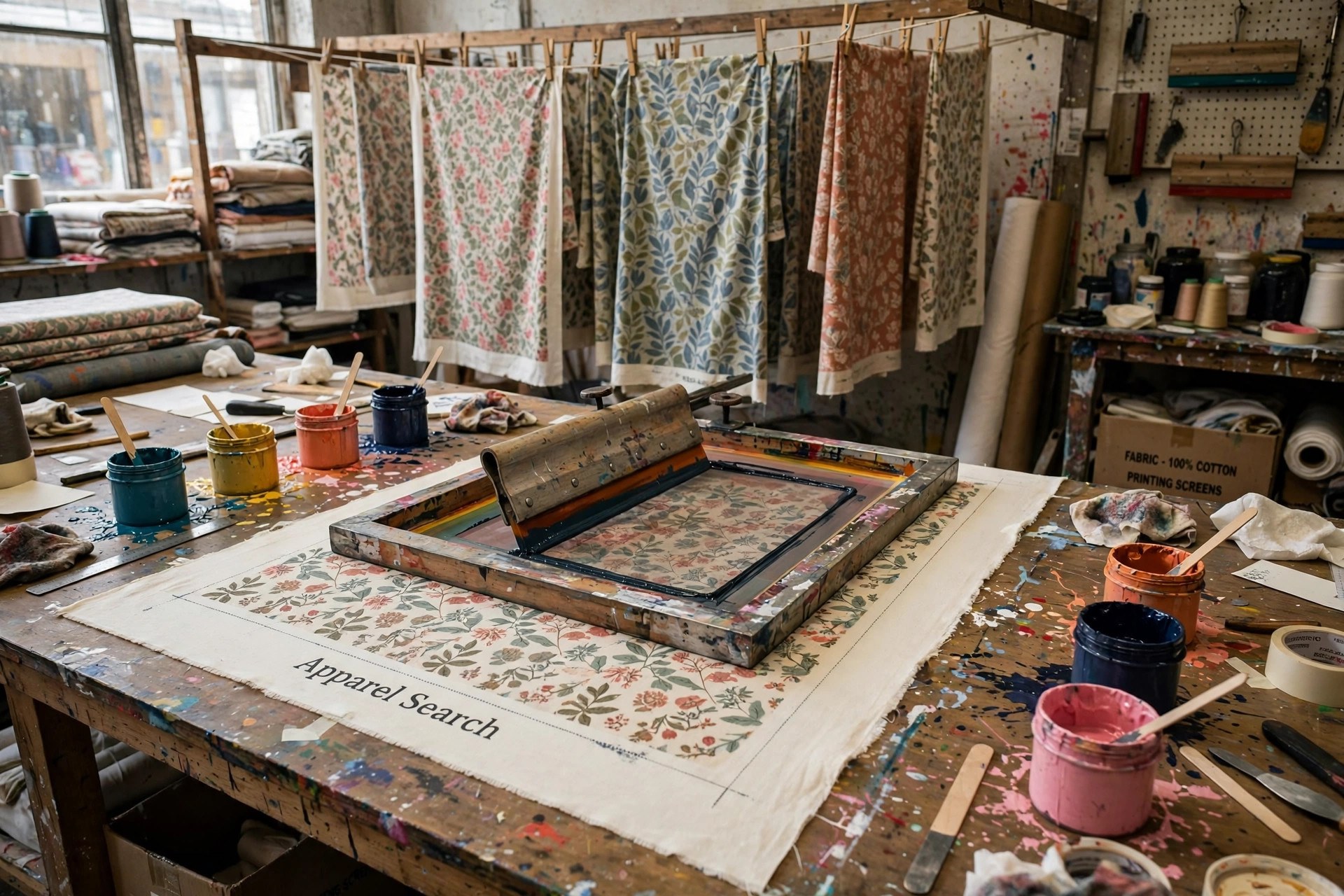
Every screen print begins as artwork, separated into one layer per colour. The printer or pre-press colleague exposes each separation onto a mesh screen coated with emulsion, washes out the design, and checks the screen for pinholes and blocked areas. Mesh count, squeegee hardness and paste consistency are chosen for the fabric and the effect — a fine line on silk and a bold white on black fleece are different technical problems wearing the same job title. For digital printing, preparation means colour-profiling the file to the fabric, pre-treating cloth so inks fix correctly, and test-printing a strike-off.
Print pastes and inks are mixed to the approved colour standards, with binders and auxiliaries matched to the fibre: pigment pastes for versatility, reactive and disperse systems where wash fastness on a specific fibre demands them, plastisol and water-based inks on garments. The printer proofs each colour on the actual production fabric, because a paste that matches on paper drifts on a textured or pre-dyed ground, and only a strike-off on the real cloth tells the truth.
Printing: Screen, Rotary and Digital
In flatbed screen printing, cloth is pinned or glued to a long table and each screen is printed in turn along its length, the squeegee pulling paste through the mesh in a single firm stroke — placement accuracy is the printer's eye and arm. Rotary screen printing mechanises the same idea for volume: cylindrical screens rotate over a moving blanket, each laying one colour, at speeds that demand constant attention to registration, paste supply and screen condition. Digital printing drops the screens entirely, jetting the design directly — economical for short runs, sampling and photographic detail, slower and costlier per metre at volume.
After printing, the colour must be fixed: garments are cured through a dryer at a controlled temperature, yardage may be steamed or baked depending on the dye system, and wash-fast prints are washed and finished. The printer checks output continuously — registration drift, colour variation, screen marks, misprints — and stops the run when quality slips, because printed faults cannot be unprinted. Finished work is recorded by design, colourway, quantity and any issues, so a repeat order prints the same way it printed the first time.
Skills and Abilities the Work Requires
A printer needs a colourist's eye and a mechanic's hands. Judging colour under standard light, spotting a quarter-tone drift before a customer does, and understanding why a paste behaves differently on cotton than on polyester are daily judgments. Registration — keeping multi-colour designs aligned — is the signature skill, and it is equal parts setup precision and mid-run vigilance. Machine care matters as much: screens cleaned without damage, print heads maintained, dryers calibrated.
Physical and organisational skills support the craft. Print work involves lifting screens and fabric rolls, standing at tables or machines for long stretches, and working cleanly around inks and chemicals with the required protective equipment. Printers sequence jobs to minimise colour changes and wash-ups, keep screens and files findable for repeats, and communicate with designers in both directions — what will print beautifully, and what must be adapted before it can print at all.
Training, Qualifications and Career Path
Printers typically train in the print shop, starting as assistants — coating screens, mixing pastes, catching and folding — and progressing to printing under supervision. Textile printing, surface design and printmaking courses provide the colour theory, repeat construction and process knowledge that shorten the apprenticeship, and digital roles increasingly expect competence with design software and colour management alongside the machines.
Career paths lead to senior printer and print-room supervisor roles, into pre-press and colour separation specialisms, or toward print design and development, where the printer's knowledge of what a process can do shapes the artwork itself. Experienced garment printers frequently establish their own shops — the equipment ladder from a manual carousel to an automatic press is a well-trodden route into business ownership — while textile printers may move into technical and quality roles with mills, brands and print buyers.
Common Questions
What is the difference between screen printing and digital fabric printing?
Screen printing pushes paste through a prepared screen — one screen per colour — and wins on volume, special effects and cost per metre on long runs. Digital printing jets ink directly from a file with no screens, so it wins on short runs, sampling and photographic detail. Many print shops run both and choose per job.
What does registration mean in fabric printing?
Registration is the alignment of the separate colour layers so they land exactly where the design intends. Poor registration shows as halos, gaps or doubled edges. Printers control it through screen setup, cloth tension and constant checking during the run.
Why do prints crack or wash out on garments?
Usually under-curing: the ink film was not dried at the right temperature for long enough to bond fully, or the wrong ink system was used for the fabric. Correct ink choice, correct cure and a wash test on a sample garment prevent both faults.
More to Explore
Printing Resources
- Fabric Printing
- Fabric Mills Directory
- Fabric Guide
- Clothing Factories (CMT)
- Clothing B2B
- Printing Machinery Manufacturers
- Printing Equipment Wholesalers
- Mesh for Screen Printers
- Squeegees for Screen Printing
- Heating, Drying and Curing Machinery
- Rotary Screens
- Adhesives for the Printing Process
- Chemicals for the Printing Industry
- Emulsions
- Inks for Textile Printing
- T-Shirt Manufacturers and Factories
- Hats and Headwear
- Printing on Hangers
- Corporate Apparel Distributors
- Printing Associations
- Digital Printing
- Colour Separations
- Screen Engravers
- Print Designs
- Dyeing and Finishing
- Embroidery Directory
- Textile Printing Definition
- Fashion Industry Portal
References & Further Reading
More Job Description Categories
- Buying Job Descriptions
- Design Job Descriptions
- Marketing & PR Job Descriptions
- Miscellaneous Job Descriptions
- Planning & Allocation Job Descriptions
- Production & Sourcing Job Descriptions (current)
- Sales & Selling Job Descriptions
- Transportation & Warehouse Job Descriptions