Athletic Shoe
Footwear Definitions — the sport-first shoe that became everyday dress, from Apparel Search
Search Apparel Search
At a Glance
Definition: An athletic shoe is a shoe designed for sporting activities, made of flexible material with a typically rubber sole, and today also worn widely as casual footwear.
Also known as: Sport shoe, running shoe, gym shoe, tennis shoe; sneaker (American English), trainer (British English)
Category: Footwear Definitions
Word Origin
Two of the casual names carry their own stories. Sneaker was first used in 1916 by the United States Rubber Company for the Keds brand, because rubber soles made the shoes quiet enough to sneak in. Trainer is simply a shortening of training shoe.
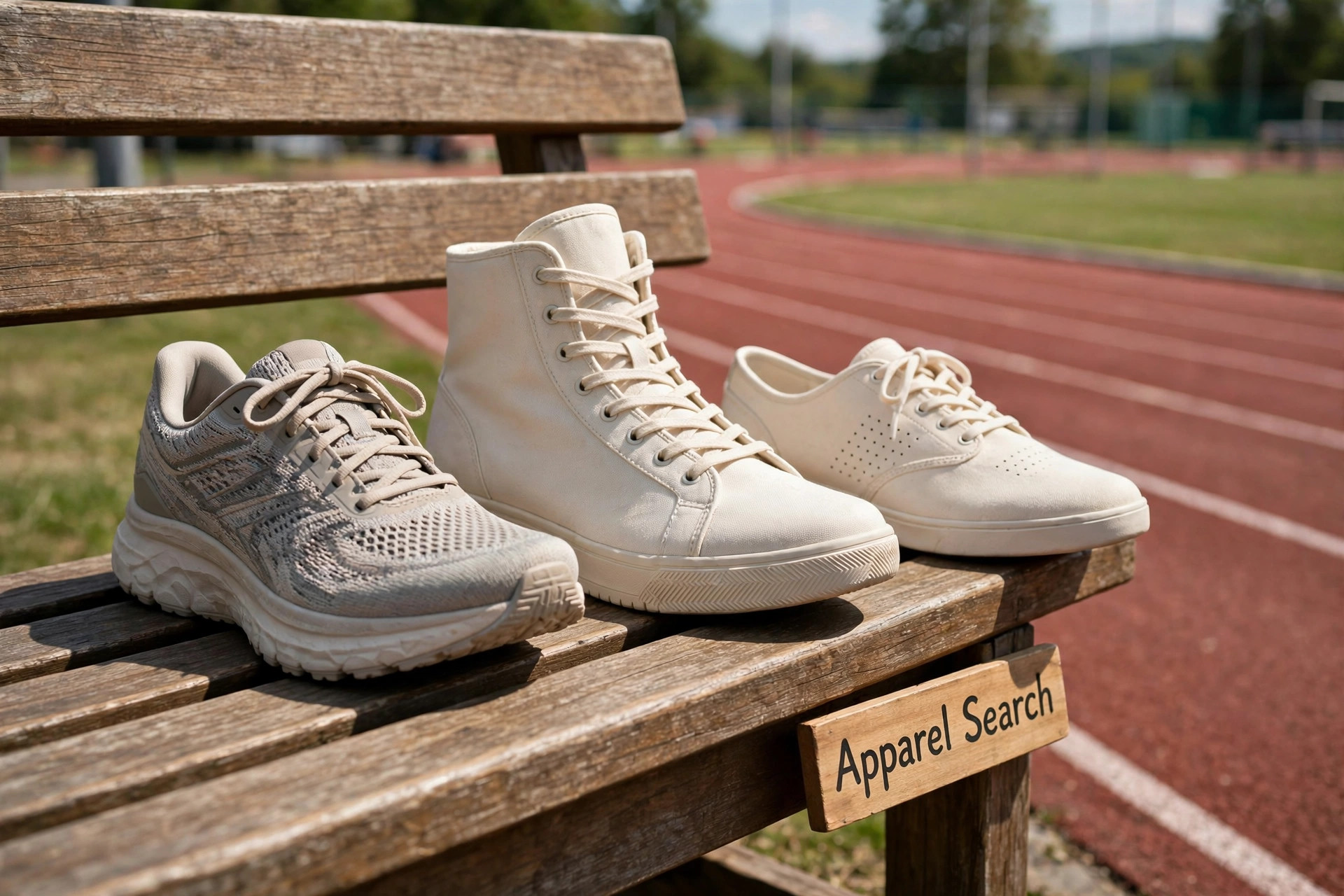
An athletic shoe is a generic name for a shoe designed for sporting activities. Athletic shoes began as sporting apparel, but they are today worn much more widely as casual footwear, and the family answers to many names: sport shoe, running shoe, gym shoe and tennis shoe, and in everyday speech a sneaker in American English or a trainer in British English. What unites the family is construction — flexible materials over soles typically made of rubber — and what divides it is purpose, because manufacturers have long since tailored the basic design to each sport it serves and, separately, to the casual market that now wears it off the field.
Built for a Sport First
The defining habit of the athletic shoe is specialisation. The term is used for shoes for running, basketball and tennis, among others, but it tends to exclude the footwear for sports such as football (soccer) and rugby, which are generally called boots. A basic flexible shoe with a rubber sole is only the starting point: from there, each sport rewrites the design around its own movements. Running shoes are built for repeated forward motion, with cushioning under the heel and forefoot, and the clearest example of tailoring is the spike developed for running shoe soles, which gives grip on the track. Basketball shoes rise higher around the ankle and brace the foot against the sideways cuts and landings of the court game. Tennis shoes use flatter, hard-wearing soles patterned for court surfaces, and gym shoes strip the formula back to a light all-purpose trainer for indoor exercise.
That specialisation is why the boundary of the term sits where it does. The studded footwear of football and rugby does the same job for its sports, but tradition calls those boots, and the name athletic shoe is reserved for the rubber-soled family. A buyer who understands the split shops more accurately: the wider category of performance footwear is organised by activity first and appearance second, and a shoe chosen for one sport carries design decisions — sole pattern, ankle height, cushioning placement — that may be wrong for another.
From Sporting Apparel to Everyday Dress
The second life of the athletic shoe, as casual footwear, is now larger than its first. Athletic shoes have been tailored for the casual market and are popular especially with young people, and the terms sneakers and trainers tend to be associated more with this casual use than with competition. These casual shoes are derivatives of shoes worn, and endorsed, by athletes as well as other celebrities. The market for casual athletic shoes is quite large, which leads to a lot of competition between companies and to their eagerness to sign up celebrities to endorse their products. Popular brands include Nike, Adidas, PUMA, Reebok, Converse and Fila.
The practical lesson is to shop by intended use. A shoe bought for running should be fitted and chosen as a running shoe, a shoe bought for the gym as a trainer, and a fashion style can be chosen on looks alone — the three may share a silhouette, but the cushioning, support and sole pattern underneath are genuinely different. The shoe has also acquired meanings beyond dress: in urban areas, a pair of sneakers tied together and hanging on telephone lines is widely read as a marker of a place where drug dealers sell or a gang gathers. On the foot or over a wire, the athletic shoe is read as a sign — which is the measure of how completely a piece of sporting equipment became everyday shoes.
Not to Be Confused With
Athletic shoes are not the studded footwear of football (soccer) and rugby. Those do the same sporting job, but tradition calls them boots, and the term athletic shoe is reserved for the flexible, rubber-soled family used for running, basketball, tennis and similar sports.
Common Questions
What counts as an athletic shoe?
The term athletic shoes covers shoes made for running, basketball and tennis, among other sports. It tends to exclude the footwear for football (soccer) and rugby, which are generally called boots even though they serve the same sporting purpose.
What are athletic shoes made of?
Athletic shoes are made of flexible material, typically featuring a sole made of rubber. Manufacturers tailor the design to each sport, for example adding spikes to the soles of running shoes for grip on the track.
Why are athletic shoes so popular off the field?
Athletic shoes have been tailored for the casual market and are popular especially with young people. Casual styles are derivatives of shoes worn and endorsed by athletes and other celebrities, and brands such as Nike, Adidas, PUMA, Reebok, Converse and Fila compete heavily for that market.