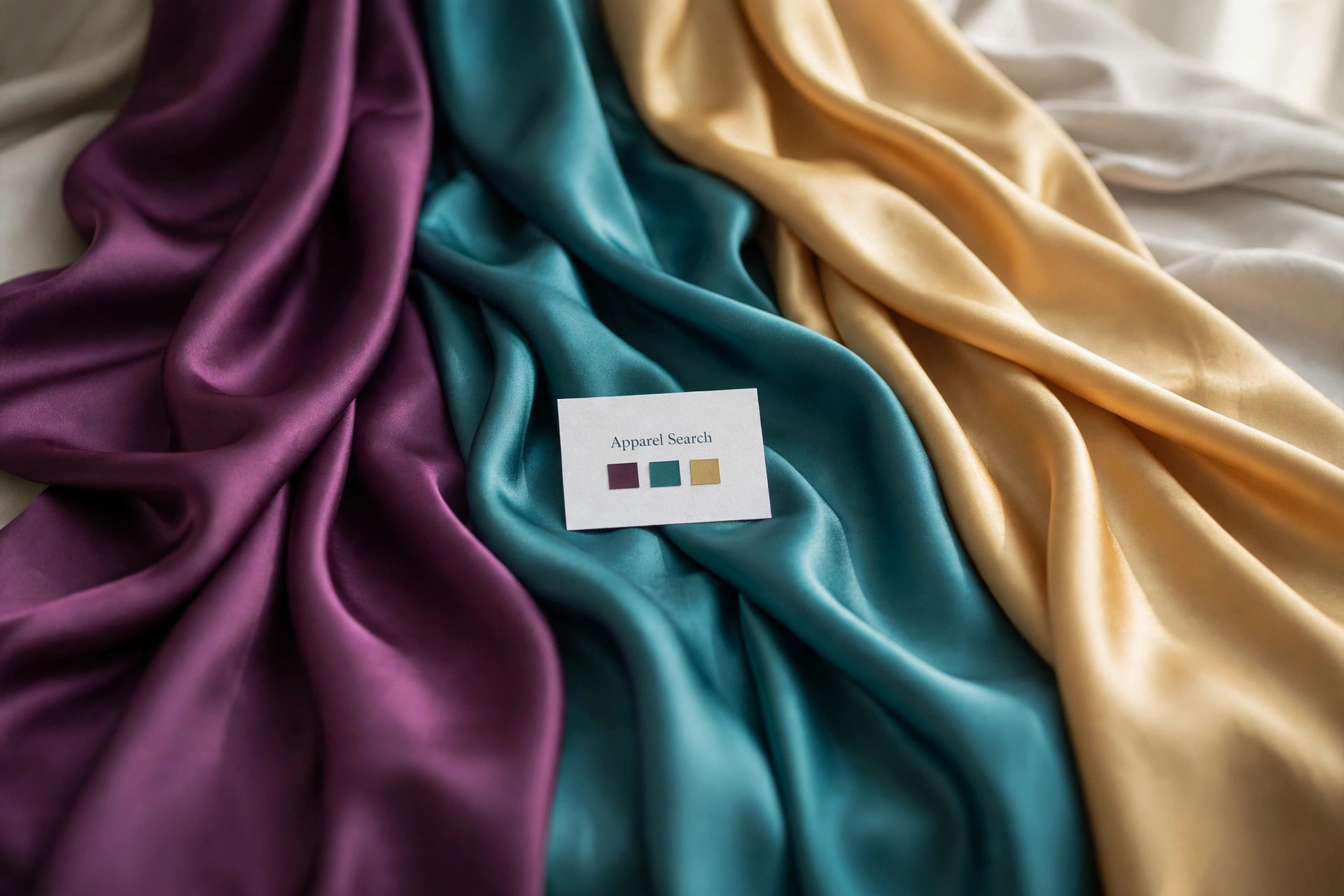
Satin is the glossy, liquid-smooth cloth of evening dresses, lingerie, linings and wedding gowns - and the most misunderstood word on a fabric label. Satin is not a fiber. It is a weave: a way of interlacing threads so that one set floats across the surface in long, unbroken runs, and those floats are what catch the light. Silk satin, polyester satin and cotton sateen can share the same structure and behave completely differently, because the fiber underneath the weave decides the care, the cost and much of the feel. This guide explains how the satin weave is built, the satin-versus-sateen distinction every buyer should know, the types you will meet, and how to choose and care for satin by reading the fiber first.
01 / The fabric
What Satin Is
In a satin weave, each warp thread floats over several weft threads before dipping under just one - in the smallest regular satin, a five-thread repeat written 4-over-1: the warp passes over four picks and under one, and the single interlacing points are scattered so they never line up into a visible pattern. Compare the three basic weaves: plain weave interlaces every thread, twill steps its interlacings into a diagonal, and satin hides its interlacings so the face is almost entirely floating yarn. A surface of smooth, parallel floats reflects light in one direction instead of scattering it - that is the shine. The back of the cloth, where the short floats sit, is comparatively dull, which is why satin has a bright face and a matte reverse.
Satin was originally woven in silk, and silk remains its most luxurious form: filament silk yarns are naturally smooth, so their floats glow. But the weave works with any smooth yarn, and today most satin is polyester, with nylon, rayon and acetate versions also common. What changes with the fiber is everything else - breathability, static, durability, price and washing. What stays the same is the structure: long floats, a lustrous face and a dull back.
The essential companion term is sateen. Sateen uses the same satin structure turned the other way: the weft threads float across the face instead of the warp, and it is woven from spun cotton rather than filament yarn. So satin is the warp-faced form, usually in filament fibers, and sateen is the weft-faced cotton counterpart - softer and more matte in character, and the fabric of most cotton bed sheets with a sheen. Confusing the two leads to buying the wrong cloth; the next sections keep them separate.
02 / Performance
How Satin Feels and Performs
Good satin pours. The long floats let the cloth slide over itself and the body, so satin drapes in fluid folds, feels cool and smooth against the skin, and shows color with unusual depth - light moving across the floats makes shades shift as the garment moves. That slipperiness is functional as well as beautiful: satin linings let tailored jackets glide over shirts, and satin pillowcases and hair wraps are sold precisely because the surface creates so little friction.
The floats are also the fragility. A yarn that runs unbroken across four or more threads has four or more chances to catch on a rough nail, a zipper tooth or a piece of jewelry, so satin snags and pulls more readily than plain or twill weaves of the same fiber. Water droplets can leave visible spots on some satins, especially silk, as the drops disturb the smooth surface. And because the face is all float, abrasion shows quickly - satin is a fabric for occasions and linings, not for workwear.
Strengths
- High, liquid luster from the floating warp face
- Smooth and cool against the skin; very low friction
- Fluid drape that pours into soft folds
- Shows dye colors with exceptional depth
- Glides as a lining over other garments
Trade-offs
- Long floats snag and pull easily
- Water droplets can spot silk and some other satins
- Abrasion shows quickly on the float face
- Slippery to cut and sew; seams can pucker
- Polyester satin builds static and breathes poorly
03 / Varieties
Types of Satin and Sateen
- Charmeuse - the best-known dress satin: a lightweight satin weave with an especially lustrous face and a dull, slightly crepe-like back. In silk it is the classic cloth of slips, nightgowns, blouses and bias-cut evening dresses; polyester charmeuse is its affordable counterpart.
- Duchess satin - a heavy, stiff satin with a high sheen, woven to hold structured shapes. It is a bridal and formalwear staple for gowns that need body rather than drape.
- Crepe-back satin - satin on one face and crepe on the other, so one cloth offers a glossy side and a matte textured side; designers use either face outward, or both in one garment.
- Antique and slub satins - satins woven with uneven, slubbed weft yarns that soften the shine into a textured, vintage-looking surface, common in drapery and formal skirts.
- Sateen - the weft-faced cotton counterpart described above: spun cotton floats across the face for a low, soft luster. Mercerized cotton sateen, treated for extra smoothness and shine, is the standard cloth of lustrous bed sheets and appears in shirts and dresses too.
- Baronet and messaline - lighter, softer satins historically used for linings, dresses and lingerie; the names survive in fabric shops for fine, fluid satin cloths.
04 / Construction
Where Satin Is Used
Satin's jobs all exploit the same two properties - shine and slip. As a face fabric it carries evening and bridal dressing: gowns, cocktail dresses, blouses, camisoles, lingerie and pajamas, where the luster does the decorating and the drape does the shaping. Bias cutting - cutting the cloth at 45 degrees - makes satin cling and pour in a way no other common weave matches, which is why so many classic evening dresses are bias-cut charmeuse.
As a supporting fabric satin is just as busy: jacket and coat linings, the smooth facings of lapels, cummerbunds and bow ties, ribbons, and the covered buttons and trims of formal clothing. Sateen works the household shift - sheets and duvet covers - and a quieter clothing shift in shirts, dresses and trousers that want cotton's comfort with a polished face. Knowing which side of the family you are holding, satin or sateen, tells you most of what to expect before you even check the fiber.
05 / Buying
How to Choose Satin
Read the label in the right order: weave first, fiber second - and let the fiber drive the decision. Silk satin breathes, regulates temperature and has the deepest luster, at the highest price and the most careful washing. Polyester satin is inexpensive, durable for its delicacy and easy to wash, but it can feel clammy in heat and it crackles with static in dry weather. Rayon satin drapes beautifully and breathes better than polyester but weakens when wet and needs gentle handling. If what you actually want is cotton with a sheen, you want sateen, and no amount of shopping for "cotton satin" will serve you as well as asking for it by its own name.
Then judge the cloth in your hands. The face should be evenly lustrous with no pulled threads or dull abrasion patches; hold it to the light and check that the shine is smooth rather than streaky. Drape a length over your arm - dress satins should fall in fluid folds, while duchess satin should stand away with body; a cloth that does neither well is usually a poor example of its type. Finally, match the weight to the garment: light charmeuse for blouses and lingerie, mid-weight satin for dresses, heavy duchess for structured gowns.
06 / Care
Caring for Satin
Satin has no care routine of its own - the fiber decides. That is the single most useful sentence in this guide: a label that says only "satin" tells you the weave, and you must find the fiber content before you wash anything. Silk satin is hand-washed cool or dry cleaned, kept out of prolonged sunlight, and never wrung; water spotting is a real risk, so wet a spotted silk satin evenly rather than dabbing one place. Polyester satin tolerates a gentle machine wash in cool water. Cotton sateen washes like other cotton, though its float face appreciates a gentle cycle and washing inside out. The fabric care guide gives the fiber-by-fiber routines.
Whatever the fiber, protect the floats. Wash satin turned inside out, ideally in a mesh bag, away from zippers, hooks and rough garments that can pull the surface threads. Press on the reverse side with a cool iron, or steam gently - a hot iron on the face can glaze or melt the floats depending on the fiber. Store formal satin rolled or padded on hangers rather than folded in hard creases, and keep rings and rough nails in mind every time you handle it: most satin damage happens in a single careless second, not in the wash.
Satin at a Glance
Common Questions
Is satin a fiber?
No. Satin is a weave - a structure in which warp threads float over several weft threads, creating the smooth, glossy face. The fiber can be silk, polyester, nylon, rayon or another smooth yarn, and the fiber, not the weave, decides the price, the breathability and how the garment must be washed.
What is the difference between satin and sateen?
They share the same float structure, turned opposite ways. In satin the warp threads float on the face, and the cloth is usually woven from filament fibers such as silk or polyester, giving a high gloss. In sateen the weft threads float on the face, and the cloth is woven from spun cotton, giving a softer, lower luster - it is the fabric of most cotton sheets with a sheen.
Why does satin snag so easily?
Because of the floats. Each surface thread runs unbroken across four or more crossing threads before it is anchored, so a rough nail, zipper tooth or piece of jewelry can catch and pull it. Handle satin with smooth hands, wash it inside out away from hardware, and keep it from rubbing against rough surfaces in wear.
How do you wash satin?
By its fiber, not by the word satin. Silk satin is hand-washed cool or dry cleaned and never wrung. Polyester satin usually tolerates a gentle machine wash in cool water. Cotton sateen washes like other cotton, on a gentle cycle and inside out. Always check the garment's fiber content and care label first.
More to Explore
Explore more: Fabric Directory | Fabric Industry Guide
Definitions and Comparisons
Directories and Further Reading
Search Apparel Search
Fabric Guides
- Fabric Guides Hub
- Cotton Fabric Guide
- Denim Fabric Guide
- Silk Fabric Guide
- Linen Fabric Guide
- Wool Fabric Guide
- Polyester Fabric Guide
- Cashmere Fabric Guide
- Nylon Fabric Guide
- Rayon Fabric Guide
- Spandex Fabric Guide
- Corduroy Fabric Guide
- Satin Fabric Guide
- Chiffon Fabric Guide
- Twill Fabric Guide
- Velvet Fabric Guide
- Jersey Fabric Guide
- Fleece Fabric Guide
- Lace Fabric Guide
- Tulle Fabric Guide
- Poplin Fabric Guide
- Fabric Care Guide