Women's Petite Size Clothing Guide - Page 3
Page 3 of the petite size clothing guide goes practical: full petite measurement charts, regular-to-petite conversions by garment, and the shopping strategies that make petite sizing work online and in store.
Shop Women's Petite Clothing Now
Shop Women's Petite Clothing on Amazon Shop Women's Petite Clothing on eBayThe Amazon and eBay links on this page are affiliate links. If you make a purchase through them, Apparel Search may earn a commission.
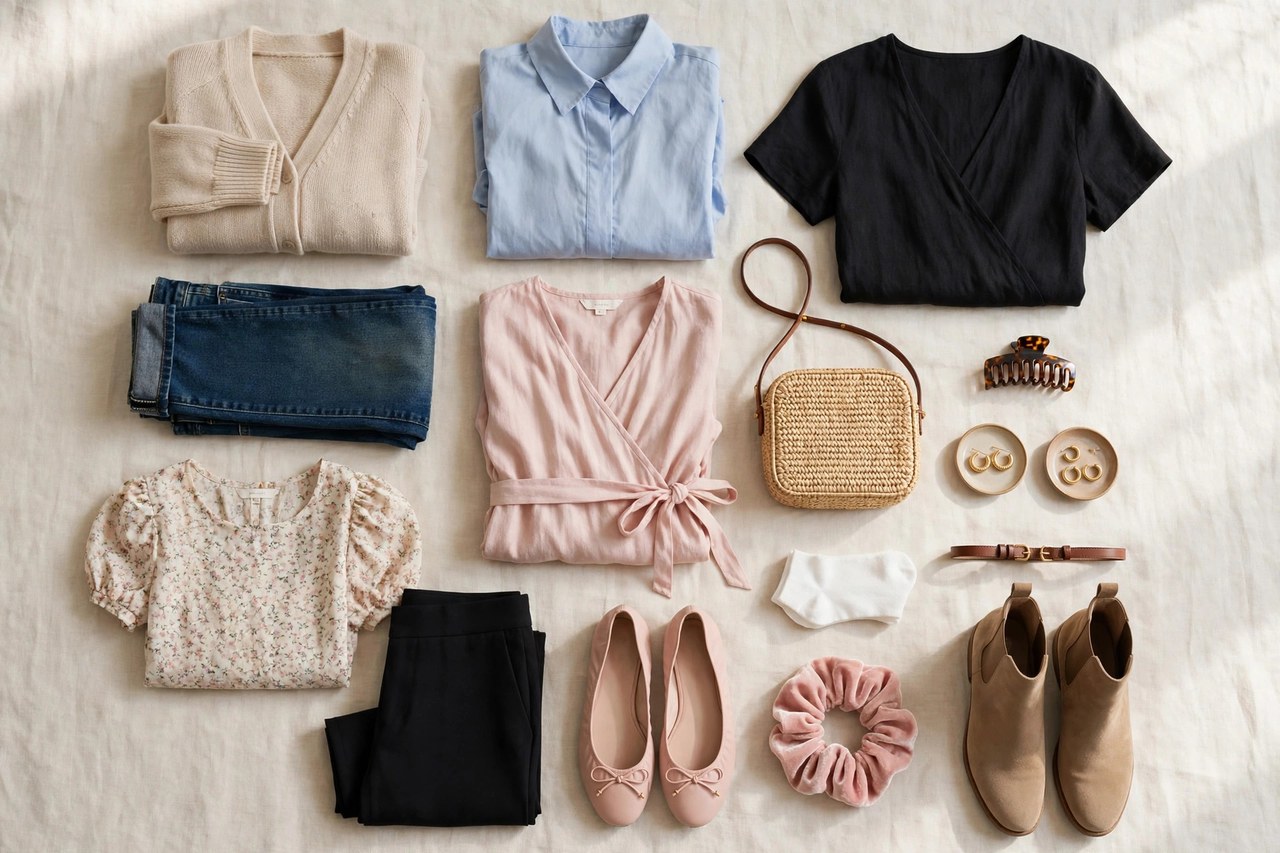
This is page 3 of the women's petite size clothing guide, and it assumes the foundations from the earlier pages: petite sizing is a proportion system for women 5'4" and under, not merely smaller regular sizing, and it re-grades length, rise, waist position and scale garment by garment. Page 3 turns that knowledge into numbers and method — the measurements to take, the chart ranges petite sizes actually cover, how to convert when a style is not offered in petite, and how to shop efficiently in a category that many stores stock thinly.
Keep a tape measure nearby as you read. Petite shopping rewards the prepared: with your bust, waist, hip, back length and two inseams written down, size charts stop being guesswork, returns fall sharply, and you can judge a new brand's petite range in minutes instead of a fitting-room afternoon.
The Petite Measurement Chart in Full
Petite sizes are usually labeled with a P after the number or letter — 8P, MP, and so on. Typical petite chart ranges run roughly: bust 31 to 46 inches across sizes 00P to 18P, waist about 24 to 39 inches, and hips 33 to 48 inches, with the exact bands varying by brand. Those circumferences overlap regular sizing heavily, because petite is about length and proportion: the same bust measurement sits on a shorter torso, with a higher waist and narrower shoulders, in the petite draft.
The length measurements are the ones to learn. Back waist length in petite patterns runs about an inch to an inch and a half shorter than regular. Petite inseams are commonly 25 to 28 inches for cropped and ankle styles and 28 to 31 for full-length trousers and jeans, against regular inseams two to three inches longer. Sleeve lengths grade roughly an inch shorter, and dress and skirt lengths one to three inches shorter depending on the style. When a brand publishes these numbers, trust them over the size letter; when it does not, measure the garment, not the model photograph.
Converting Regular Sizes to Petite, Garment by Garment
Sometimes a style exists only in regular sizes, and conversion works for some garments and not others. Forgiving garments — relaxed knit tops, elastic-waist skirts, wrap dresses, overshirts — convert well: choose your usual circumference size or one down, and plan a hem. The wrap and the elastic absorb the proportion differences that defeat structured clothing. Unforgiving garments — tailored jackets, button-front shirts, sheath dresses, trousers with a set waistband — convert badly, because their waist position, button stance and rise are fixed in the wrong places for a petite body.
For trousers and jeans in regular-only styles, expect to hem and possibly take in the waist, and accept that the rise will sit higher than designed; a mid-rise regular often behaves like a high-rise on a petite frame, which can be used deliberately. For dresses, a regular size can work when the waist is empire or undefined. A good tailor can shorten, raise a hemline design permitting, and narrow sleeves, but cannot move a waist seam through boning or re-space a button placket — knowing that boundary is most of conversion wisdom.
Shopping Strategies for Petite Ranges
Shop where petite is a real department, not an afterthought: dedicated petite ranges grade every pattern, while a token petite capsule may only shorten hems. Online, filter by petite first rather than browsing everything and hoping, and read the garment measurements and inseam fields before the marketing copy. Reviews from other petite shoppers are unusually informative in this category — look for height mentions, since a 5'0" review and a 5'4" review describe different fits of the same garment.
In store, use the four-point check from the earlier pages: hem position, waist position, armhole and scale. Try structured pieces before knits, because structure reveals a pattern's honesty immediately. Build a short list of brands whose petite blocks fit you and buy basics there repeatedly, reserving experiments for one piece at a time. Consider a standing relationship with a tailor for the final ten percent — petite sizing gets most wearers ninety percent fitted off the rack, the best ready-to-wear result available at any height.
Building the Petite Wardrobe from the Charts Outward
The practical endpoint of pages 1 to 3 is a wardrobe bought by measurement. Start with the categories where petite grading matters most and buy them in true petite ranges: trousers and jeans (rise and inseam), jackets and tailored tops (waist and armhole), dresses (waist and length) and coats (everything at once). Fill in with converted regular pieces only in the forgiving categories, and keep your measurement card — bust, waist, hip, back length, two inseams, sleeve — updated once a year or after any significant change.
Finally, remember what the numbers are for. Petite sizing exists so that clothing's designed proportions — where a waist sits, where a hem falls, where a pocket waits for your hand — happen on your body the way the designer drew them. A woman of 5'2" in correct petite tailoring looks neither smaller nor larger than herself; she looks, simply, well dressed. That is the standard to hold every purchase to, and the charts on this page are how you enforce it without living in a fitting room.
Related Women's Guides
More to Explore on Apparel Search
- Petite Clothing Pg. 2
- About Petite Clothing
- Petite Pajamas
- Petite Pants
- Petite Party Dresses
- Petite Prom Dress
- Petite Rain Coats
- Petite Rainwear
- Petite Robes
- Petite Separates
- Petite Shapewear
- Petite Shawls
- Petite Shirts
- Petite Shoes
- Petite Shorts
- Petite Short Sleeve Shirts
- Petite Silk Blouse
- Petite Silk Sleepwear
- Petite Skirts
- Petite Sleep Pants
- Petite Sleep Shirts
- Petite Sleepwear
- Petite Socks
- Petite Spring Fashion
- Petite Suits
- Petite Sundresses
- Petite Sweaters
- Petite Swimwear
- Petite Tops
- Petite T-shirts
- Petite Turtlenecks
- Petite Underwear
- Petite Wedding Dress
- Petite Wedding Gowns
- Petite Wool Coats
- Petite Wool Sweaters
- Petite Workwear
Looking for Women's Clothing Stores?
This guide helps you choose women's petite clothing. To browse where to buy, visit our women's clothing store directory, where you can find retailers that carry them.