Fashion Buying Job Descriptions — Page 2
More buyer and purchasing roles in the clothing industry — letters K through Y
This is the second page of the buying job descriptions directory. The first page introduces the buying category and lists the roles from A to J; this page continues the directory from K to Y, completing the full set of buying and purchasing job descriptions on the site. Between the two pages, every buying role is listed once, in alphabetical order by the merchandise it covers.
Browse Buying Job Descriptions by Letter:
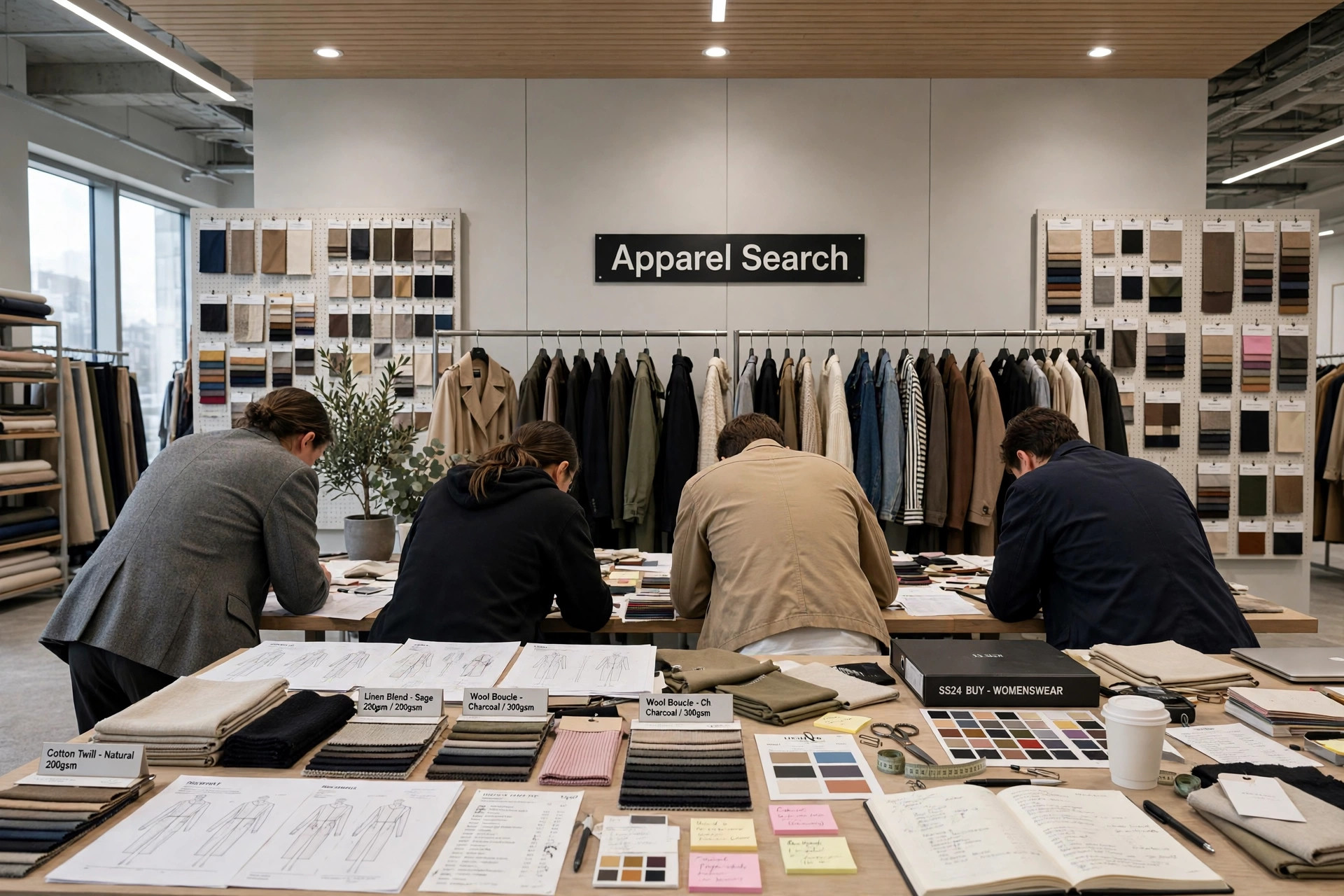
Specialist Buyers: One Category, Bought Deeply
Most of the roles on this page are specialists. A knit fabric buyer or knits buyer works close to the textile side of the trade, judging yarns, gauges and fabric performance before a garment exists. A lingerie, swimwear or underwear buyer manages categories where fit is everything and size ranges are wide, while maternity and missy buyers serve customers whose needs change with life stage and fit rather than with fashion alone. The outerwear and swimwear families each split further — into children's, men's and women's versions of the same role — because the customer, the sizing and the selling season differ enough in each market to need a dedicated buyer.
Working this way gives a buyer real depth. A specialist learns which suppliers deliver on time, which fabrics wash well, which fits customers return and which price points move — knowledge that only builds up over seasons in one category. That depth is also the career path: specialists who consistently read their numbers well are the people promoted into the cross-category roles, the divisional and general merchandise manager jobs described on the first page of this directory.
The Purchasing Agent: Buying Beyond the Sales Floor
One role on this page works differently. The purchasing agent buys goods and services for a business itself — materials, supplies and contracted services — rather than merchandise for resale. The skills overlap with retail buying: comparing suppliers, negotiating terms, placing orders and making sure deliveries arrive as agreed. The difference is the customer: a purchasing agent serves the company's own operations, so contracts, specifications and cost control matter more than seasonal fashion judgement. It is a reminder that buying is a profession in its own right, practised well beyond the clothing rails.
Buyer Job Descriptions K–Y
Every remaining buying and purchasing role is listed below by letter. Use the alphabet bar above to jump to the same letters on the main buying hub, or return to page 1 for the A–J roles.
K — Buying Roles
L — Buying Roles
M — Buying Roles
N — Buying Roles
O — Buying Roles
P — Buying Roles
S — Buying Roles
- Shirt Buyer
- Shoe Buyer
- Sleepwear Buyer
- Swimwear Buyer
- Children's Swimwear Buyer
- Men's Swimwear Buyer
- Women's Swimwear Buyer
T — Buying Roles
U — Buying Roles
W — Buying Roles
Y — Buying Roles
Common Questions
Which buying job descriptions are on page 1 and which are on page 2?
The first page of the buying directory lists the roles from A to J — accessories, assistant and clothing buyers through to jeans and juniors buyers — and introduces the full A–Z list. This second page continues the directory from K to Y: knit and fabric buyers, lingerie, maternity, menswear and missy buyers, the outerwear, swimwear and underwear specialists, and the womenswear and young men's buyers at the end of the alphabet.
How do I become a fashion buyer?
Most buyers start in an entry role such as buyer's assistant or assistant buyer, learning how ranges are planned, ordered and tracked while supporting an experienced buyer. From there, proven judgement about product and numbers leads to a buyer role over a single category, and then to senior buyer, divisional merchandise manager and general merchandise manager roles. Retail experience, strong numeracy and negotiation skill matter as much as any single qualification.
Why are so many buying roles named for a product category?
Because buyers are usually hired against the merchandise they will buy. A store needs deep knowledge of one product area — its fabrics, fits, sizes, suppliers and seasonal calendar — so roles are named for categories such as footwear, handbags, dresses and swimwear rather than for buying in general. The senior roles that sit across categories, such as DMM and GMM, are the main exceptions.
Buying Job Descriptions Directory — All Pages
- Page 1 — Fashion Buying Job Descriptions
- Page 2 — More Fashion Buyer Job Categories (current)