Raschel Machinery Parts for Textile Machinery
Textile and clothing machine spare parts — what the part does, how to specify it, and the companies that supply it.
Raschel machines are the versatile workhorses of warp knitting, producing everything from lace and net to technical textiles, spacer fabrics and coarse Raschel goods knitted from tapes and heavy yarns. Like all warp knitting machines, a Raschel builds its fabric from elements that work in precise unison — compound or latch needles, sinkers, guides in multiple guide bars, and the jacks and holding elements that time them — and those loop-forming elements are the machine's main spare parts. A single damaged needle or bent guide affects every course, so Raschel spares are stocked by element type and machine gauge.
Textile Machinery Directory
The Loop-Forming Elements of a Raschel Machine
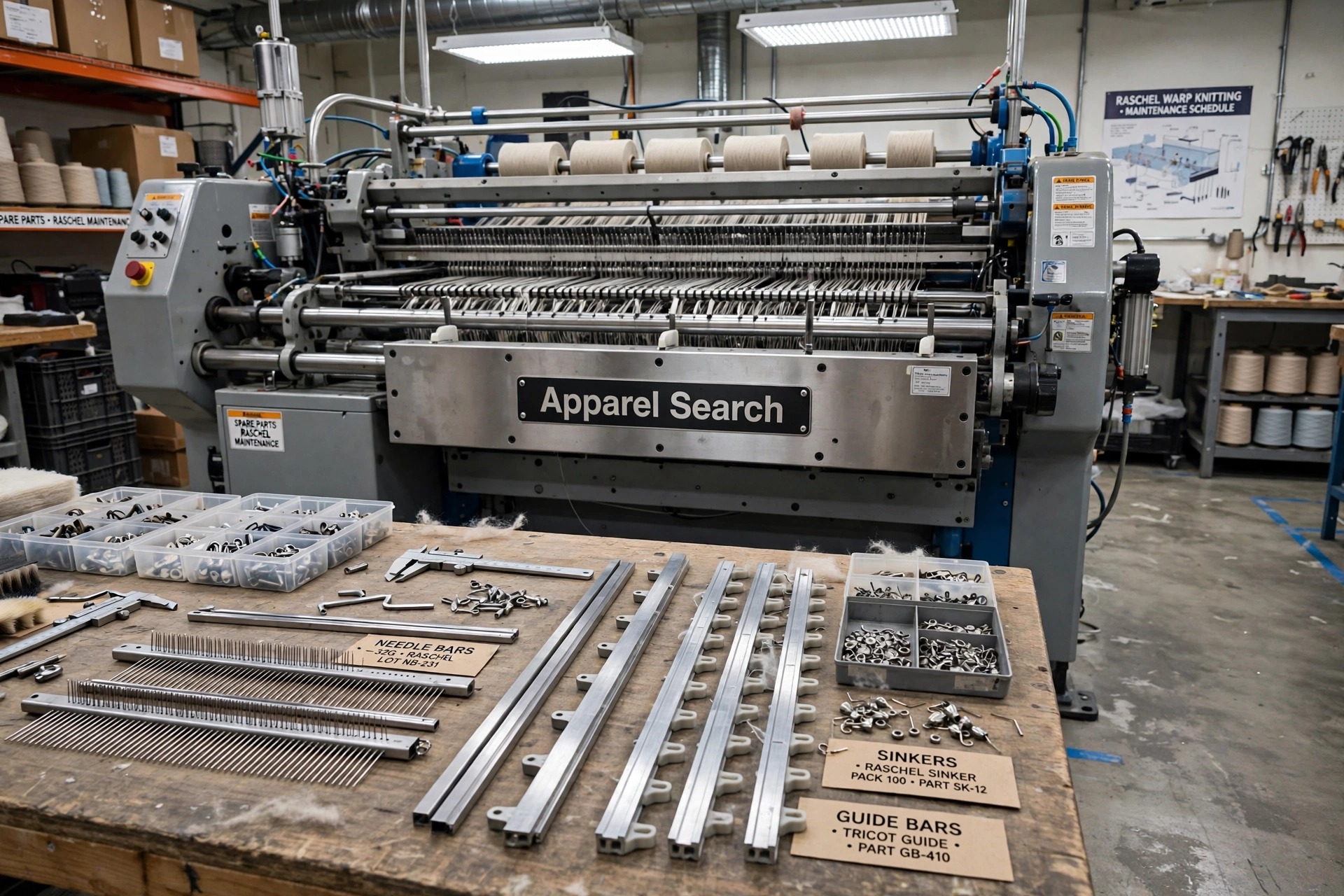
A Raschel's knitting elements are arranged in bars across the full working width: the needle bar, the sinker bar that holds the fabric and separates the stitches, and several guide bars whose guides swing and shift to lay yarn into the needles to the pattern. Jacks and related elements in the drive and patterning system transmit the motions that time each bar. The elements are made to fine tolerances and are gauge-specific — the spacing of needles per unit width defines the machine gauge, and needles, sinkers and guides must all match it, as well as matching the machine maker's pattern of shank, hook and latch.
Raschel work is demanding on elements: abrasive yarns, tapes and monofilaments wear hooks and sinker throats, and the machines' wide product range means elements are changed both for wear and for product changeovers. Broken latches, bent guides and chipped sinkers are the everyday replacements.
Sourcing and Fitting Raschel Spares
Order Raschel elements by machine make and model, gauge, working width where relevant, and the element's exact pattern — taking a sample element or the maker's part reference to the supplier avoids the near-miss that will not run. In fitting, elements are changed in the bar with the machine stopped and the bars secured, new elements are checked for free movement, and the first courses are knitted slowly and inspected for the needle lines or dropped stitches that betray a mis-seated element. Because warp knitting spares are highly specific, mills value a stockist holding a very big stock across many machine types, able to deliver a single needed element quickly anywhere. The German supplier below is exactly that kind of source for Raschel and other warp knitting parts.
Element care between changes also matters. Needles and sinkers are kept oiled with the machine maker's recommended knitting oil, yarn paths are kept free of abrasive deposits, and damaged elements found during cleaning are changed before they mark a full piece. Keep elements for each machine and gauge in labelled store compartments: Raschel elements for different gauges look deceptively alike out of their packets, and one wrong-gauge element fitted in a bar can damage its neighbours across the whole working width before the fault is seen in the fabric.
Companies Supplying Raschel Machinery Parts
Betex
Betex (Germany) supplies jacks, sinkers and spare parts for the textile industry — uncomplicated, reliable and quick. Whether it is a needle that needs replacing on the other side of the world or a technical problem they can help to solve by telephone, Betex works from a very big stock with a wide range of products and can deliver demands immediately with its worldwide operating logistical partners.
Supplies: Raschel Machine Parts · Jacks · Sinkers · Warp Knitting Spare Parts · Needles
Textile & Clothing Machine Spare Parts
- Beam Heads
- Beams for Weaving Machinery
- Bulb Socket
- Cams
- Ceramic Friction Disks
- Ceramic Thread Guides
- Circular Knitting Machine Parts
- Creel Stands
- Cutters for Looms
- Cylinders
- Dials
- Electric Shears
- Feed Wheel
- Feeders
- Fineblanked Stampled Parts
- Flexible Card Clothing
- Grinder
- Grippers
- Guide Unit s - textile machinery
- Hosiery Camboxes
- Knitting Machine Spare Parts
- Loop Forming Elements
- Loose Needles
- Lycra Feeders
- Metallic Card Clothing
- Metallic Cleaning Tool
- Mounting Pads
- Papermakers for Felt Weaving
- Patterning
- Positive Feeders
- Poy Winder Machines
- Pulleys for textile machines
- Rapier Tapes
- Rapier Wheel
- Rotary Hooks
- Safe Needles
- Sample
- Sensors for Looms
- Sewing Machinery Spare Parts
- Sinkers Rings
- Slide Electronic yarn Control Devices
- Springs for Textile Machines
- Stamped Bent Parts
- Stitch Bonding Machine Parts
- Striper
- Swatch Cutters
- Tension Meters
- Thread Break Guard
- Thread Guide Units
- Tricot Machinery Spare Parts
- Warp Knitting Spare Parts
- Warper Beams
- Weaving Machinery Spare Parts
- Weft Feeders
- Weight Scales
- yarn Carriers
- yarn Retainer
- yarn Sensor
- yarn Splicers
- yarn Suction Cups for Winders
- yarn Supervisor by Drop
- yarn Supervisor by Tearing
- yarn Supervisor by Tearing & Drop
Knitting & Weaving Machinery
- Circular Knitting Machinery
- Crotchet Knitting Machinery
- Double Jersey Knitting Machinery
- Fleece fabric Knitting Machines
- Hosiery / Socks Machinery
- Knitting Lubricator
- Knitting Software
- Mesh fabric Knitting Machines
- Pile fabric Knitting Machines
- Plush fabric Knitting Machines
- Rib fabric Knitting Machinery
- Ring Temples
- Seamless Knitting Machinery
- Sewing Machinery Attachments
- Single Jersey Knitting Machinery
- Terry fabric Knitting Machinery
- Terry Machinery
- Velour fabric Knitting Machinery
- Weaving Machinery Manufacturers
Related Guides and Resources
Common Questions
Which Raschel parts are replaced most often?
The loop-forming elements: needles with worn hooks or broken latches, sinkers with worn throats, and guides that have bent or worn. Jacks and drive elements last longer but are stocked for patterning and timing repairs.
Why must Raschel elements match the machine gauge exactly?
Gauge sets the spacing of every element in the bars. An element of the wrong gauge or pattern cannot sit correctly in the bar, and will cause dropped stitches, needle damage or collisions with neighbouring elements at running speed.
How is a damaged element found in a full-width bar?
By its fabric signature: one faulty needle or guide repeats its fault — a needle line, dropped stitch or distorted wale — in the same position course after course. Mark the position in the fabric, count across the bar, and change that element.