Stitch Bonding Machine Parts for Textile Machinery
Textile and clothing machine spare parts — what the part does, how to specify it, and the companies that supply it.
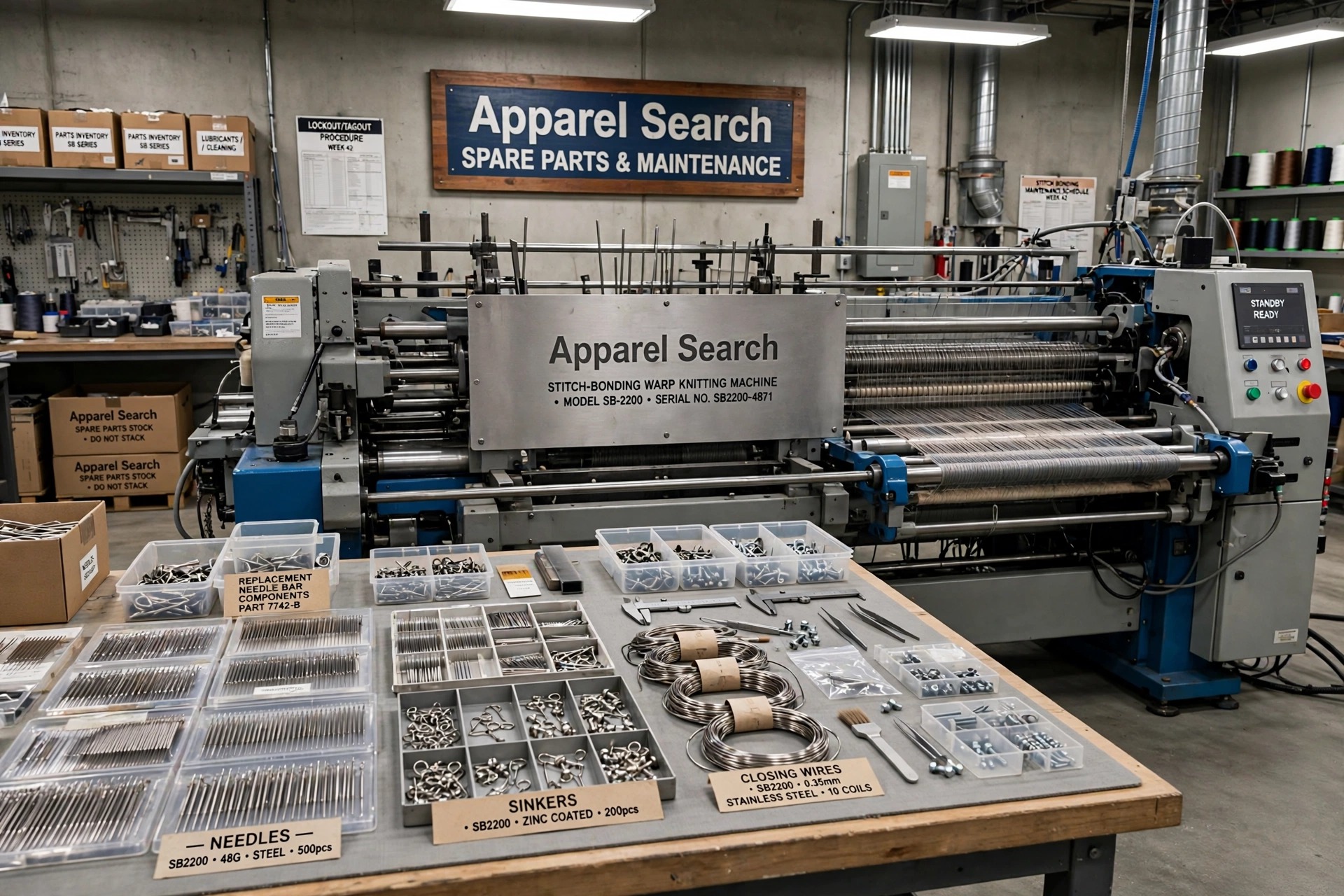
Stitch bonding makes fabric without weaving or conventional knitting: a layer of fibres, a fleece or a sheet of yarns is passed through the machine and stitched together by rows of yarn loops driven through it by compound needles working with sinkers, guides and closing elements. The process produces furnishing fabrics, technical textiles, backing and insulation materials at high speed, and its working parts - needles, sinkers, jacks and guide units - run in abrasive fibre all shift. Stitch bonding machine parts are consumable precision spares, stocked by gauge and machine type wherever these machines run.
Textile Machinery Directory
The Working Parts of a Stitch Bonding Machine
The stitch-forming elements work as a timed set. Compound needles pierce the fibre or yarn layer and draw the stitching yarn through it; sinkers control the material and the formed stitches between needle rows; guide bars lay the stitching yarns to the needles in the pattern the fabric design requires; and jacks and related elements drive and position the working parts through each cycle. Because the needles penetrate a fibre web rather than passing through open loops, abrasive wear is the dominant life limit - fibre, and especially glass or recycled fibre, dulls needle points and wears sinker edges until stitch quality and running behaviour force a change.
Parts are gauge-specific: the element set must match the machine's gauge, working width arrangement and the product being run, and elements are normally changed in complete rows or sets so stitch formation stays uniform across the width. A part worn beyond its neighbours shows as a line in the fabric that follows the machine across every piece it produces.
Stocking and Sourcing Stitch Bonding Spares
Stitch bonding parts reward a stocked shelf: needles, sinkers and jacks in the gauges in use, guide unit parts for the bars fitted, and the small elements whose failure stops the whole machine for the sake of one component. Supply speed matters as much as stock, and the specialist listed below is built around it: Betex supplies jacks, sinkers and spare parts for the textile industry - uncomplicated, reliable and quick - drawing on a very large stock across a wide range, delivered immediately through worldwide logistics partners, with help by telephone when a technical problem needs solving as well as a part. Its warp knitting range covers stitch bonding alongside tricot and raschel machine parts.
Element changes are planned work, not breakdown work, wherever the product allows: a machine stopped on schedule for a full needle, sinker and jack inspection loses less production than one stopped mid-order by a stitch fault, and changing elements in sets builds a record of element life by product - valuable information when a more abrasive fibre web is quoted and its element cost has to be priced into the job. Worn elements are diagnostic, too: uneven wear across the width points to web or guide misalignment that new elements alone will not cure.
Companies Supplying Stitch Bonding Machine Parts
Betex
Betex (Germany) supplies jacks, sinkers and spare parts for the textile industry - uncomplicated, reliable and quick. Whether a needle needs replacing on the other side of the world or a technical problem can be solved by telephone, Betex works from a very large stock with a wide range of products and delivers immediately through its worldwide operating logistics partners. Its range covers stitch bonding machine parts together with tricot machine parts, raschel machinery parts, loose needles, patterning, thread break guards and guide units.
Supplies: Stitch Bonding Machine Parts · Jacks · Sinkers · Tricot Machine Parts · Raschel Machinery Parts · Guide Units
Textile & Clothing Machine Spare Parts
- Beam Heads
- Beams for Weaving Machinery
- Bulb Socket
- Cams
- Ceramic Friction Disks
- Ceramic Thread Guides
- Circular Knitting Machine Parts
- Creel Stands
- Cutters for Looms
- Cylinders
- Dials
- Electric Shears
- Feed Wheel
- Feeders
- Fineblanked Stampled Parts
- Flexible Card Clothing
- Grinder
- Grippers
- Guide Unit s - textile machinery
- Hosiery Camboxes
- Knitting Machine Spare Parts
- Loop Forming Elements
- Loose Needles
- Lycra Feeders
- Metallic Card Clothing
- Metallic Cleaning Tool
- Mounting Pads
- Papermakers for Felt Weaving
- Patterning
- Positive Feeders
- Poy Winder Machines
- Pulleys for textile machines
- Rapier Tapes
- Rapier Wheel
- Raschel Machinery Parts
- Rotary Hooks
- Safe Needles
- Sample
- Sensors for Looms
- Sewing Machinery Spare Parts
- Sinkers Rings
- Slide Electronic yarn Control Devices
- Springs for Textile Machines
- Stamped Bent Parts
- Striper
- Swatch Cutters
- Tension Meters
- Thread Break Guard
- Thread Guide Units
- Tricot Machinery Spare Parts
- Warp Knitting Spare Parts
- Warper Beams
- Weaving Machinery Spare Parts
- Weft Feeders
- Weight Scales
- yarn Carriers
- yarn Retainer
- yarn Sensor
- yarn Splicers
- yarn Suction Cups for Winders
- yarn Supervisor by Drop
- yarn Supervisor by Tearing
- yarn Supervisor by Tearing & Drop
Knitting & Weaving Machinery
- Circular Knitting Machinery
- Crotchet Knitting Machinery
- Double Jersey Knitting Machinery
- Fleece fabric Knitting Machines
- Hosiery / Socks Machinery
- Knitting Lubricator
- Knitting Software
- Mesh fabric Knitting Machines
- Pile fabric Knitting Machines
- Plush fabric Knitting Machines
- Rib fabric Knitting Machinery
- Ring Temples
- Seamless Knitting Machinery
- Sewing Machinery Attachments
- Single Jersey Knitting Machinery
- Terry fabric Knitting Machinery
- Terry Machinery
- Velour fabric Knitting Machinery
- Weaving Machinery Manufacturers
Common Questions
How does stitch bonding differ from warp knitting?
Warp knitting forms fabric from yarn alone. Stitch bonding stitches through an existing layer - a fibre web, fleece or yarn sheet - binding that layer with rows of yarn loops, which makes it a route to furnishing and technical fabrics built on a fibre base.
Which stitch bonding parts wear fastest?
The elements that pierce and control the fibre layer: compound needles first, then sinkers and jacks. Abrasive fibres shorten element life, and worn elements are changed in sets or rows so stitch formation stays even across the width.
How are stitch bonding spares specified?
By machine make and type, gauge, and the element's position and function - needle, sinker, jack or guide unit part. Gauge is decisive: elements from another gauge will not form stitches correctly.