Feeders for Textile Machinery
Textile and clothing machine spare parts — what the part does, how to specify it, and the companies that supply it.
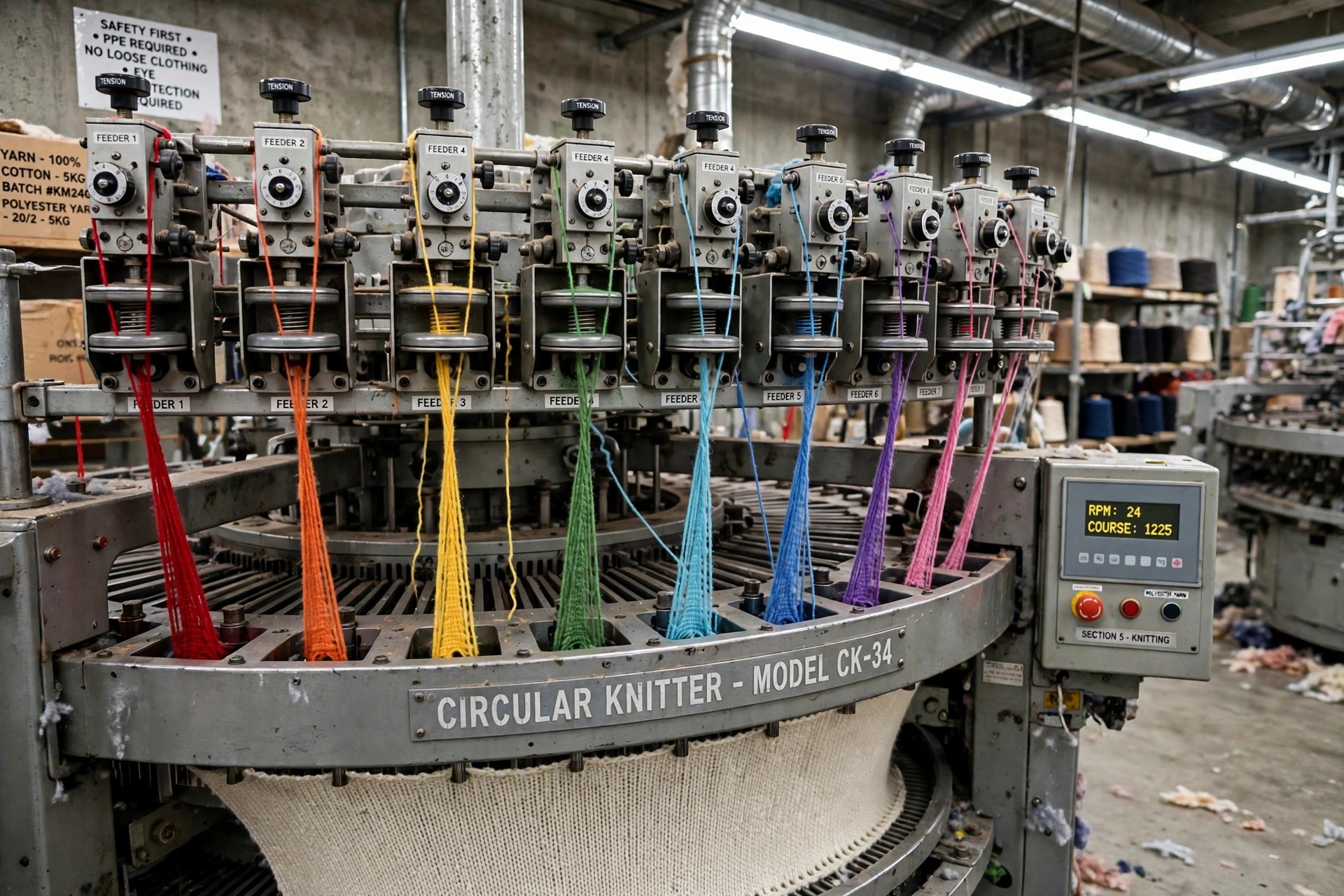
A feeder is the device that presents yarn to the needles at the right rate and tension, feed by feed, hour after hour. Knitting quality is largely decided here: loop length is set by how much yarn the feeder delivers, and most barré, stripes and tension faults trace back to feeding. Feeder types divide by principle — positive feeders that meter a fixed length, storage feeders that accumulate and release yarn at even tension, and dedicated units for difficult yarns such as Lycra — and the feeder trade supplies them as machine-specific spare parts.
Textile Machinery Directory
Feeder Types and What They Control
Positive feeders drive the yarn — wrapped on a wheel or drum — so delivery is set by the drive, not by yarn demand; the Self Grip Wheel feed wheel from Inchlines, extensively used on large diameter fabric machines, is the classic example. Storage feeders wind a reserve of yarn on a drum and let the machine draw it off, ironing out the tension peaks of package unwinding. Plating, striper and jacquard machines need feeders that handle several yarns at different tensions at once, and elastane needs its own controlled feed. Around the feeder itself, yarn carriers — the guides that take yarn the last distance to the needles — wear with the yarn, which is why carrier refurbishing with a ceramic coating, as offered below, has become a service in its own right for machines knitting abrasive yarns.
Feeder Faults and Maintenance
Feeder problems announce themselves in the fabric: periodic barré from a slipping wheel or belt, tight and loose courses from a sticking tension disc, and fuzz from a worn carrier eye. Maintenance is mostly cleanliness and surface condition — spin finish and lint bake onto wheels and discs, changing their grip, and ceramic-coated or ceramic contact parts extend the intervals. Inchlines, the Leicester textile engineers listed below, design and manufacture feeders as part of their circular knitting parts range and are specialists in hosiery machine camboxes, cams, feeders, yarn carriers and accessories. Order feeders and parts by machine make, model and feed position, and by yarn type where the feeder is yarn-specific.
Companies Supplying Feeders
Inchlines Ltd
Inchlines Ltd, the Leicester-based textile engineers, design and manufacture a range of parts and accessories for circular knitting machines, including feeders. They report continuing success with their Self Grip Wheel, a feed wheel extensively used on large diameter fabric machines, and their refurbishing service gives yarn carriers a special ceramic coating — increasingly required for circular fabric machines knitting abrasive yarns, where the coating has proved successful in giving carriers a longer life. Inchlines are specialists in hosiery machine camboxes, cams, feeders, yarn carriers and accessories.
Supplies: Feeders · Feed Wheels · Yarn Carriers · Cams · Hosiery Camboxes
Textile & Clothing Machine Spare Parts
- Beam Heads
- Beams for Weaving Machines
- Bulb Socket
- Cams
- Ceramic Friction Disks
- Ceramic Thread Guides
- Circular Knitting Machine Parts
- Creel Stands
- Cutters for Looms
- Cylinders
- Dials
- Electric Shears
- Feed Wheel
- Fineblanked Stampled Parts
- Flexible Card Clothing
- Grinder
- Grippers
- Guide Unit s - textile machinery
- Hosiery Camboxes
- Knitting Machine Spare Parts
- Loop Forming Elements
- Loose Needles
- Lycra Feeders
- Metallic Card Clothing
- Metallic Cleaning Tool
- Mounting Pads
- Papermakers for Felt Weaving
- Patterning
- Positive Feeders
- Poy Winder Machines
- Pulleys for textile machines
- Rapier Tapes
- Rapier Wheel
- Raschel Machinery Parts
- Rotary Hooks
- Safe Needles
- Sample
- Sensors for Looms
- Sewing Machinery Spare Parts
- Sinkers Rings
- Slide Electronic yarn Control Devices
- Springs for Textile Machines
- Stamped Bent Parts
- Stitch Bonding Machine Parts
- Striper
- Swatch Cutters
- Tension Meters
- Thread Break Guard
- Thread Guide Units
- Tricot Machinery Spare Parts
- Warp Knitting Spare Parts
- Warper Beams
- Weaving Machinery Spare Parts
- Weft Feeders
- Weight Scales
- yarn Carriers
- yarn Retainer
- yarn Sensor
- yarn Splicers
- yarn Suction Cups for Winders
- yarn Supervisor by Drop
- yarn Supervisor by Tearing
- yarn Supervisor by Tearing & Drop
Knitting & Weaving Machinery
- Circular Knitting Machinery
- Crotchet Knitting Machinery
- Double Jersey Knitting Machinery
- Fleece fabric Knitting Machines
- Hosiery / Socks Machinery
- Knitting Lubricator
- Knitting Software
- Mesh fabric Knitting Machines
- Pile fabric Knitting Machines
- Plush fabric Knitting Machines
- Rib fabric Knitting Machinery
- Ring Temples
- Seamless Knitting Machinery
- Sewing Machinery Attachments
- Single Jersey Knitting Machinery
- Terry fabric Knitting Machinery
- Terry Machinery
- Velour fabric Knitting Machinery
- Weaving Machines
Common Questions
What is the difference between positive and storage feeders?
A positive feeder meters a fixed yarn length by driving the yarn on a wheel or drum. A storage feeder keeps a wound reserve and lets the machine draw yarn off at even tension, smoothing out package unwinding peaks.
What fabric fault do faulty feeders cause?
Barré — visible horizontal banding from uneven loop lengths — is the classic feeder fault, along with tight and loose courses from sticking tension devices.
Why are yarn carriers ceramic coated?
Carriers guide yarn into the needles and wear where yarn rubs. A ceramic coating resists abrasive yarns and has proved successful in giving carriers a longer life.