Sewing Machine Spare Parts for Textile Machinery
Textile and clothing machine spare parts — what the part does, how to specify it, and the companies that supply it.
An industrial sewing machine is built to run all day at thousands of stitches a minute, and its spare parts trade exists because some of its components are designed to wear, break or be consumed in that service. Hooks, bobbin cases, needles, feed dogs, presser feet, knives on trimming machines, loopers on overlocks, and the small precision links and sleeves inside the machine all have service lives, and a garment factory's output depends on replacing them quickly with parts that match the machine class exactly. Sewing machine spare parts are therefore organised by machine make, class and part number — and supplied both by the machine makers and by specialist parts manufacturers.
Textile Machinery Directory
The Parts That Keep a Sewing Factory Running
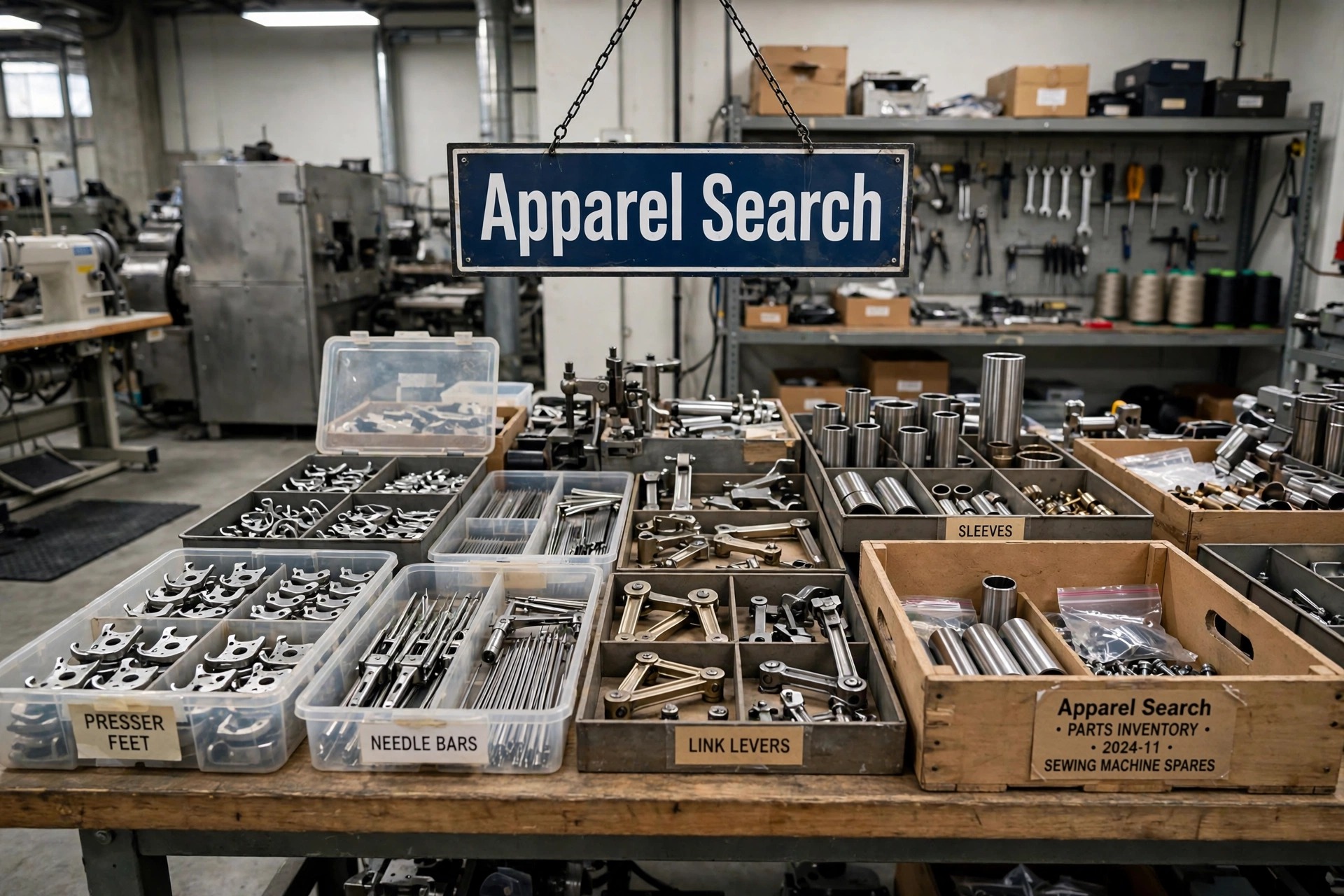
The stitch-forming parts come first: hooks and bobbin cases on lockstitch machines, loopers and spreaders on overlock and coverstitch machines, and needles by the box in every size and point style the work demands. Feeding parts follow — feed dogs, presser feet, needle plates and folders and attachments for each operation. Inside the machine, a second family does the driving: link levers, including the inter-ball bore copper link levers in which the supplier below specialises, together with sleeves, bushings and shafts that carry the needle bar, thread take-up and hook drive motions. These internal parts wear slowly but decide whether an older machine still sews accurately, so quality in their machining — bores, ball joints and curved needle processing among them — is what separates a lasting repair from a short-lived one.
Taizhou in China, where the supplier below is based, is noted as the most famous city for producing sewing machines in China, and its parts makers supply both machine brands and the independent spares trade.
Matching Parts to Machines
Sewing parts are matched by machine make, model or class and, wherever possible, the maker's part number: two parts that look identical can differ in a bore, a timing face or a thread hand, and the wrong one will not sew correctly even if it fits. Factories standardise where they can — keeping the fleet on fewer machine classes shrinks the spares shelf — and buy wearing parts in depth while sourcing slow internal parts against need. Shengda, listed below, illustrates the specialist route: established in 1991 in Taizhou, it makes its speciality parts with advanced equipment and testing methods, acts as exclusive supplier to many famous brands, and also helps customers source other sewing machine parts through its relations with other parts manufacturers in its area. Contact: e-mail info@sdsmp.com, Phone 0086-576-8998737, Fax 0086-576-8998807.
Good parts management shows in small habits: parts are stored by machine class in labelled bins, hooks and loopers are kept oiled against rust, and mechanics record which parts were changed at each repair so repeat failures point to a cause — a machine eating hooks has a timing or needle-bar fault, not a run of bad hooks. When a machine class is retired, its slow-moving internal spares go with it, while the common consumables stay; and before ordering an unfamiliar part, the removed original is kept as the sample the new part must match exactly.
Companies Supplying Sewing Machine Spare Parts
Shengda
Shengda (China), established in 1991 and located in Taizhou — the most famous city for producing sewing machines in China — has produced sewing machine parts for more than ten years. With advanced equipment and perfect testing methods it is among the best manufacturers in China of inter-ball bore copper link levers, top-curved needle processing and sleeves, and has become the exclusive supplier for many famous brands in the world. It also helps customers source many other sewing machine parts through its good relations with other parts manufacturers in the area. Contact: e-mail info@sdsmp.com, Phone 0086-576-8998737, Fax 0086-576-8998807.
Supplies: Sewing Machine Parts · Link Levers · Sleeves · Needle Processing · Parts Sourcing
Textile & Clothing Machine Spare Parts
- Beam Heads
- Beams for Weaving Machinery
- Bulb Socket
- Cams
- Ceramic Friction Disks
- Ceramic Thread Guides
- Circular Knitting Machine Parts
- Creel Stands
- Cutters for Looms
- Cylinders
- Dials
- Electric Shears
- Feed Wheel
- Feeders
- Fineblanked Stampled Parts
- Flexible Card Clothing
- Grinder
- Grippers
- Guide Unit s - textile machinery
- Hosiery Camboxes
- Knitting Machine Spare Parts
- Loop Forming Elements
- Loose Needles
- Lycra Feeders
- Metallic Card Clothing
- Metallic Cleaning Tool
- Mounting Pads
- Papermakers for Felt Weaving
- Patterning
- Positive Feeders
- Poy Winder Machines
- Pulleys for textile machines
- Rapier Tapes
- Rapier Wheel
- Raschel Machinery Parts
- Rotary Hooks
- Safe Needles
- Sample
- Sensors for Looms
- Sinkers Rings
- Slide Electronic yarn Control Devices
- Springs for Textile Machines
- Stamped Bent Parts
- Stitch Bonding Machine Parts
- Striper
- Swatch Cutters
- Tension Meters
- Thread Break Guard
- Thread Guide Units
- Tricot Machinery Spare Parts
- Warp Knitting Spare Parts
- Warper Beams
- Weaving Machinery Spare Parts
- Weft Feeders
- Weight Scales
- yarn Carriers
- yarn Retainer
- yarn Sensor
- yarn Splicers
- yarn Suction Cups for Winders
- yarn Supervisor by Drop
- yarn Supervisor by Tearing
- yarn Supervisor by Tearing & Drop
Knitting & Weaving Machinery
- Circular Knitting Machinery
- Crotchet Knitting Machinery
- Double Jersey Knitting Machinery
- Fleece fabric Knitting Machines
- Hosiery / Socks Machinery
- Knitting Lubricator
- Knitting Software
- Mesh fabric Knitting Machines
- Pile fabric Knitting Machines
- Plush fabric Knitting Machines
- Rib fabric Knitting Machinery
- Ring Temples
- Seamless Knitting Machinery
- Sewing Machinery Attachments
- Single Jersey Knitting Machinery
- Terry fabric Knitting Machinery
- Terry Machinery
- Velour fabric Knitting Machinery
- Weaving Machinery Manufacturers
Related Guides and Resources
Common Questions
How are sewing machine spare parts identified?
By machine make, model or class and the maker's part number. Stitch-forming and internal parts are class-specific, and look-alike parts can differ in bores or timing faces, so order against the number, not the appearance.
Which sewing machine parts should a factory stock in depth?
The fast-wearing and operation-critical ones: needles, hooks, bobbin cases, loopers, feed dogs, presser feet and knives for the machine classes in use. Slow internal parts such as link levers and sleeves are stocked lightly or sourced against a planned overhaul.
Why do internal parts like link levers and sleeves matter?
They carry the needle bar, take-up and hook drive motions, and their bores and joints set the machine's timing accuracy. A worn lever or sleeve introduces play that shows as inconsistent stitching, so precision in these parts decides whether a repair lasts.