Yarn Supervisor by Drop for Textile Machinery
Textile and clothing machine spare parts — what the part does, how to specify it, and the companies that supply it.
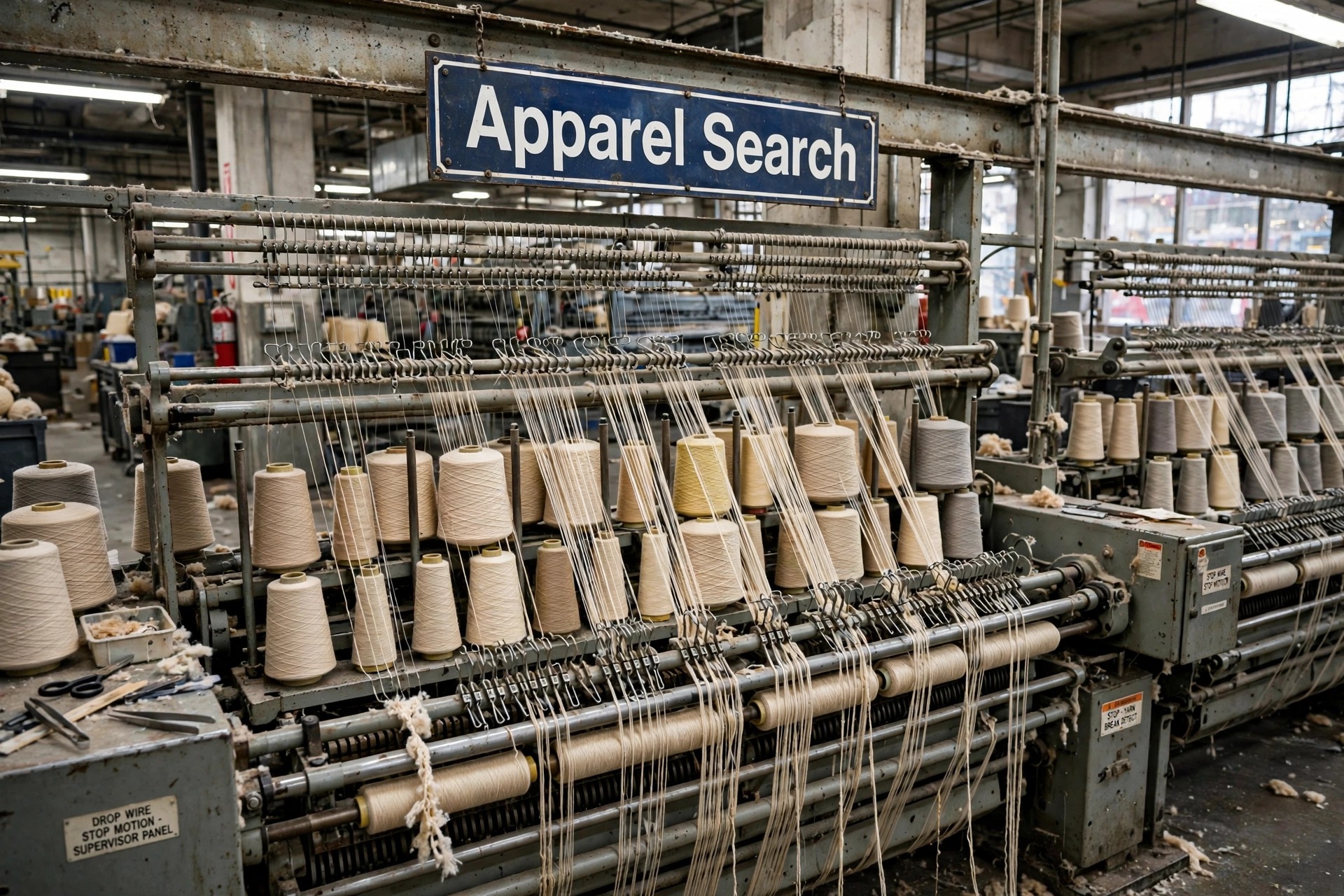
The yarn supervisor by drop is the oldest and simplest watchdog on a knitting machine, and still one of the most reliable: a light wire, pin or finger rests on the running yarn, held up by nothing but the yarn itself. While the end is present and feeding, the drop element rides in its raised position and the machine runs. The moment the yarn breaks or the package runs out, support vanishes, the element falls under its own weight, and its fall trips the stop motion — no power, no electronics, just gravity doing the sensing. Banks of these drop elements along a creel or feeder rail give the operator a second gift as well: the fallen wire points straight at the fault.
Textile Machinery Directory
Gravity Does the Sensing: How Drop Supervision Works
Each supervised end carries its own drop element on its own path between package and knitting point. The yarn is threaded so that its line supports the element against gravity; in many designs the fallen element completes or breaks an electrical contact in the stop circuit, while in purely mechanical arrangements its fall moves a stop rod directly. Either way the logic is beautifully binary — yarn present, machine runs; yarn absent, element down, machine stops — and the failure that matters most, a head jammed up by impacted fly so it cannot fall, is prevented by nothing more exotic than regular cleaning. Drop supervision suits spun and filament yarns across the usual knitting counts, provided one variable is respected: the weight of the drop element itself.
That weight is the whole calibration. The element must be light enough that the yarn carries it without added tension that would stretch or break a fine end, yet heavy enough to fall decisively the instant support goes — a wire that floats down slowly through fly and friction stops the machine late, after needles have already run empty. Makers therefore supply drop elements in graded weights by yarn count, and swapping to a finer or coarser yarn without swapping the drop set is the classic cause of both broken ends and missed trips.
Drop Wires, Weights and Spares Planning
The parts list for drop supervision is short and cheap, which is its maintenance charm: drop wires, pins or fingers in their graded weights, their guide rails and contact strips, and the stop-circuit contacts the fall actuates. Wear shows as bent or grooved elements that no longer ride true, corroded contacts that trip late or not at all, and rails worn where hundreds of elements have fallen for years. False stops usually trace to an element too heavy for the yarn, or a path threaded so the yarn barely supports its wire; missed stops trace to jammed pivots, wrong weights after a yarn change, or contacts fouled with fly.
RMB Massardi of Italy, listed below, includes yarn supervisors by drop in its parts range for circular and flat knitting machines, alongside its by-tearing and combined tearing-and-drop units, yarn sensors, retainers and slide electronic yarn control devices. Order by machine make and model and — critically — by the yarn counts to be supervised, so the graded element weights match the work; keep a labelled set of each weight grade in use, plus spare contacts, in the machine-side cabinet. When a style change brings a new yarn count onto the machine, changing the drop set belongs on the same job card as changing the feeders.
Companies Supplying Yarn Supervisor by Drop
RMB Massardi
Yarn supervisors by drop are supplied by RMB Massardi of Italy, within its parts programme for circular and flat knitting machines. The drop unit sits in a family that also offers tearing-principle supervision and a combined tearing-and-drop model, while the company's broader catalogue takes in yarn sensors, yarn retainers, safe needles, slide electronic yarn control devices, electric shears and bulb sockets.
Supplies: Yarn Supervisors by Drop · Yarn Sensors · Safe Needles · Yarn Control Devices · Knitting Machine Parts
Textile & Clothing Machine Spare Parts
- Beam Heads
- Beams for Weaving Machinery
- Bulb Socket
- Cams
- Ceramic Friction Disks
- Ceramic Thread Guides
- Circular Knitting Machine Parts
- Creel Stands
- Cutters for Looms
- Cylinders
- Dials
- Electric Shears
- Feed Wheel
- Feeders
- Fineblanked Stampled Parts
- Flexible Card Clothing
- Grinder
- Grippers
- Guide Unit s - textile machinery
- Hosiery Camboxes
- Knitting Machine Spare Parts
- Loop Forming Elements
- Loose Needles
- Lycra Feeders
- Metallic Card Clothing
- Metallic Cleaning Tool
- Mounting Pads
- Papermakers for Felt Weaving
- Patterning
- Positive Feeders
- Poy Winder Machines
- Pulleys for textile machines
- Rapier Tapes
- Rapier Wheel
- Raschel Machinery Parts
- Rotary Hooks
- Safe Needles
- Sample
- Sensors for Looms
- Sewing Machinery Spare Parts
- Sinkers Rings
- Springs for Textile Machines
- Stamped Bent Parts
- Stitch Bonding Machine Parts
- Striper
- Swatch Cutters
- Tension Meters
- Thread Break Guard
- Thread Guide Units
- Tricot Machinery Spare Parts
- Warp Knitting Spare Parts
- Warper Beams
- Weaving Machinery Spare Parts
- Weft Feeders
- Weight Scales
- yarn Carriers
- yarn Control Devices (Slide Electronic)
- yarn Retainer
- yarn Sensor
- yarn Splicers
- yarn Suction Cups for Winders
- yarn Supervisor by Tearing
- yarn Supervisor by Tearing & Drop
Knitting & Weaving Machinery
- Circular Knitting Machinery
- Crotchet Knitting Machinery
- Double Jersey Knitting Machinery
- Fleece fabric Knitting Machines
- Hosiery / Socks Machinery
- Knitting Lubricator
- Knitting Software
- Mesh fabric Knitting Machines
- Pile fabric Knitting Machines
- Plush fabric Knitting Machines
- Rib fabric Knitting Machinery
- Ring Temples
- Seamless Knitting Machinery
- Sewing Machinery Attachments
- Single Jersey Knitting Machinery
- Terry fabric Knitting Machinery
- Terry Machinery
- Velour fabric Knitting Machinery
- Weaving Machines
Common Questions
How does a yarn supervisor by drop detect a break?
A light wire or pin rests on the running yarn and is held up by the yarn alone. When the yarn breaks or runs out, the element falls under gravity and its fall trips the machine stop motion. The fallen element also shows the operator exactly which end has failed.
Why must drop elements be matched to the yarn count?
The element's weight is the calibration. Too heavy, and it overloads or snaps a fine yarn, causing false stops; too light or fouled, and it falls slowly or not at all when the yarn goes. Drop elements come in graded weights — change the set when the yarn count changes.
What causes a drop supervisor to miss a broken yarn?
Almost always mechanical fouling: a pivot jammed with fibre fly, a bent element, or corroded stop contacts. Cleaning on rota, straight true elements and clean contacts keep gravity sensing reliable — there is no electronic fault-finding to do on a drop head.