Yarn Splicers for Textile Machinery
Textile and clothing machine spare parts — what the part does, how to specify it, and the companies that supply it.
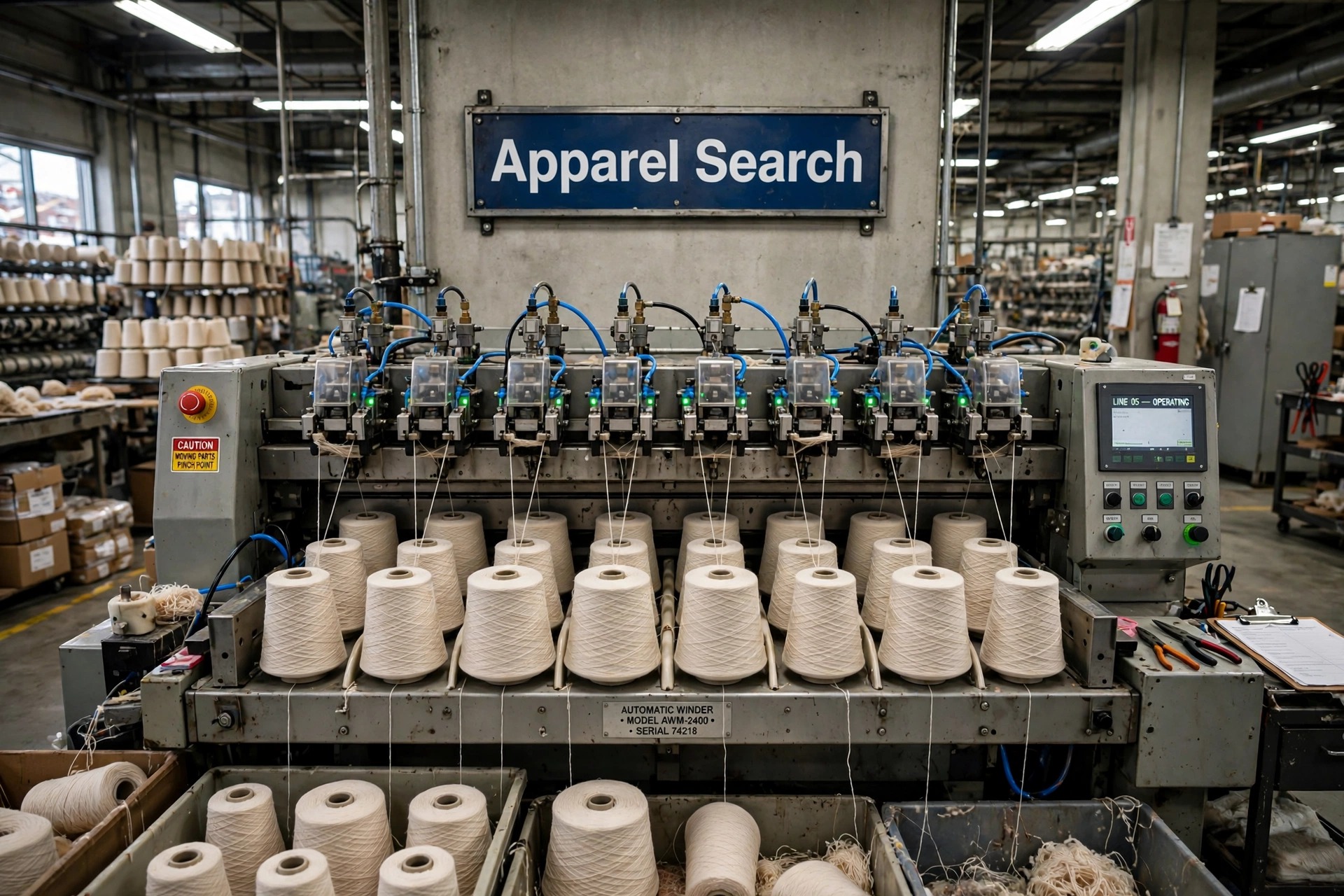
A yarn splicer joins two yarn ends together so winding can continue without a knot. On an automatic winder or autoconer, every package change and every cleared break produces two loose ends; a knot tied in them would be a thick place that can snag in warping, weaving or knitting and show in the finished cloth, while a good splice is close to the parent yarn in diameter and strength and passes through guides, heddles and needles almost unnoticed. Splicers — most of them pneumatic, using a controlled blast of air to interlace the fibres — are precision wear parts at the heart of winding quality, and their chambers, blades and valves are regular spares.
Textile Machinery Directory
How Pneumatic Splicing Replaces the Knot
Inside the splicer, the two yarn ends are laid overlapping in a small splicing chamber, clamped, trimmed to length by built-in blades, and then blasted with a short, timed jet of air. The blast untwists and intermingles the fibres of both ends so that, when it stops, the overlap behaves as one continuous yarn. Variants tune that simple idea to the fibre: water-assisted splicers add a fine mist that helps cotton and blends splice cleanly, heated and mechanical systems serve particular filament and coarse-yarn jobs, and the chamber profile, air pressure and blast duration are all set for the yarn count and material being wound. A splice made with the wrong chamber or tired settings looks hairy, tests weak, or tails — and a weak splice simply breaks again downstream, where it costs far more to clear.
Because splicing happens at every doff and every break, the splicer cycles thousands of times a day on a busy winder. Consistency matters more than any single perfect splice: the maintenance team watches splice strength sampling and downstream break rates, and treats a drift in either as an early warning. Clean, dry air at stable pressure and a chamber kept free of fibre fly complete the conditions a splicer needs.
Splicer Wear Parts and How to Specify Replacements
The parts that wear are the parts that touch yarn or air: splicing chambers and their covers, trimming blades and scissors that dull and then tear instead of cutting, rubber clamps and pads that harden, and the valves, seals and nozzles that meter the air blast. Chamber wear is gradual — the profile slowly loses the sharp geometry that makes fibres interlace — so splices weaken before anything visibly fails, which is why chambers and blades are changed on condition and on splice-test results rather than run to breakdown. When ordering, specify winder make and model, splicer type and chamber size, and the yarn range in fibre and count; a chamber correct for fine cotton will not splice coarse denim yarn, and filament yarns need their own settings.
Falcon Engineers, listed below, covers the winding side of the mill among its loom and autoconer spares — the class of supplier a mill uses for winder-adjacent parts such as cutters, scissors and suction equipment alongside its weaving range. Keep one full splicer service set per winder type on the shelf — chamber, blades, seals and a valve — and record splice settings by yarn lot in the winder log, so a badly splicing new lot can be traced back to a known-good setting.
Companies Supplying Yarn Splicers
Falcon Engineers
Falcon Engineers (India) manufactures and supplies spares for looms and autoconer machines, and has developed many parts for textile machines; it also supplies imported parts from Germany, Italy and other countries. Falcon provides replacement parts for weaving machines and POY winder machines, offering high-quality, accurate products to the textile industries at affordable prices. It supplies scissors and cutters for automatic loom and winding machines, yarn suction guns for POY winder machines, and cards, nozzles and sensors for all types of looms, plus heald wire and jets for all types of looms.
Supplies: Yarn Splicer Support · Autoconer Spares · Cutters · Scissors · Nozzles · Sensors · Winding Machine Parts
Textile & Clothing Machine Spare Parts
- Beam Heads
- Beams for Weaving Machinery
- Bulb Socket
- Cams
- Ceramic Friction Disks
- Ceramic Thread Guides
- Circular Knitting Machine Parts
- Creel Stands
- Cutters for Looms
- Cylinders
- Dials
- Electric Shears
- Feed Wheel
- Feeders
- Fineblanked Stampled Parts
- Flexible Card Clothing
- Grinder
- Grippers
- Guide Unit s - textile machinery
- Hosiery Camboxes
- Knitting Machine Spare Parts
- Loop Forming Elements
- Loose Needles
- Lycra Feeders
- Metallic Card Clothing
- Metallic Cleaning Tool
- Mounting Pads
- Papermakers for Felt Weaving
- Patterning
- Positive Feeders
- Poy Winder Machines
- Pulleys for textile machines
- Rapier Tapes
- Rapier Wheel
- Raschel Machinery Parts
- Rotary Hooks
- Safe Needles
- Sample
- Sensors for Looms
- Sewing Machinery Spare Parts
- Sinkers Rings
- Springs for Textile Machines
- Stamped Bent Parts
- Stitch Bonding Machine Parts
- Striper
- Swatch Cutters
- Tension Meters
- Thread Break Guard
- Thread Guide Units
- Tricot Machinery Spare Parts
- Warp Knitting Spare Parts
- Warper Beams
- Weaving Machinery Spare Parts
- Weft Feeders
- Weight Scales
- yarn Carriers
- yarn Control Devices (Slide Electronic)
- yarn Retainer
- yarn Sensor
- yarn Suction Cups for Winders
- yarn Supervisor by Drop
- yarn Supervisor by Tearing
- yarn Supervisor by Tearing & Drop
Knitting & Weaving Machinery
- Circular Knitting Machinery
- Crotchet Knitting Machinery
- Double Jersey Knitting Machinery
- Fleece fabric Knitting Machines
- Hosiery / Socks Machinery
- Knitting Lubricator
- Knitting Software
- Mesh fabric Knitting Machines
- Pile fabric Knitting Machines
- Plush fabric Knitting Machines
- Rib fabric Knitting Machinery
- Ring Temples
- Seamless Knitting Machinery
- Sewing Machinery Attachments
- Single Jersey Knitting Machinery
- Terry fabric Knitting Machinery
- Terry Machinery
- Velour fabric Knitting Machinery
- Weaving Machines
Related Guides and Resources
Common Questions
Why splice yarn instead of knotting it?
A knot is a thick, hard lump in the yarn. It can catch in guides, heddles and knitting needles, cause a break or a machine stop, and show as a defect in finished cloth. A well-made splice is close to the normal yarn diameter, keeps most of the parent yarn strength, and passes through later processes with far fewer stops.
What wears out first in a pneumatic yarn splicer?
The splicing chamber, the trimming blades and the air valve seals. Chamber profiles lose their edge gradually, blades dull and begin to tear the yarn ends instead of cutting them square, and tired seals change the air blast. Splice strength testing usually reveals the wear before a visible failure does.
How is a replacement splicer specified?
By the winder or autoconer make and model, the splicer and chamber type, and the yarn being wound — fibre, count and whether it is spun or filament. Chamber size and air settings are yarn-specific, so quote the full yarn range the position has to cover, not just the lot running today.