Yarn Sensor for Textile Machinery
Textile and clothing machine spare parts — what the part does, how to specify it, and the companies that supply it.
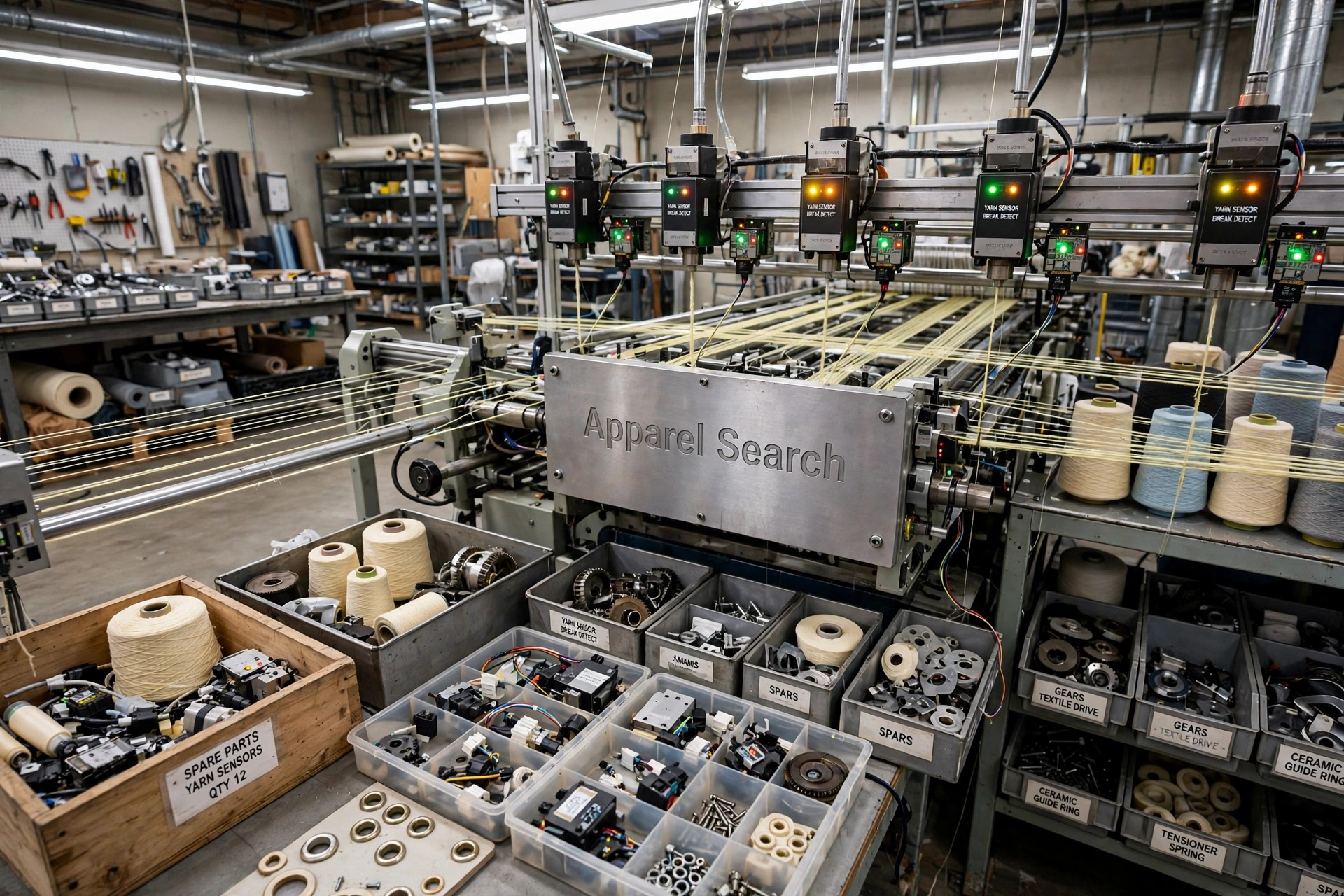
A yarn sensor is the machine's watcher: a sensing device on the yarn path that confirms yarn is present and running, and signals a stop the moment an end breaks, runs out or stops moving. On a knitting machine the cost of a missed break is high — needles continue to knit without yarn, producing press-offs, holes and ladders that scrap fabric and can damage the machine — so sensors are fitted per feed and trusted like safety devices. This page covers what yarn sensors detect, the supervisor types in use, and the Italian maker whose range is built around yarn supervision.
Textile Machinery Directory
Detecting Presence, Drop and Tearing
Yarn supervision works by several principles, reflected in the supervisor families RMB Massardi lists. A supervisor by drop watches the yarn's tensioned position: while yarn runs, it holds its sensing element up, and when the end breaks the element drops and triggers the stop. A supervisor by tearing responds to the yarn being pulled or torn — detecting faults where yarn is dragged or snatched rather than simply absent. Combined supervisors by tearing and drop cover both behaviours in one device. Electronic yarn sensors extend the same idea with contactless sensing of yarn presence and movement, feeding the machine's stop motion and, on modern machines, its fault recording, so the operator is called to the exact feed that failed.
Fitted alongside slide electronic yarn control devices, sensors turn yarn behaviour — presence, motion, tension events — into machine signals at every feed. The stop the sensor calls is as important as the detection: the machine must halt quickly enough that the broken end does not travel, yet without a shock stop that breaks other ends or disturbs the fabric, and the signal must identify where the fault sits so the operator goes straight to the failed feed on a machine that may carry dozens of them. Sensor ranges are therefore matched to the machine's own stop-motion and control system, not bought as isolated devices. A sensor that stops the machine reliably but cannot be threaded quickly after a repair will be bypassed by a pressed operator, so ease of rethreading is a genuine selection point alongside sensitivity.
Fitting and Looking After Yarn Sensors
Sensors only protect the machine when they are clean, correctly threaded and actually in circuit: lint across a sensing point, a yarn path threaded around rather than through a sensor, or a defeated stop motion all silently remove the protection. Mills check sensor function at every machine start and after every break repair, keep sensing points blown clean with the machine's routine, and replace damaged units rather than bridging them. RMB Massardi of Italy, listed below, manufactures yarn sensors within its parts range for circular and flat knitting machines, alongside its yarn supervisors by drop, by tearing and by tearing and drop, slide electronic yarn control devices, yarn retainers, safe needles, bulb sockets and electric shears — the feed-area protection parts sourced from one maker.
Companies Supplying Yarn Sensor
RMB Massardi
RMB Massardi (Italy) manufactures yarn sensors as part of its range of parts for circular and flat knitting machines. Its yarn supervision range includes yarn supervisors by drop, yarn supervisors by tearing, and yarn supervisors by tearing and drop, together with slide electronic yarn control devices, yarn retainers, safe needles, bulb sockets and electric shears.
Supplies: Yarn Sensors · Yarn Supervisors by Drop · Yarn Supervisors by Tearing · Yarn Control Devices · Yarn Retainers
Textile & Clothing Machine Spare Parts
- Beam Heads
- Beams for Weaving Machinery
- Bulb Socket
- Cams
- Ceramic Friction Disks
- Ceramic Thread Guides
- Circular Knitting Machine Parts
- Creel Stands
- Cutters for Looms
- Cylinders
- Dials
- Electric Shears
- Feed Wheel
- Feeders
- Fineblanked Stampled Parts
- Flexible Card Clothing
- Grinder
- Grippers
- Guide Unit s - textile machinery
- Hosiery Camboxes
- Knitting Machine Spare Parts
- Loop Forming Elements
- Loose Needles
- Lycra Feeders
- Metallic Card Clothing
- Metallic Cleaning Tool
- Mounting Pads
- Papermakers for Felt Weaving
- Patterning
- Positive Feeders
- Poy Winder Machines
- Pulleys for textile machines
- Rapier Tapes
- Rapier Wheel
- Raschel Machinery Parts
- Rotary Hooks
- Safe Needles
- Sample
- Sensors for Looms
- Sewing Machinery Spare Parts
- Sinkers Rings
- Slide Electronic yarn Control Devices
- Springs for Textile Machines
- Stamped Bent Parts
- Stitch Bonding Machine Parts
- Striper
- Swatch Cutters
- Tension Meters
- Thread Break Guard
- Thread Guide Units
- Tricot Machinery Spare Parts
- Warp Knitting Spare Parts
- Warper Beams
- Weaving Machinery Spare Parts
- Weft Feeders
- Weight Scales
- yarn Carriers
- yarn Retainer
- yarn Splicers
- yarn Suction Cups for Winders
- yarn Supervisor by Drop
- yarn Supervisor by Tearing
- yarn Supervisor by Tearing & Drop
Knitting & Weaving Machinery
- Circular Knitting Machinery
- Crotchet Knitting Machinery
- Double Jersey Knitting Machinery
- Fleece fabric Knitting Machines
- Hosiery / Socks Machinery
- Knitting Lubricator
- Knitting Software
- Mesh fabric Knitting Machines
- Pile fabric Knitting Machines
- Plush fabric Knitting Machines
- Rib fabric Knitting Machinery
- Ring Temples
- Seamless Knitting Machinery
- Sewing Machinery Attachments
- Single Jersey Knitting Machinery
- Terry fabric Knitting Machinery
- Terry Machinery
- Velour fabric Knitting Machinery
- Weaving Machinery Manufacturers
Related Guides and Resources
Common Questions
What does a yarn sensor do?
It watches the yarn path at a feed and detects that yarn is present and running. When an end breaks, runs out or stops, the sensor signals the machine to stop before missing yarn becomes press-offs, holes or needle damage.
What is the difference between a supervisor by drop and one by tearing?
A drop supervisor reacts when a broken end lets its sensing element fall; a tearing supervisor reacts to yarn being pulled or torn. Combined tearing-and-drop units watch for both failure behaviours in one device.
Why do yarn sensors stop working even when they are not broken?
Lint on the sensing point, a yarn path threaded past the sensor, or a stop motion taken out of circuit all defeat sensing without damaging the unit. Sensors are cleaned and function-checked at machine starts and after break repairs.