Women's Footwear Guide
Shoes carry every outfit and every mile. This guide covers the main families of women's footwear, how a shoe should fit, what it should be made of, and how to make a good pair last.
Shop Women's Shoes Now
Shop Women's Shoes on Amazon Shop Women's Shoes on eBayThe Amazon and eBay links on this page are affiliate links. If you make a purchase through them, Apparel Search may earn a commission.
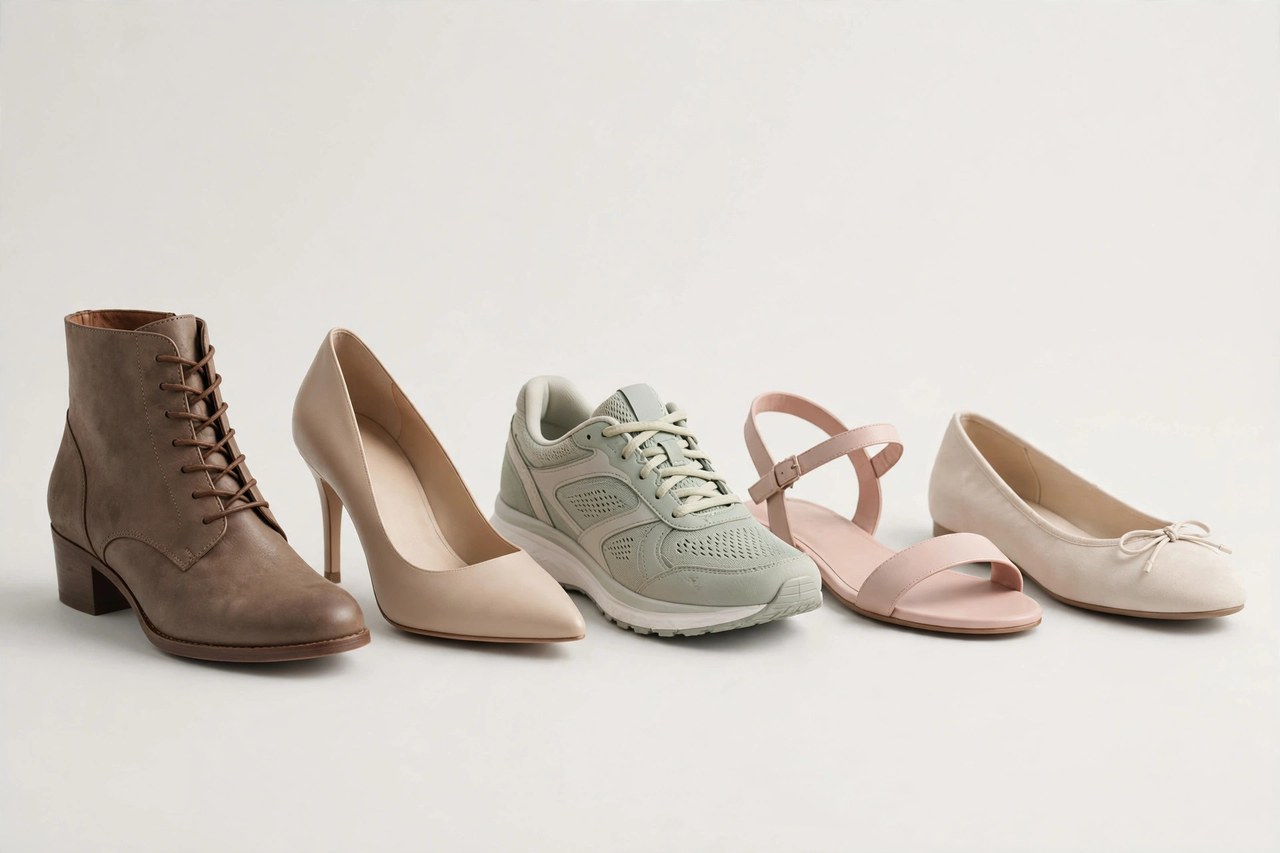
Footwear is the hardest-working part of a wardrobe. A pair of shoes supports your full weight through thousands of steps a day, protects your feet from pavement, weather and workplace hazards, and quietly sets the tone of everything worn above it. The same dress reads formal with a pump, relaxed with a sandal and sporty with a sneaker, which is why most women own far more shoes than any other single clothing category.
This hub introduces the whole landscape before you dive into the details. It explains the main families of women's footwear and what each one is built to do, the fit fundamentals that apply to every style, the materials you will meet again and again, and the simple care habits that double the life of a pair. From here, six category guides go deeper into athletic shoes, boots, casual shoes, dress shoes, sandals and trend styles.
The Main Footwear Families
Athletic shoes are engineered for movement: running, training, court sports and trail walking, each with its own cushioning, support and tread. Boots cover the ankle and beyond, from flat Chelsea boots for everyday wear to insulated winter pairs and heeled knee-high styles. Casual shoes are the daily drivers - sneakers, loafers, flats and walking shoes chosen for comfort over long, ordinary days on your feet.
Dress shoes handle the polished end of life: pumps, heeled sandals, elegant flats and occasion styles for work, weddings and evenings out. Sandals open the foot to warm weather, ranging from flat slides and sport sandals to wedges and heeled evening pairs. Finally, trend shoes capture whatever the season is pushing - a platform, a sculptural heel, a bold colour - the styles that refresh a wardrobe fastest and date fastest too.
Fit Fundamentals: Length, Width and Arch
Fit matters more than fashion, because a beautiful shoe that hurts will simply not be worn. Start with length: there should be roughly a thumb's width of space beyond your longest toe, and feet should be measured late in the day, when they are at their largest. Shop the larger foot if your two feet differ, and remember that sizes are not standardised - a size 8 in one brand can fit like a 7.5 in another.
Width is the most neglected dimension. A shoe that is too narrow squeezes the forefoot and pushes toes out of alignment, while one that is too wide lets the foot slide and rub. Many styles now come in narrow, medium and wide fittings, and choosing the right width often fixes problems blamed on size. Finally, consider your arch: flat, neutral and high arches distribute weight differently, and the right insole or support level keeps knees, hips and back comfortable too.
Materials, Inside and Out
Leather remains the benchmark upper material: it stretches slightly to the foot, breathes, polishes up well and, in full-grain form, ages gracefully for years. Suede and nubuck offer a softer look but mark more easily and dislike rain. Modern textile and knit uppers dominate athletic and casual shoes because they are light, flexible and easy to wash, while synthetic leathers keep prices down at some cost to breathability and longevity.
Underneath, soles are usually rubber for grip and durability, foam compounds such as EVA for cushioning, or leather on traditional dress shoes. Inside, a cushioned insole, a smooth lining that does not rub, and a firm heel counter that holds the back of the foot steady are the quiet marks of a well-made shoe. Checking these three layers - upper, sole and interior - tells you more about quality than any label.
Caring for Your Shoes
Shoes last far longer when they are rotated: leather and foam both need a day of rest between wearings to dry out and recover their shape. Store pairs with shoe trees or simple stuffing, keep them out of damp cupboards, and brush off dirt before it sets. A quick wipe after wear, conditioner for smooth leather every few months, and protector spray for suede will keep most pairs looking respectable for years.
Repair beats replacement for any shoe you love. Worn heel tips, tired insoles and loose stitching are inexpensive fixes at a cobbler. Retire athletic shoes on schedule rather than on looks, though: their cushioning foam breaks down with mileage long before the uppers wear out, and running on dead foam is a common, avoidable source of aches.
How This Footwear Directory Is Organized
The category guides linked below follow the way women actually shop for shoes: by the job the shoe has to do. Each guide covers its family's main styles, when and where they are worn, how to choose fit and judge quality, the materials that matter, and the care that category needs - plus one extra topic specific to that kind of shoe, from boot heights to heel heights to how fashion trends cycle.
Below each guide you will also find its directory listings, pointing to the many specialised shoe guides across the site. Start with the category closest to what you are shopping for, read its fit notes before you buy, and use the hub to compare families side by side.
Women's Footwear Categories
Photos


Women's Shoe Guide Directory
- Women's Shoes
- Shoe Search
- Women's Shoe Stores
- Women's Shoe Wholesalers
- Footwear Definitions
- Women's Fashion
- Shopping For Shoes
- Adventure Shoes
- Baseball Shoes
- Basketball Shoes
- High Top Basketball Shoes
- Low Top Basketball Shoes
- Bowling Shoes
- Canvas Shoes
- Cheerleading Shoes
- Classic Shoes
- Cleated Shoes
- Baseball Cleats
- Softball Cleats
- Soccer Cleats
- Track Cleats
- Fitness Footwear
- Golf Shoes
- Hiking Shoes
- Lifestyle Shoes
- Running Shoes
- Cross Country Running Shoes
- Cushioning Running Shoes
- Stability Running Shoes
- Supportive Running Shoes
- Trail Running Shoes
- Skate Shoes
- Ice Skates
- Roller Skates
- Skater Shoes
- Soccer Shoes
- Sports Fan Shoes
- Sports Sandals
- Tennis Shoes
- Track Shoes
- Training Shoes
- Volleyball Shoes
- Walking Shoes
- Water Sports Shoes
- Boots
- Ankle Boots
- Casual Boots
- Cold Weather Boots
- Cowgirl Boots
- Designer Boots
- Dress Boots
- Engineer Boots
- Equestrian Boots
- Flats Boot
- High Heel Boots
- Hiking Boots
- Insulated Boots
- Knee-high Boots
- Lace-up Boots
- Mid-Calf Boots
- Motorcycle Boots
- Platform Boots
- Pull On Boots
- Rain Boots
- Snowboarding Boots
- Stretch Boots
- Vegan Boots
- Waterproof Boots
- Wide-Calf Boots
- Western Boots
- Medium Round Toe Western Boots
- Pointed Toe Western Boots
- Work Boots
- Non-safety Work Boots
- Safety Work Boots
- Zip-Up Boots
- After Sport Shoes
- Ballet Flats
- Boat Shoes
- Clogs
- Comfort Shoes
- Corporate Casual Shoes
- Designer Shoes
- Duty Shoes
- Espadrille Shoes
- Loafers
- Mary-Janes
- Mule
- Nurse Shoes
- Oxfords
- Platform Shoes
- Slip On Shoes
- Slippers
- Sports Shoes
- Trend Shoes
- T-Strap Shoes
- Wedge Shoes
- Work Shoes
- Woven Shoes
- Trendy Shoes
- Trendy Boots
- Trendy Casual Shoes
- Trendy Dress Shoes
- Trendy Sandals
- Where to Buy Shoes
- Bridal Shoes
- Business Shoes
- Career Shoes
- Evening Shoes
- Homecoming Footwear
- Open Toe Shoes
- Peep Toe Shoes
- Pointed Toe Shoes
- Prom Shoes
- Pumps
- Quarter Strap Shoes
- Round Toed Shoes
- Sandals
- Slingback Shoes
- Special Occasion Shoes
- Spectator Shoes
- Square Toe Shoes
- Vegan Shoes
- All Terrain Sandals
- Comfort Sandals
- Designer Sandals
- Dress Sandals
- Espadrille Sandals
- Fisherman Sandals
- Flats Sandals
- Flip-Flop Sandals
- Platform Sandals
- Resort Sandals
- Slide Sandals
- Slingback Sandals
- Strappy Sandals
- Thong Sandals
- Vegan Sandals
- Wedge Sandals
Looking for Women's Clothing Stores?
This guide helps you choose women's footwear that fits well, suits the occasion and lasts. To browse where to buy, visit our women's clothing store directory, where you can find retailers that carry them.